Before you request a quote for a folding carton — what we call a card paper box or plain box in Hong Kong — the first thing to pin down isn't the box's name. It's the structure your product needs to support, display and protect it.
Two cartons can look identical, yet the right style for a lightweight trinket, a glass bottle, a reed diffuser, a skincare item, a handmade product or a counter display can be completely different. "I want a paper box" is rarely enough to quote from, because before we go to print we need the product's dimensions, weight, purpose, how it opens, and whether it needs an insert or a display function.
Quick version: lightweight products start with a tuck-end box; anything with weight or a bottle starts with a lock-bottom or auto-bottom box; if you already have a plain box, start with a sleeve; if you need a counter display, start with a display box; and if you want the product itself to show, look at a window box.
The 30-second call: which card box should your product start with?
Your situation | Start with | What to tell us |
|---|---|---|
Lightweight items / general retail products | Tuck-end box | Size, quantity, hang hole, seal sticker or product label |
Glass bottles / candles / diffusers | Lock-bottom or auto-bottom box | Weight, base support, whether an insert is needed |
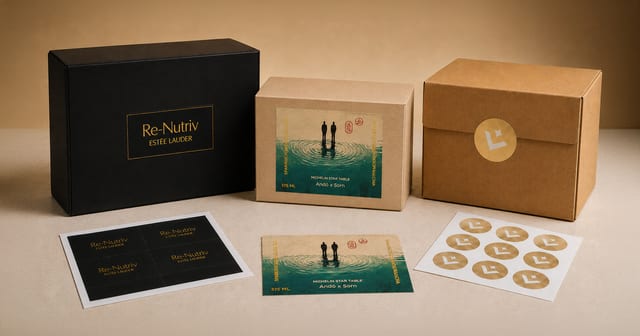
You already have a plain / ready-made box | Sleeve | Existing box size, how many faces to cover |
Counter display / event tabletop display | Display box | Display angle, how items are picked up, restocking |
You want the product itself visible | Window box | Window position, whether a film backing or insert is needed |
If you're not sure of the box style yet, send a product photo, the length/width/height, the weight and the expected quantity to our packaging print WhatsApp enquiry. With just those few details we can already point you toward a tuck-end, lock-bottom, sleeve or display-box direction.
How card boxes, plain boxes and folding cartons relate
Many product boxes are really folding cartons: they lie flat before assembly and take shape through a cutting die, score lines, tuck flaps and a glue seam — which is why they're also called plain boxes or card boxes.
They're different from rigid boxes such as two-piece lid-and-base boxes. Rigid boxes lean on stiffness, unboxing feel and a gift-box quality; card boxes are more common for retail products, food outer boxes, skincare cartons, handmade-product packaging, event packaging or product boxes used in larger volumes.
So if you want a lighter product box that folds flat and prints your branding, the card-box / plain-box direction is usually the place to start; if you want a corporate gift box, a premium set or a thick unboxing box, you're closer to the rigid-box direction covered in what to prepare before a rigid-box packaging quote.
Choosing by product: where to start
If you're starting from the product rather than the box style, use the directions below to narrow things down. These aren't final specs — just a way to organise your enquiry faster.
Product type | Start with | Why / what to tell us |
|---|---|---|
Reed diffuser bottle | Lock-bottom or auto-bottom box | Start with the bottle's weight, base support and whether an insert is needed to hold it. |
Single skincare bottle or tube | Tuck-end, window or lock-bottom box | Depends on the bottle's weight, whether you want to show the product, and whether it will shift inside. |
Candle | Lock-bottom or auto-bottom box | Weight and base support come first; a plain tuck bottom on its own usually isn't the right call. |
Handmade small items | Tuck-end box or sleeve | If you already have a ready-made box, a sleeve or stickers can build a branded look first. |
Event giveaways | Auto-bottom or tuck-end box | At high volumes, assembly speed matters; for lightweight items a simpler structure works first. |
Counter samples / testers | Display box | The focus is how items are picked up, restocking and on-site visibility — not just wrapping the product. |
Tuck-end, lock-bottom, auto-bottom and sleeve: what's the difference?
The section above sorts by product; this one focuses on the structural differences between the box styles themselves, so you're not just memorising names without knowing their limits.
Box style | Best for | Strength | Watch out for |
|---|---|---|---|
Tuck-end box | Lightweight products, small retail items, general packaging | Intuitive, familiar structure | Not for heavier products relying on the base alone |
Lock-bottom box | Bottles, candles, diffusers, heavier products | Steadier base support than a plain tuck bottom | Give us the weight and how the product loads in |
Auto-bottom box | Higher-volume assembly, faster packing | The base forms as you pop the box open | Quote and structure depend on size, weight and assembly needs |
Sleeve | Existing plain boxes, ready-made boxes, seasonal editions | A fast way to add branding or a series look | The existing box size must be exact, or it slips off or won't fit |
Display box | Counters, exhibitions, event tables, retail shelves | Packs and displays at once | Decide the display angle and pick-up direction first |
A lock-bottom box usually needs its base folded together by hand; an auto-bottom box forms its base as you pop the body open, which suits faster packing or larger assembly runs. Neither is simply "the more premium option" — it comes down to product weight, quantity and your packing workflow.
Board thickness, inserts and windows go together
Thicker board isn't automatically better. Whether a carton feels rigid depends on the box style, size, product weight, window placement and assembly method all together. The same board thickness feels completely different on a small box versus a large one, and a lightweight item and a glass bottle place very different demands on the base.
For a large box, a heavier product or a window box, structure usually matters more than board thickness alone. An oversized window, an under-supported base or an unsecured product can all warp the box or make it feel unstable in the hand.
For surface finishes, a card box can take matte lamination, gloss lamination, anti-scuff film, foil stamping, embossing, spot UV or a sticker seal, depending on the brand feel you want. Whether any of them fits comes down to the board, colours, budget and how the box is handled — don't pile on every finish just to look "premium".
When quoting a card box, whether the product moves inside is a key question. If the product knocks about easily, the bottle is tall, or a set holds several pieces, it may need an insert, dividers, a paper tray or another way to hold everything in place.
Window boxes are the same. A window isn't just a hole in the front panel — you also have to consider whether the product shifts, whether the opening weakens the box, whether it needs a film backing, and whether important text gets squeezed by the cut-out.
For display boxes, think through how they'll be used on site first: on a counter, beside the till, on an exhibition table or on a retail shelf? Each setting affects height, angle, the front lip, how customers reach in, and whether you need room to restock.
If you want to dig into the relationship between board thickness and product weight, see how to choose card-box board thickness, which focuses on rigidity, weight and matching them to the box style.
When not to judge by box style alone
The product is heavy but you only want a plain tuck-end box — the base may not hold.
The window is too large, which can weaken the box and squeeze out the space for text.
The sleeve size is off, so the finished piece is too loose, won't slide on, or creases once it does.
You chase thick board but skip the insert, so the product still rattles around inside.
The display box's pick-up direction wasn't thought through, so restocking and customers grabbing items both get awkward.
You send only a product photo without sizes, weight and quantity, which makes an accurate quote very hard.
None of this is about making the process complicated — it's about not discovering after the sample stage that the product "fits, but doesn't work well". Look at box style, board thickness, inserts and display method together from the start, and there's far less to revise later.
FAQ
Are a card box and a plain box the same thing?
In everyday conversation, very nearly. Plenty of plain boxes, folding cartons and card boxes all lie flat before assembly and take shape through a cutting die, score lines and a glue seam. The real answer still depends on the box style, board, size and product weight.
Do I need a cutting die before making a card box?
Not necessarily a complete die from the very start. If you already have a box style, product dimensions or a reference photo, we can work out the structural direction first and arrange the die afterwards. If you have an old box, existing packaging or reference images, send those too — they make the call easier.
Can I make card boxes in small quantities?
You can ask, but it depends on the size, die, print method and finishing. Card boxes usually involve a die and assembly, so at very low quantities the unit price can run high. In that case it's worth weighing up whether to start with a ready-made box, a sleeve, a seal sticker or branded labels instead.
Lock-bottom or auto-bottom — how do I choose?
Both are about base support. A lock-bottom box usually needs its base folded by hand; an auto-bottom box forms its base as you pop the body open. If the product is heavier, the run is larger, or your packing needs to move faster, spell out the product weight and how you'll assemble it when you enquire.
Can a card box have foil stamping or anti-scuff film?
Yes, assessed against your design and board — but don't add every finish just to look upmarket. Dark box surfaces, matte packaging or areas that get handled a lot are good candidates for anti-scuff film; logos, brand names or the seal area are where foil-stamped stickers or foil stamping are worth considering.
Ready to enquire about a card box or plain box?
If you're not sure whether you need a tuck-end, lock-bottom, auto-bottom, sleeve, display or window box, gather the details below and send them to us on WhatsApp for packaging print.
Product photos: front, side, and roughly how it sits inside the box.
Product size: length, width and height — ideally measured to the widest points.
Product weight: especially for glass bottles, candles, diffusers and skincare.
Packaging purpose: retail, gifting, event giveaways, counter display or a seasonal set.
Expected quantity: it affects whether a die is worth cutting and how to keep cost in check.
Preferred box style: tuck-end, lock-bottom, sleeve or display — undecided is fine too.
Reference images: box styles, windows, inserts or finishes you like.
If you already have an old box, a plain box or a preliminary die, include those as well. If the product is still in testing, compare a ready-made box with branded stickers versus a new die-cut card box first, so you don't over-invest in packaging too early.
If you don't know the box-style names yet, don't guess. Just send the product photos, length/width/height, weight and purpose, and we'll point you toward a tuck-end, lock-bottom, sleeve, display or window box to start from.
Send your details on WhatsApp for packaging print — message +852 3001 5678, English is fine — and we'll steer the box-style direction first, then look at whether board thickness, inserts, windows, sleeves, stickers or finishes need to come into play. We deliver across Hong Kong and Macau.