Before you ask for a rigid box packaging quote, six details are worth having ready: your product sizes, the use case, whether you're leaning premium-rigid or lightweight-cardstock, your insert needs, the expected quantity, and the date you need it. You don't need finished artwork on day one — but those six things directly shape the box style, structure, budget, and every conversation that follows.
A rigid box — also called a two-piece box or a lid-and-base box — is the format behind most corporate gift sets, product packaging, seasonal bundles and premium gift boxes. It looks simple. But leave the product height, the insert, the opening direction or the surface finish undecided, and the quote and design tend to bounce back and forth.
Prepare these six things before a rigid box quote
To point your enquiry in the right direction, gather the details below first. They don't have to be complete in one go — but the clearer they are, the easier it is to judge where your rigid box packaging should start.
| What to prepare | How to provide it |
|---|---|
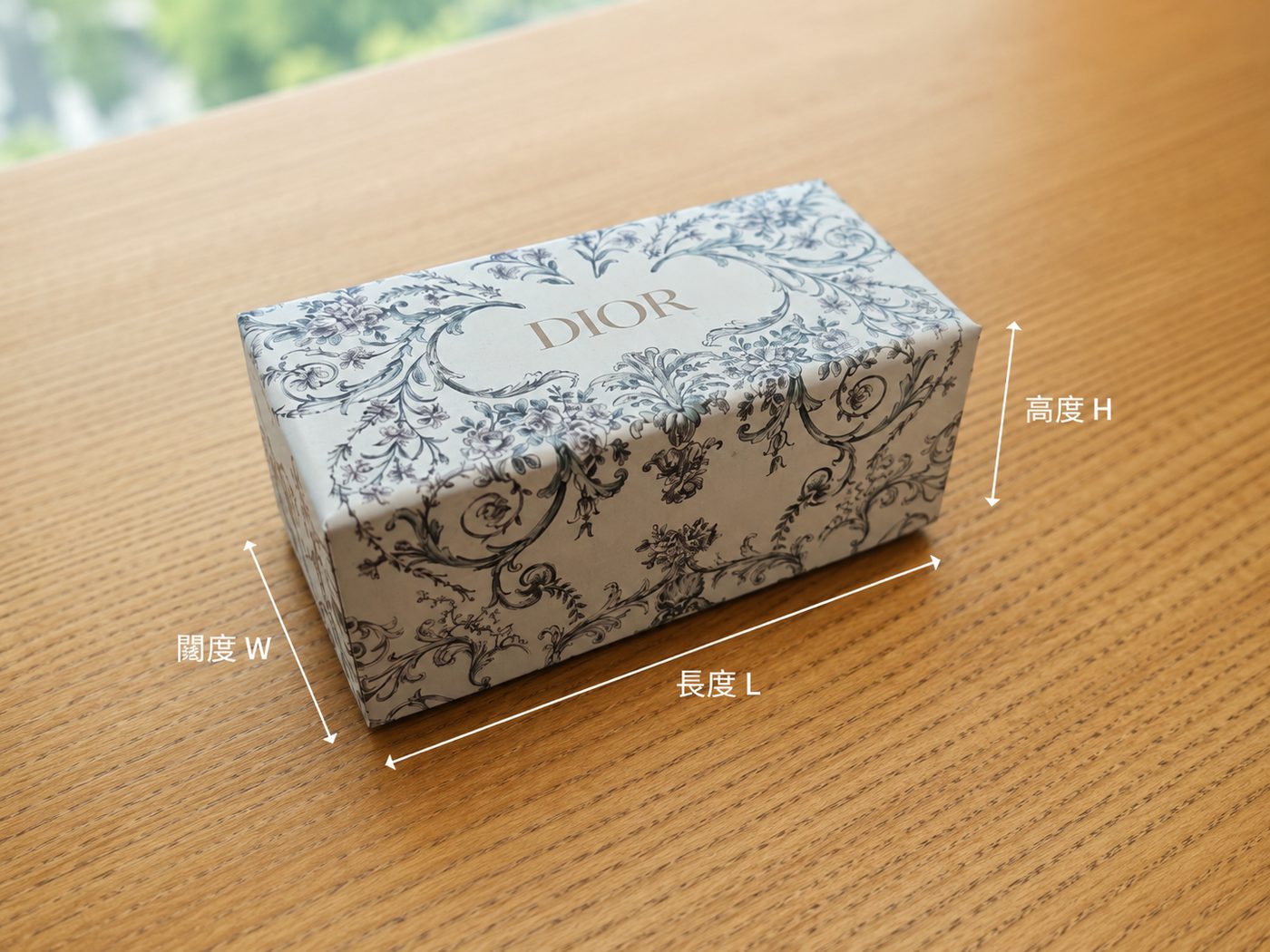
| Product size | Length, width and height — ideally measure every item |
| Product photos | Top view, side view, and a shot of everything together |
| Use case | Gifting, retail, event giveaway, seasonal set or brand packaging |
| Box direction | Premium rigid, lightweight cardstock, or undecided and want to compare |
| Insert | Whether the product needs to be held in place, shown in compartments, or stopped from shifting |
| Quantity and date | Expected quantity and the date you need it |
If all you have right now is product photos, start with the photos, a rough product size and an expected quantity. Those three are already enough for us to point you in a general direction — you don't need to lock down every detail up front.
First, decide: premium rigid or lightweight cardstock?
Say "rigid box" and most people picture a thick, ceremonial gift box. When you actually enquire, though, it helps to know whether you're leaning premium or leaning cardstock. The cardstock version we mean here is the lighter, more practical soft-build direction.
A premium rigid box is usually greyboard wrapped in printed paper: firm walls, a real gift-box feel, well suited to corporate gifting, client boxes, brand sets and anything where the unboxing matters. A cardstock box is made from thick card, lighter in the hand, with the emphasis on weight, practicality and cost control — a better fit for event giveaways, short-run promotions or larger volumes.
How do premium rigid and cardstock boxes differ?
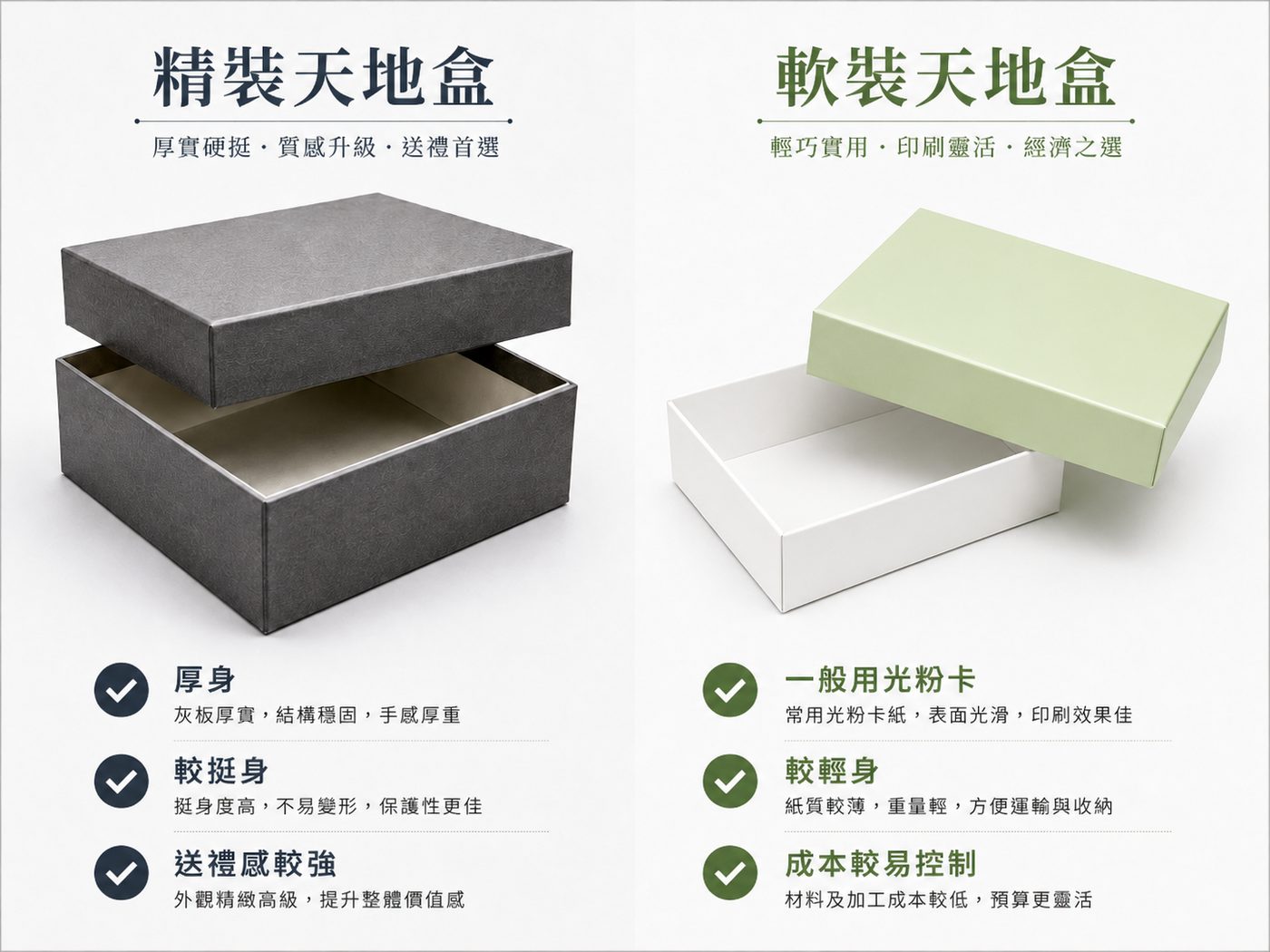
| Direction | Best for | Feel / protection | Spell out when enquiring |
|---|---|---|---|
| Premium rigid box | Corporate gifting, high-end gift boxes, seasonal sets | Firm and structured with real unboxing appeal; usually about feel and build | Product weight, whether you need an EVA insert, surface finishes, scuff-resistant lamination |
| Cardstock box / soft build | Event giveaways, higher-volume packaging, tighter budgets | Lighter and easier on cost; feel depends on the stock and design | Quantity, use case, stock direction, whether the product needs simple holding in place |
Size isn't just the front of the product — measure the height and how it loads
The most common thing that stalls a rigid box quote is incomplete measurements. Packaging quotes usually go wrong not because the length or width was off, but because the product height, a bottle cap, the thickness of accessories, the insert depth, or the room needed to lift the product out was overlooked.
Before you enquire, it helps to note down:
- The length, width and height of a single item.
- How many items go into each set.
- Whether the product lies flat, stands upright, or is angled for display.
- Whether you need room for a thank-you card, instruction card or booklet.
- Whether the product is fragile, scratch-prone, knock-sensitive or needs to be held in place.
For a gift set, it's worth laying everything out on a table once, taking a top-down photo, and measuring the rough footprint.
An insert isn't decoration — it holds the product and builds the unboxing
If the box holds a single, sturdy item, you may not need an insert at all. But for a multi-piece set, glass bottles, scented products, skincare or fine goods, the insert can make or break how the finished box reads.
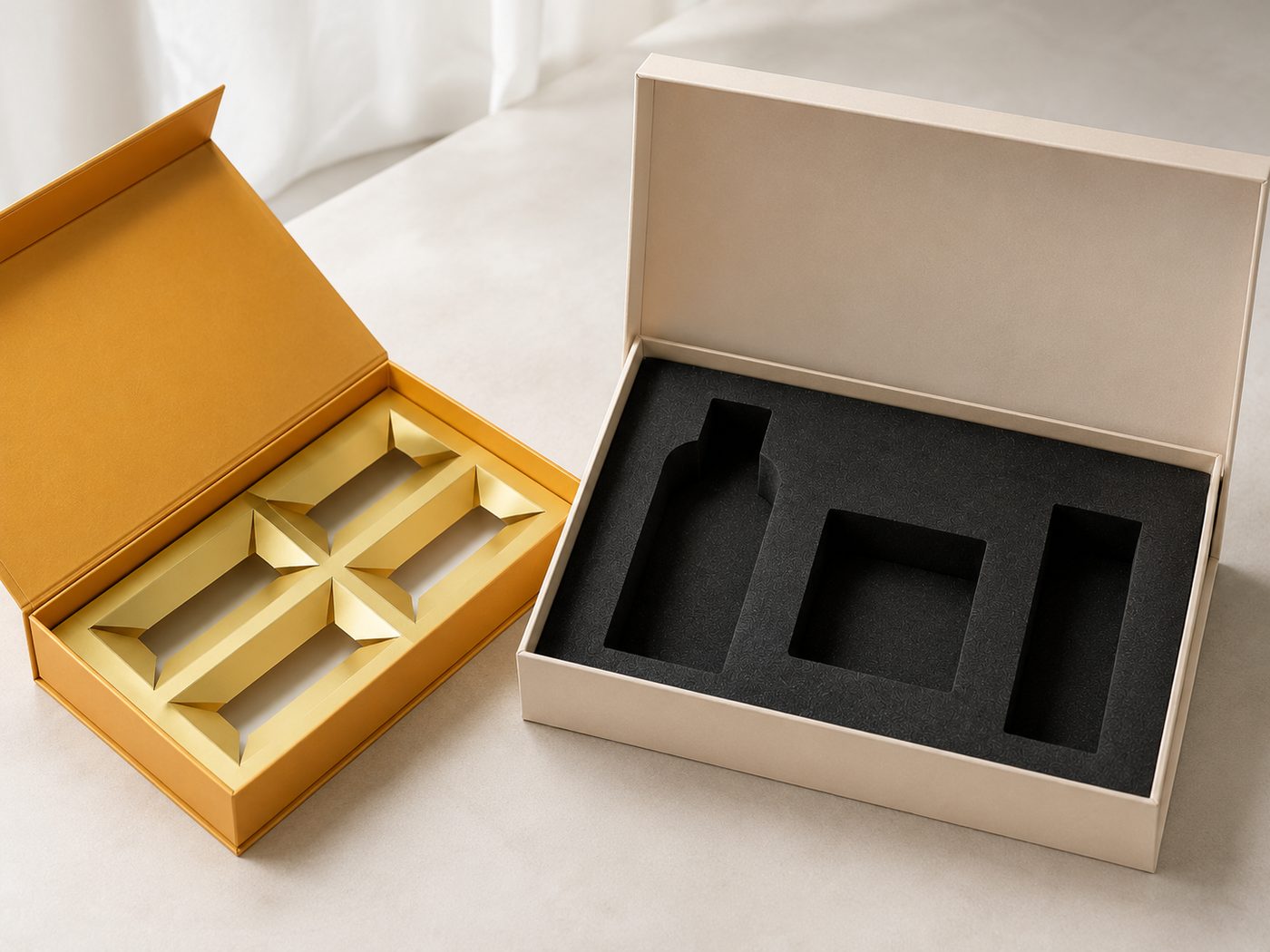
| Insert type | Best when | Upside | Watch out for |
|---|---|---|---|
| EVA insert | Premium rigid boxes, glass bottles, fine goods, heavier items or anything that needs to stay put on display | Strong protection, the product stays exactly in place, and it feels premium on opening | You'll need to supply product size, shape and layout; cost and tooling usually run higher than a paper insert |
| Paper insert | Lighter products, an eco-minded direction, everyday gift boxes or budget-conscious sets | Sits naturally with a paper, eco-friendly look and feels understated | Protection and load-bearing depend on product weight — not right for every fragile or heavy item |
You don't have to settle every detail before enquiring, but do make three things clear: whether the product needs to be held in place, whether each piece should be displayed on its own, and whether you're leaning toward a paper insert or an EVA one.
Structure, stock and finishes follow the use case
A rigid box is more than "a lid on a base." How far the lid covers the base, whether the base sits on a raised plinth, and how firm you want the walls all shape the finished feel — and the quote.
When quoting a rigid box, beyond length, width and height, it helps to say roughly how much of the base you want the lid to cover. The point where the lid meets the base is usually called the mouth, the closure line or the seam.
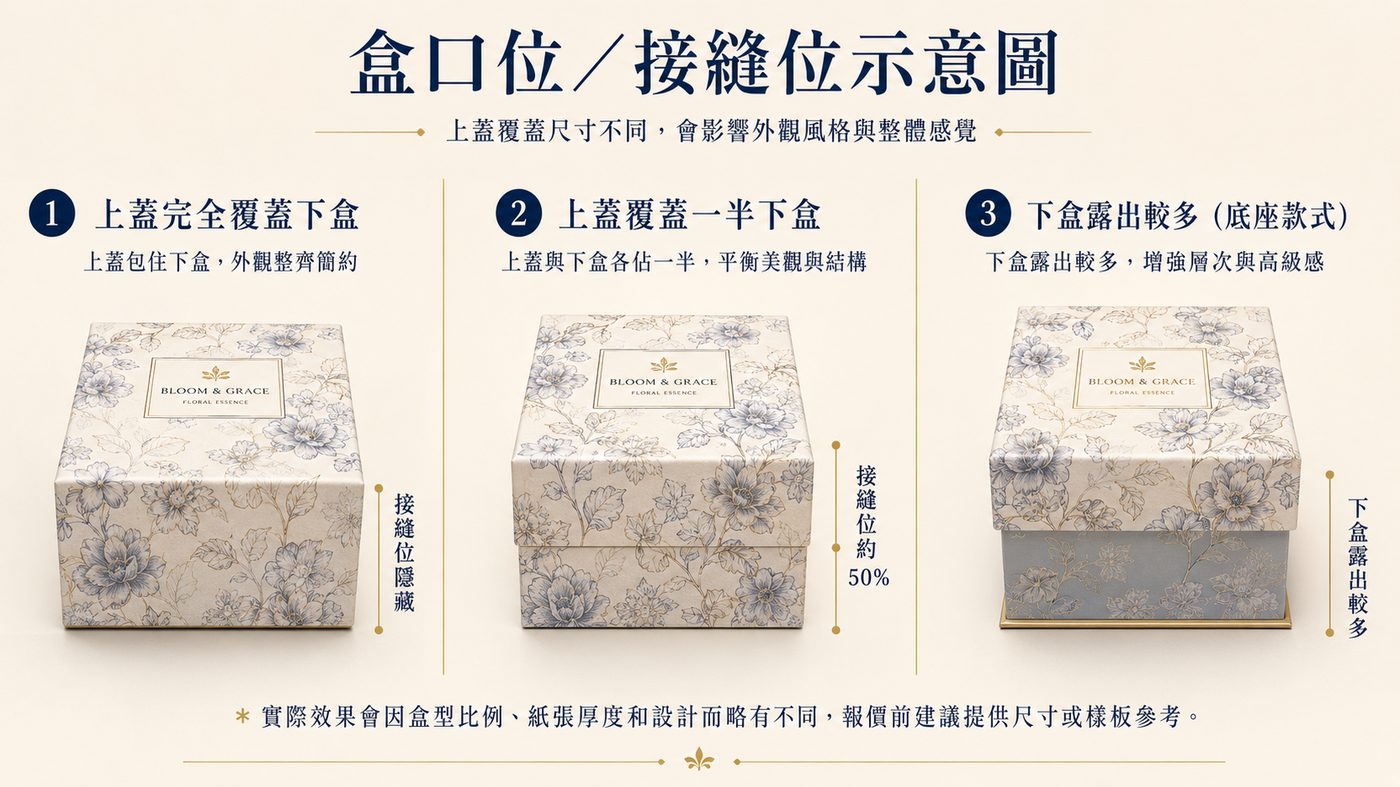
| Box structure | Visual feel | Best when | Spell out when enquiring |
|---|---|---|---|
| Lid fully covers the base | Complete and seamless, a unified look | You want the box to look clean, simple and tidy | Lid height, how it feels to open, logo placement |
| Lid covers half the base | The lid-to-base proportion is obvious, with more depth | Gift boxes, brand sets, or showing off a lid-vs-base colour contrast | Lid and base colours, box proportions, opening direction |
| Lid covers just the top of the base | More of the base shows, for a more direct open | You want to highlight the base colour, a belly-band feel or layered walls | How much of the base is exposed, whether it opens and closes easily |
| Base on a plinth | More display presence and a premium feel | Premium rigid boxes, fine gift boxes, packaging where the unboxing experience matters | Product weight, insert needs, plinth height and how it's displayed |
Stock and finishing options
Here's a quick way to weigh the common finishes:
| Finish | Typical effect | Good for | Watch out for |
|---|---|---|---|
| Scuff-resistant lamination | Cuts down scratches and fingerprints for a more premium touch | Dark box surfaces, matte boxes, corporate gift boxes | Best raised at the quote stage so you're not changing course later |
| Gold / silver foil stamping | A metallic sheen on the logo or key wording | Brand logos, seasonal themes, gift-box covers | Go carefully with small text and fine lines — keep the artwork legible |
| Embossing / debossing | Gives the logo, artwork or text a raised or recessed texture | Understated luxury, brand texture, fine packaging | The result depends on the stock and the detail of the artwork |
| Spot UV | A glossy, reflective contrast in selected areas | Highlighting a logo, a focal graphic or the product name | Usually needs a smoother surface — confirm the stock direction first |
| Specialty stock | Uses the paper's own texture to add feel | Refined, natural, tactile gift boxes | Won't suit every finish — judge by the paper's surface |
The more finishes you add, the earlier you'll want to lock down design, structure and budget — leaving them to the last minute isn't advised.
A practical move is to gather two or three reference images and say what you like about them — the colour, the feel, the way they open, or the overall mood.
Different uses shift the priorities
Corporate gifting usually leans premium, with the focus on the unboxing, the brand logo, the overall feel and a matching paper bag. Seasonal gift boxes can go premium or cardstock depending on budget, with the focus on theme colours, how the set is arranged, insert cards and closure stickers.
Retail products start with structure, shelf dimensions and where the barcode or label sits. Event giveaways put quantity, assembly speed, shipping and on-the-day handout first — and often suit a cardstock direction to keep costs down.
Five common mistakes when asking for a rigid box quote
To cut down on back-and-forth revisions, steer clear of these common slip-ups.
- Sending product photos with no length, width or height.
- Measuring only the front of the product, not the height, a cap or any protruding parts.
- Wanting an insert but not deciding the product layout or how many pieces go in each box.
- Only realising after the box is made that the paper bag, closure sticker or insert card doesn't fit.
- Saying you want it to look premium without sharing reference images, a use case or a budget direction.
None of these will sink a project, but they do muddy the quote, the design and the production direction. A little prep before you enquire usually makes everything move much faster.
FAQ
Does a rigid box have to be the premium build?
Not necessarily. A rigid box can go different ways depending on use and budget. If gifting feel and the unboxing matter, lean premium; for short-term events, higher-volume giveaways or a tight budget, start by discussing a lighter build.
Do I need finished artwork before asking for a quote?
No. For an initial enquiry, product size, use case, quantity, reference images and the box direction you're after are enough. Artwork can come later, once the box style, die-line and print direction are set.
Is an insert always necessary?
Not always. If the product is sturdy, few in number or just being stored simply, you may not need one. But for multi-piece sets, glass bottles, fine goods or anything meant to be displayed on opening, it's worth assessing an insert so the product doesn't shift inside the box.
Can a rigid box come with a paper bag and closure sticker?
Yes — they can all be planned together as one packaging solution. Paper bags, closure stickers, thank-you cards, product labels and booklets all feed into the overall brand feel, so it's best to mention up front whether you want the matching extras.
Not sure how to approach your rigid box?
Start by sending us three things on WhatsApp: product photos, a rough product size and an expected quantity.
If you have reference images, a deadline, or a leaning toward premium rigid or cardstock, send those along too. Message us through WhatsApp for packaging enquiries — we deliver across Hong Kong and Macau, and English is fine — and Printing Banana will help you work out the box style, insert, size and rough production direction.