A large-format banner pulls the eye from across the street or a crowded hall. This guide breaks down how to choose the right banner material, design copy that reads at a distance, add an interactive touch like a QR code, and get your sizing and file specs right — so you can run the whole custom-banner process in one read.
What is large-format banner printing, and when do you use it?
A large-format banner is a wide-format print, usually made from PVC, mesh, fabric, or canvas, and it can run several metres — even a dozen or more — in length. Banners like these show up on building façades, event stages, exhibition booths, mall windows, and street promotions. Their core strength is long-distance visibility: they catch a passing pedestrian or driver in a split second.
What do large banners do for a brand?
Higher visibility and pulling power
Studies show large banners capture your target audience from a distance. With well-chosen imagery and copy, a banner gets the brand message across quickly — outdoors or at an event — and strengthens recall.
Stronger brand awareness and engagement
High-quality image output can carry a story, your values, and a promotion, building an emotional connection with viewers. Placed in a high-footfall area, a banner lifts exposure and encourages interaction.
Versatile materials and sustainability
Banners can be printed on PVC, mesh, fabric, or even recycled stock. Choosing recyclable or eco-friendly materials lets a business signal its commitment to sustainability.
Cost-effective
Compared with TV spots or large outdoor LED screens, banners are relatively cheap and hard-wearing. Even premium materials keep the one-off unit cost reasonable, and long exposure makes for a healthy return on investment.
In short, a large banner is a powerful tool for long-term brand exposure — especially for shop openings, holiday promotions, exhibition marketing, and community events.
Choosing your material: common banner substrates compared
| Material | Characteristics & best uses | Durability | Eco-friendliness |
|---|---|---|---|
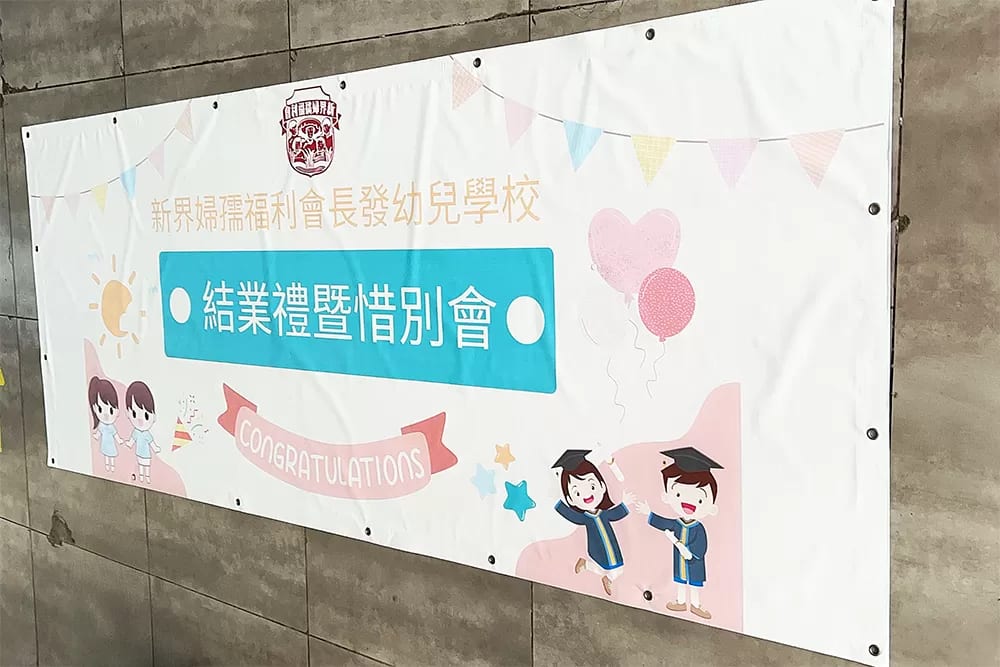
| Matte / gloss vinyl | Smooth, waterproof surface with high colour saturation; ideal for outdoor banners, street hanging, and exhibition wayfinding. Economical, and takes inkjet or UV printing. | ★★★★☆ | ★★☆☆☆ |
| Mesh | A perforated surface lets wind pass through to cut wind load; suited to building wraps, temporary hoarding, and outdoor event stages. The holes reduce wind pressure and tearing. | ★★★☆☆ | ★★☆☆☆ |
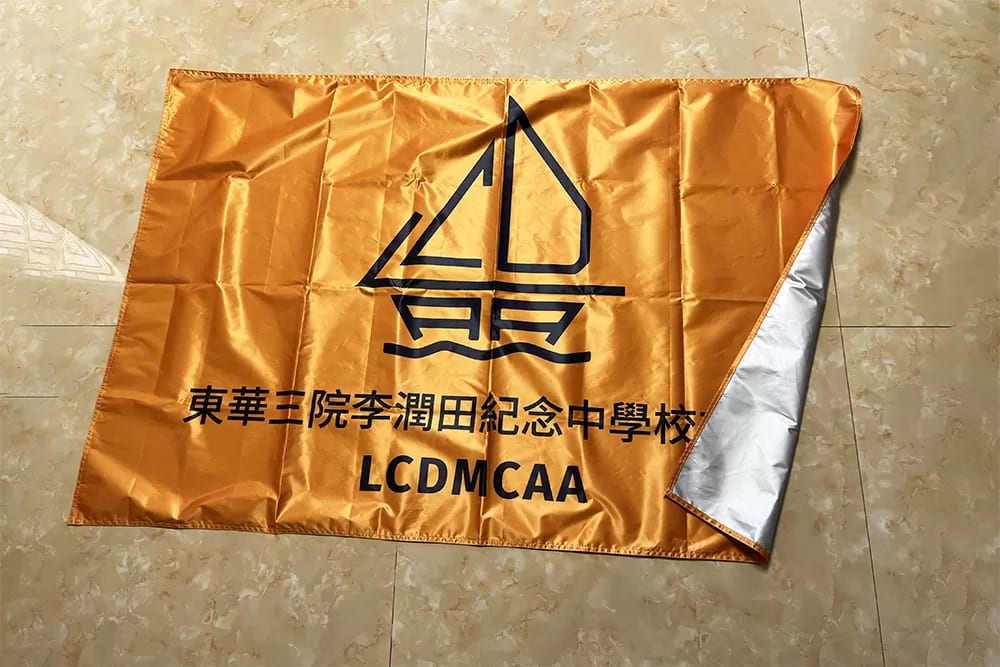
| Flag fabric | Soft to the touch, foldable, and wrinkle-resistant. Great for indoor hanging, stage backdrops, and event flags. Dye-sublimation printing renders vivid colours. | ★★★☆☆ | ★★★☆☆ |
| Artist canvas | Premium feel with a slight surface texture; suited to art exhibitions and boutique decorative banners. Pairs well with a wooden or tension frame. | ★★★☆☆ | ★★★☆☆ |
| Blockout (knife-coated) PVC | Smooth, waterproof, scratch-resistant, and hard-wearing, with high colour saturation; ideal for high, exposed outdoor banners. Pricier, and takes inkjet or UV printing. | ★★★★★ | ★★☆☆☆ |
What to weigh when choosing a material
Environmental conditions: for exposed outdoor sites with high wind or heavy rain, go with mesh or blockout PVC; indoors, flag fabric or vinyl works well.
Length of display: for short-run events, an inexpensive, good-looking fabric does the job; for long-term campaigns or repeat use, choose a more durable material.
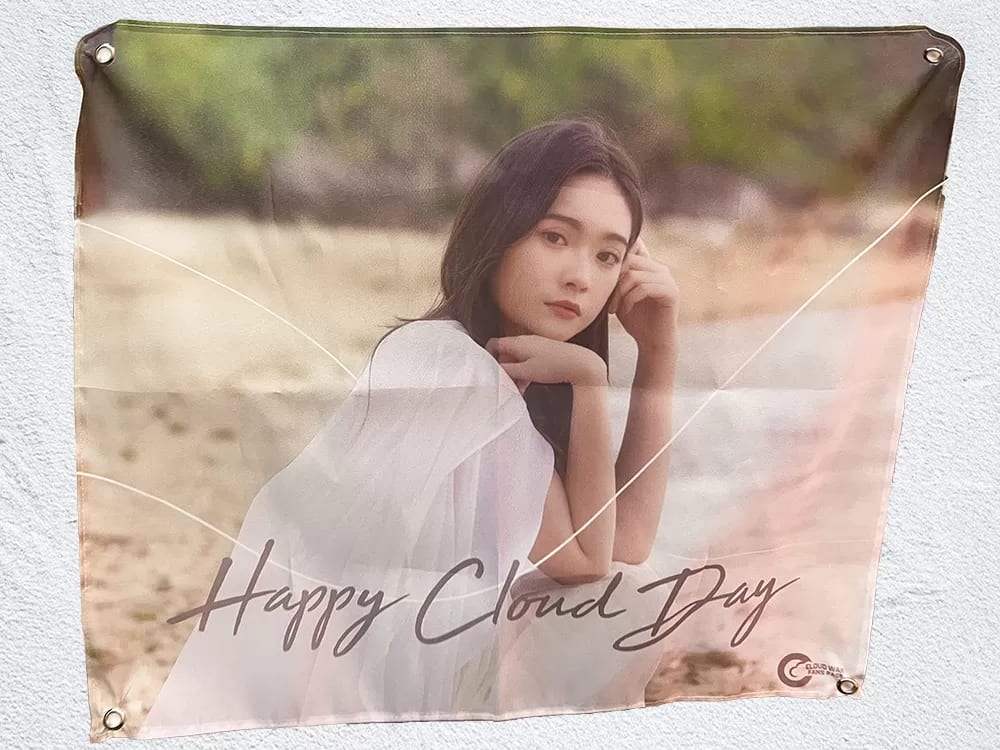
Real examples
How to design a large banner that lands
A clear, punchy headline
The copy on a banner should land its core message in 3–5 seconds — the event name, the headline offer, or a brand tagline. Size the type to the viewing distance, and don't go so small it's hard to read.
Strong contrast and brand colour
Pair your primary brand colour with a complementary one so the banner stays legible from a distance. Sharp contrast pulls the eye and reinforces brand recall.
Visual storytelling
Use high-resolution imagery to show the product or the idea. Telling a story through images or illustration builds emotional resonance and a stronger memory hook.
A call to action (CTA)
Add an explicit call to action — “Join now”, “Book today” — paired with a QR code or URL to guide viewers to the next step.
Consistent brand elements
Keep the logo, typeface, and look consistent with your other printed collateral to boost recognition. Avoid over-busy elements that split attention.
Layout and size guidance
Reading distance
Allow roughly 3–4 cm of letter height for every metre of viewing distance; if the banner sits 10 metres from viewers, letters should be at least 30–40 cm tall.
Proportion and composition
Common sizes include 3×1 m and 4×1.2 m. When laying out the design, leave a safe margin so text or images aren't trimmed off.
File format
Use CMYK colour mode at a resolution of at least 120–150 dpi, which suits large-format output.
The takeaway
A large banner is a superb way to stand out on the street and at events. With the right material, sharp design, and an interactive touch like a QR code, you don't just deliver a message — you build an emotional connection with your audience and gather valuable data. Printing Banana offers one-stop banner design, printing, and installation with delivery across Hong Kong and Macau. Get in touch on WhatsApp at +852 3001 5678 (English is fine) and make your brand shine at your next event or street campaign.