What do lai see envelopes mean culturally?
A lai see envelope — also called a red packet or hongbao — is one of the most meaningful printed items in Chinese gift-giving. It appears at Lunar New Year, weddings, birthdays, and shop openings, when elders tuck lucky money and good wishes into a red envelope for the younger generation or for guests. Red stands for celebration and good fortune, and is believed to ward off bad luck. At wedding banquets and other social gatherings, the lai see envelope is also how a host expresses blessing and courtesy. It is far more than packaging — it's an extension of tradition itself.
Want to choose the right lai see envelope fast?
To help you decide quickly, the table below sums up common uses with suggested sizes, paper stocks, and finishing. The entries are keywords for reference only:
| Scenario | Recommended size / paper | Suggested finishing |
|---|---|---|
| Corporate promotion / brand marketing | 170×80 mm, 128–157 gsm gloss art paper / pearl paper | CMYK printing + foil-stamped logo |
| Weddings / premium gifting | 170×80 mm, 120–160 gsm pearl or soft-touch paper | Foil stamping + emboss / blind emboss + spot UV |
| Small self-use runs / creative designs | 90×90 mm or 170×80 mm, 128–157 gsm gloss art paper | Digital printing + soft-touch lamination or single-colour foil |
| Traditional red envelope | 170×80 mm, 140 gsm red card | CMYK printing or single-colour foil |
A reminder: these combinations are only a guide — adjust the exact choice to your budget, style, and brand tone.
What sizes and structures do lai see envelopes come in?
What are the typical sizes?
Commercially printed lai see envelopes generally fall into a few size families:
- Portrait envelope (Pocket): usually around 170×80 mm or 170×82 mm, with the opening on the short edge so cash slips out easily.
- Landscape envelope (Wallet): mostly 158×80 mm, with the opening on the long edge.
- Square envelope (Square): mostly 90×90 mm — mini and cute.
Some printers also offer other square or mini sizes (for example 90×90 mm) that you can choose to suit the purpose.
What is the structure of a lai see envelope?
A lai see envelope is built like a small envelope: front and back sheets folded and glued together. The Pocket style has a shorter opening for quickly slipping in a banknote; the Wallet style has a longer opening and a flatter look; the Square style is cuter and easy to carry. When designing, leave a glue flap at the opening and mark the bleed on your artwork (typically 2–3 mm) so trimming doesn't expose a white edge.
How do you choose paper stock and texture?
Lai see envelopes usually use 120–200 g/m² specialty or gloss art paper. Different stocks affect the feel, the print result, and the cost:
- Gloss art paper (coated stock): a smooth surface with vivid, saturated colour printing. It's the lowest-cost and most widely used stock, ideal for large corporate runs.
- Matte art paper (matte coated stock): the surface is matted so printed images read fine and non-reflective, with a more mature, understated feel — slightly pricier than gloss.
- Red card: red on both sides, with a smooth face and a rough face. It's not suited to full-colour printing; flat foil or embossed foil is the better route.
- Pearl / metallic paper: the stock contains pearlescent or metallic particles for a pearl-like sheen, ideal for weddings or premium festive designs. Common weights are 120 gsm and 160 gsm.
- Soft-touch paper: silky and tactile, with a surface tension that seems to grip your fingertips and is hard to forget once touched — often used for high-end corporate envelopes.
When choosing, weigh cost against purpose: large promotional runs can use 128 gsm or 157 gsm gloss art paper; weddings or corporate gifts can go with heavier pearl or soft-touch stock.
What printing methods and file requirements apply?
Digital vs offset printing — what's the difference?
- Digital printing suits small runs of 100–500 pieces. It's fast, supports variable data (printing each recipient's name on the envelope, for example), and is more flexible.
- Offset printing suits large runs of 1,000 pieces and up, holds colour consistency, and brings the per-unit cost down at volume.
What are the file spec requirements?
When you submit artwork, prepare it to the printer's requirements:
- Work in CMYK colour mode and supply PDF, AI, or PSD to keep colour accurate.
- Use at least 300 dpi resolution; for a company logo, provide a high-resolution vector.
- Include enough bleed (usually 2–3 mm) so trimming doesn't leave a white edge.
- Convert text to outlines or embed fonts, so a missing system font doesn't scramble the layout.
What are some finishing combinations to try?
Here are a few common paper-and-finishing pairings to help you get the best result within a set budget:
- Pearl paper × foil stamping × emboss — pearl paper has its own sheen, foil adds a luxurious touch, and embossing raises text or artwork off the surface, making it ideal for weddings or premium gifts. Keep foil line widths ≥ 0.2 mm and at least 1 mm from other content so the foil film doesn't break.
- Coloured card × blind emboss / deboss — using a pre-coloured stock saves large areas of printing, while blind embossing or debossing gives artwork a subtle, low-key relief — great for brand marketing or creative designs. Coloured paper absorbs ink readily, so avoid fine lines or small text where coating can go uneven.
- Heavy gloss art paper × soft-touch lamination × spot UV — laminate a high-gsm coated stock with a soft-touch film, then add spot UV to make specific areas gleam, which suits a modern look. Keep spot UV away from the edges and at a distance from other finishing layers, so pressing or trimming doesn't chip it.
These are only examples — mix and match freely to suit your brand style, budget, and print run.
What are the key design tips and motif choices?
When designing a lai see envelope, you can honour traditional meaning and modern aesthetics at once. A few practical pointers:
- Highlight the core message: place the company logo or blessing wording at the visual centre, in a colour that contrasts strongly with the background, so the recipient reads the key point in 3–5 seconds.
- Use auspicious elements: common motifs include the characters for fortune (福) and double happiness (囍), New Year print dolls, zodiac animals, lotus, and goldfish. You can design a bespoke emblem around the year, brand character, or wedding theme.
- Work the negative space: leave appropriate whitespace on the cover rather than crowding it; large areas of foil or embossing stand out more against open space.
- Typeface and layout: pair brush calligraphy with a modern sans-serif for a blend of classical and contemporary; avoid overly fine strokes that can break during foiling or embossing.
- Colour pairing: beyond the traditional red-and-gold, try dusty pink, royal blue, or deep green, accented with metallic foil for a modern feel.
- Interaction and variable data: digital printing supports variable data, so you can print each recipient's name on their envelope for a personal surprise; you can also add a QR code linking to a blessing video, a wedding site, or a brand campaign page, so a scan reveals more. These interactive touches are especially good for corporate promotions and weddings, bringing modern tech into a traditional ritual.
What packaging options and add-ons are there?
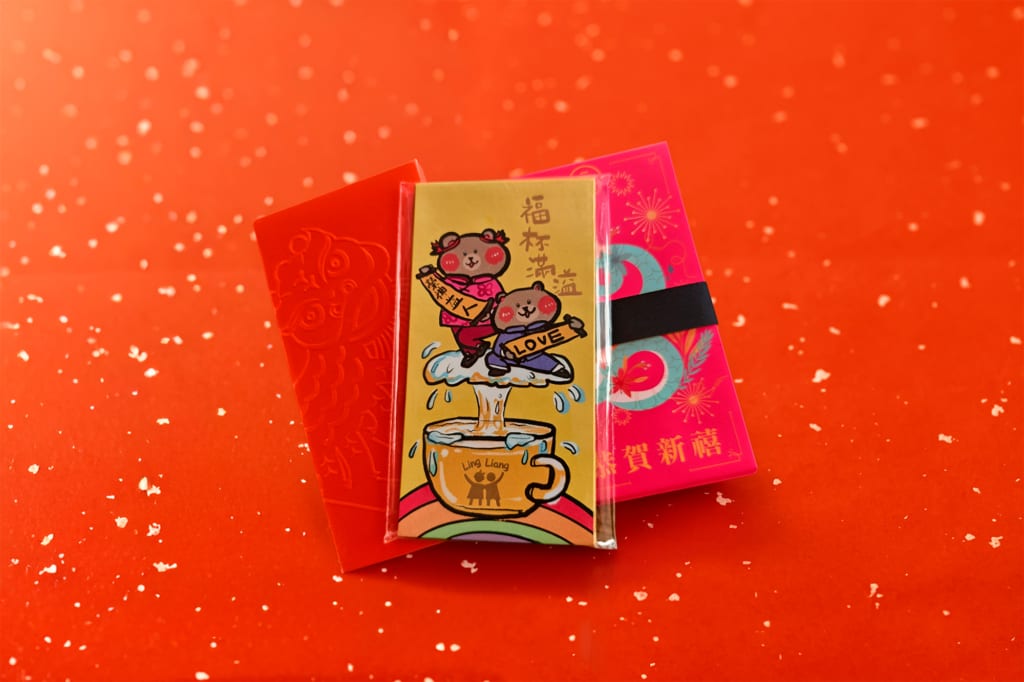
Once printed, lai see envelopes are usually bagged in sets of 5, 8, or 10 in a POP pouch. You can set a custom quantity and print a brand message or blessing on the packaging. For gifting, you can also design a dedicated outer box or paper bag to lift the overall feel.
- Soft sleeve packaging: a clear plastic or OPP bag, easy for retail and low in cost.
- Rigid box packaging: made from hard card or greyboard, with the outer layer laminated or foiled — good for corporate gifts or wedding gift boxes.
- Belly band / ribbon: bundle several envelopes together with a foiled belly band or ribbon to add a sense of ceremony.
How do you weigh quantity and cost when ordering?
The unit price of a lai see envelope ties directly to print run, paper stock, and finishing:
- Small runs can use digital printing, with a low minimum that accepts orders under 100 pieces — suited to individuals or small events.
- Large runs are better on offset or a dedicated plate, where the unit price drops as quantity rises; foil stamping or embossing carry an extra finishing charge.
- Materials and finishing: heavier stock, pearl paper, or soft-touch paper cost more; foil and embossing can lift the quality substantially but also add to cost and lead time.
- Pack quantity: usually 5, 8, or 10 per pack; for corporate promotions, base the print run on how many you expect to hand out to avoid a large surplus.
Beyond that, different printing and finishing methods sit at different cost and lead-time tiers:
- Cost, low to high: standard CMYK printing → spot UV → foil stamping (needs a metal plate made) → emboss/deboss combined with foil. In general, foil tooling and processing cost more and suit large runs; spot UV is cheaper and suits small runs; embossing tooling is the priciest but can be amortised across a large print run.
- Lead-time impact: standard printing takes about 5–7 working days; adding foil or embossing means separate plate-making and a few extra days, so the total lead time can run about a week longer. Plan ahead and confirm the time each finish needs with your printer.
What are the common lai see envelope mistakes?
Before you submit artwork, check these points to avoid the usual pitfalls:
- Proofread the content: confirm every name, company name, date, address, and amount is correct. Have a family member or colleague cross-check, since re-reading your own file repeatedly makes it easy to miss a typo or a layout slip.
- Bleed and safe margin: the file must carry 2–3 mm bleed, and text or key artwork should sit at least 3–5 mm inside the cut line so trimming doesn't expose a white edge or clip the wording.
- Line and stroke weight: for foil or embossing, keep line widths ≥ 0.2 mm and at least 1 mm from other content, so high heat and pressure don't break the foil film or blur the impression.
- Colour mode and resolution: confirm the file is built in CMYK at a minimum 300 dpi; for black text, use K100 (pure black) to avoid ink spread from an over-mixed build.
- Closure design: depending on the closure you choose (tuck flap, double-sided tape, or a round seal), leave the matching glue area, and avoid printing graphics or text on the closure where they could be covered or spoiled.
Confirming the proof after these checks meaningfully cuts down on rework and needless cost.
Conclusion: why are lai see envelopes still essential?
The lai see envelope carries blessing and festive spirit — an indispensable cultural symbol in Chinese society. In designing and making one, you balance traditional meaning, modern aesthetics, and budget: choosing the right paper and size, understanding the printing method and finishing, and caring about design detail and packaging all let a small envelope show genuine thought. Whether it's a corporate promotion, a wedding gift, or a New Year blessing, a thoughtfully designed lai see envelope leaves the recipient feeling warmth and goodwill.
Ready to print your own? Printing Banana produces custom lai see envelopes across the sizes, papers, and finishes above — from gloss and pearl stocks to foil stamping, embossing, and spot UV, in runs small or large. We deliver across Hong Kong and Macau — message us on WhatsApp at +852 3001 5678 (English is fine) for samples and a quote.