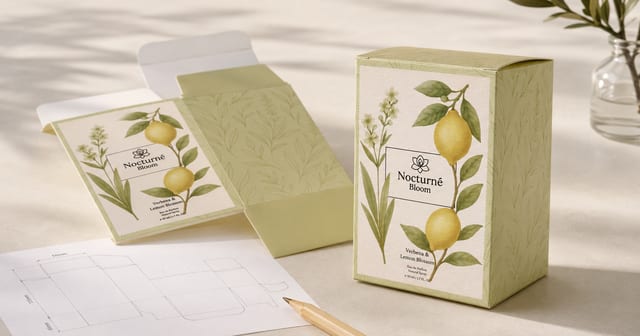
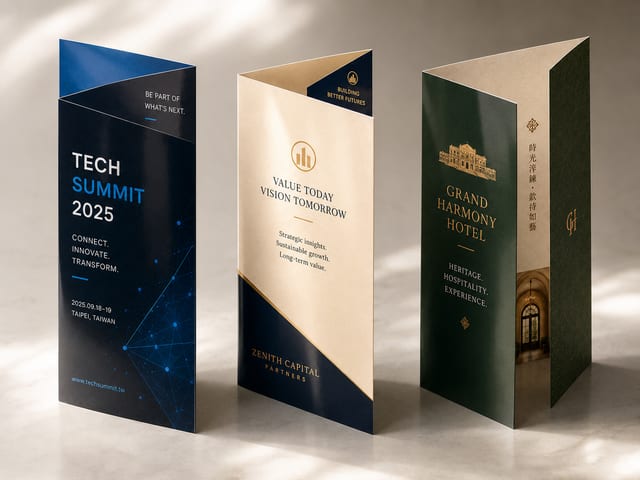
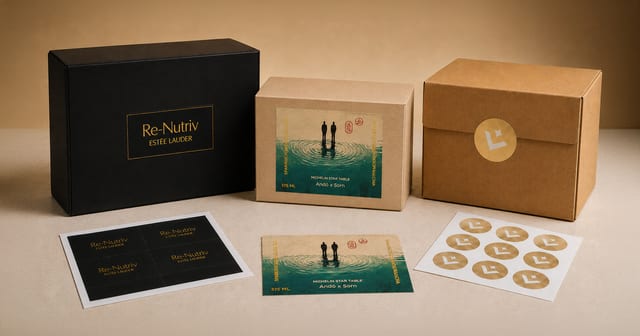
Foil stamping, spot UV and embossing aren't mere decoration — they're the craft that gives a printed piece its soul. These print finishes lift both the look and the feel of a product while sharpening brand recognition and perceived value. This guide breaks down all three techniques and shows you how to choose them wisely and combine them so your packaging and print win customers over.
What is print finishing?
Print finishing refers to the processes applied after printing to improve a finished piece's appearance, feel and durability. Once paper or packaging has been foil-stamped, spot-UV coated or embossed, it can carry different layers of light and shadow or raised and recessed texture, lending the product a sense of prestige and distinctiveness. Modern printing makes these finishes easier to achieve — even on small runs — which is exactly why more and more companies treat print finishing as a must-have for branded print.
Print finishing techniques compared
| Technique | Look & feel | Durability & suitable materials | Recommended use |
|---|---|---|---|
| Foil stamping | Metal foil is applied under heat and pressure so the artwork takes on a metallic sheen — gold, silver or colour, in gloss or matte. Eye-catching and luxurious, with a smooth touch. | The foil is highly abrasion-resistant, standing up to everyday wear; works on paper, plastic, leather and many other materials. | High-end cards, packaging boxes, certificates and gift boxes where you want to convey prestige. |
| Spot UV | A clear varnish over specific artwork creates a glossy area that contrasts with the matte surround, making a logo or text stand out with depth. Pair it with a soft-touch or velvet laminate for extra texture. | UV varnish adds scratch resistance and water resistance to the printed surface. | Covers, posters, product packaging and more, to highlight a brand name or key graphic; ideal for short-run promotions or high-quality products. |
| Embossing | A die presses a raised or recessed texture into the paper; even without ink it delivers an elegant pattern with a distinct, three-dimensional feel. | Works best on heavy or cotton stock; embossed areas are more prone to wear and benefit from a protective laminate. | Cards, invitations, premium packaging and book covers, for a handcrafted, tactile quality. |
Why foil stamping instantly elevates a brand
Foil stamping — also called hot foil transfer — uses metal foil and a heated die to transfer a metallic sheen onto paper. It doesn't just signal quality; it reinforces brand image. Finishing specialists note that foil boosts brand recognition and communicates a premium image, building customer loyalty. When light hits the foiled area, the shine and reflection draw the eye, helping packaging stand out on the shelf. Beyond gold, modern foils come in a range of colours and in mirror or matte finishes, so you can match your brand's style. Foil can also render fine, intricate artwork, adding depth to a design.
Foil isn't only about looks — it also makes a printed piece more durable. The foil forms a protective layer on the surface, so the artwork resists wear and fading. Because it can be applied to paper, plastic, leather and more, foil is widely used on premium packaging, invitations, gift cards and certificates.
How to design foil stamping that works
- Avoid ultra-fine lines: foil breaks up when it's too thin — keep line weights at least 0.2 mm.
- Leave breathing room: keep foil artwork at least 1 mm from other elements to avoid crushing them.
- Flag it as a spot colour: put the foil areas on their own separate swatch in your design software so the printer can identify them.
- Choose the right stock: cotton or heavy paper handles the heat and pressure better and is less likely to warp.
- Combine finishes: pairing foil with embossing raises the metallic areas for a three-dimensional effect.
Case in point: premium tea packaging
A tea brand launched a high-end gift box, pairing a dark paper carton with a foil-stamped logo and floral motif. The antique-bronze foil echoed the calm, traditional spirit of tea culture, while fine linework and localised embossing added visual depth. After launch the gift box quickly became a popular present, with sales up 35% on the previous quarter, and customers praised its refinement and collectability.
How spot UV makes a design pop
Spot UV coats a clear varnish over selected areas, giving a glossy effect that contrasts with a matte background. That contrast is arresting, letting a key message or graphic leap out. Spot UV also adds a tactile dimension — run a finger over the varnished part and you feel a slight rise, which keeps people looking.
Spot UV's durability shouldn't be overlooked either. The varnish protects the surface, resisting scratches and moisture and extending the life of the piece. That's why it's often used on frequently handled business cards, product packaging, book covers and exhibition posters. Available varnishes include high-gloss, matte, velvet and even a sandy texture, so designers can match it freely to a brand's style.
Tips for designing spot UV
- Highlight the focal point: place the UV over the brand name, logo or product photo to draw attention.
- Keep coverage small: covering large areas kills the contrast — apply varnish only where it counts.
- Laminate first: run an overall laminate, then apply spot UV on top, so the background doesn't absorb the varnish and the contrast stays crisp.
- Test the varnish thickness: different thicknesses change how it feels — confirm the best setting with your printer.
- Avoid busy backgrounds: spot UV loses impact over detailed backgrounds — a clean design makes the highlight pop.
Embossing: a premium experience you can feel
Embossing uses a die to raise or recess the paper. When the raised or recessed area carries no ink, it's called blind embossing. This colourless relief creates an understated, luxurious mood. An embossed piece leaves a clear tactile impression on the sheet, making a strong impression both visually and by touch; blind embossing emphasises pure, refined texture, which suits premium brands.
Embossing works on heavy or cotton stock, because those papers hold their shape under pressure. Since the die has to be made precisely, the cost is higher, but the uniqueness and durability are hard to replace. Combine it with foil or spot UV and the raised area picks up a sheen or metallic effect, making the result even more striking. Embossing is also highly customisable, rendering a company logo or motif in three dimensions and giving customers a fresh tactile experience.
Embossing design tips
- Pick a heavy enough stock: use 250 gsm or heavier paper or cotton stock to keep the sheet from deforming.
- Mind the line weight: raised lines need a certain thickness — very fine artwork won't read clearly.
- Combine with foil or UV: add metallic foil or gloss on the raised area for visual and tactile impact at once.
- Control the depth: manage the die depth carefully — too deep punches through the sheet, too shallow won't show.
- Sort the die out early: dies take time and skill to make, so discuss the details with your printer upfront to avoid costly revisions.
The quiet power of blind embossing
Rather than printing colour, blind embossing renders a design purely through the shadow and light play of the paper itself. This minimalist aesthetic adds uniqueness and a boutique feel, and gives the paper a more sculptural quality. It's often used on art books, wedding invitations and premium gift boxes, where texture and craftsmanship take centre stage. Blind embossing can also tuck a detail away without disrupting the reading, adding the fun of a second look.
How to choose and combine print finishes
Choosing a finishing technique comes down to your brand positioning, the product's characteristics and your budget. Here are some practical guidelines:
- Weigh quantity against cost: small runs suit foil or spot UV; on large runs the cost of an embossing die is easier to spread out.
- Match the material: foil works on paper, plastic or leather; embossing is best on heavy or cotton stock; spot UV performs best over a laminated surface.
- Be clear on the goal: to signal a premium brand, foil is the first choice; to grab attention through contrast, spot UV fits best; to add a tactile, refined feel, embossing or blind embossing is ideal.
- Layer techniques: combine foil with embossing to raise a metallic motif, or do spot UV first and then foil to build up light and depth.
- Talk to your printer early: different finishes may need a different processing order — foil before embossing, for instance, protects the foil. Planning ahead saves time and money.
- Factor in sustainability: some foils are recyclable, and the water-based varnish used for spot UV is relatively eco-friendly. Choosing FSC-certified or recycled paper also shrinks your footprint.
Print finishing meets sustainability: you can have both
As environmental awareness grows, many brands worry that foil or UV means more pollution. In fact, modern print finishing is increasingly eco-conscious. Some metal foils, for instance, peel cleanly off the paper stock after heat transfer, making recycling easier; spot UV can use water-based varnishes that cut volatile organic compound (VOC) emissions; and blind embossing uses no ink at all, so its environmental impact is minimal. Pair any of these with FSC-certified or recycled paper and you sharply reduce forest-resource use. Finishing experts point out that choosing eco-friendly inks and recyclable materials protects both quality and sustainability — so a brand can chase beauty and still stay green.
Case study: a retail brand doubles conversions with finishing
Background: a Hong Kong streetwear brand launched a limited-edition apparel accessory aimed at a young audience. Worried that conventional packaging wouldn't convey the product's value, the brand decided to add print finishing to its hang tags and boxes.
Execution: the hang tags used heavy cotton stock with the brand logo blind-embossed for an understated, detailed 3D effect. The box carried a black matte laminate, with spot UV highlighting the brand name and limited-edition number, while the inner sleeve added foil for a metallic sheen.
Result: after launch, the packaging generated buzz on social media — shoppers consistently described it as feeling high-end and were happy to share "unboxing" photos. The series sold out within two weeks and pushed the brand's fan-page following up 20%. It shows that print finishing does more than improve looks — it drives marketing and converts brand value.
FAQ
Q1: Is foil stamping expensive?
Foil needs a custom die, so it costs more than spot UV — but it's viable even for small runs. Talk to your printer about the budget and quantity that make the most sense.
Q2: Does spot UV fade or peel?
With the right varnish, properly cured, spot UV is highly scratch-resistant and won't peel easily. It's best to avoid applying varnish over fold lines, though.
Q3: Is embossing suitable for thin paper?
No. Thin stock tears or deforms easily; embossing usually calls for 250 gsm or heavier paper or cotton stock to hold the 3D effect.
Q4: Does finishing affect recycling?
Choosing peelable foil or water-based varnish makes recycling easier, and pairing it with FSC or recycled stock keeps you within eco guidelines.
Add foil, spot UV or embossing to your next print job
Whether it's a foil-stamped name card, spot-UV posters, or blind-embossed invitations, Printing Banana can bring these finishes to your print, with delivery across Hong Kong and Macau. Not sure which finish suits your project? WhatsApp us at +852 3001 5678 — English is fine — and we'll help you choose the right combination.