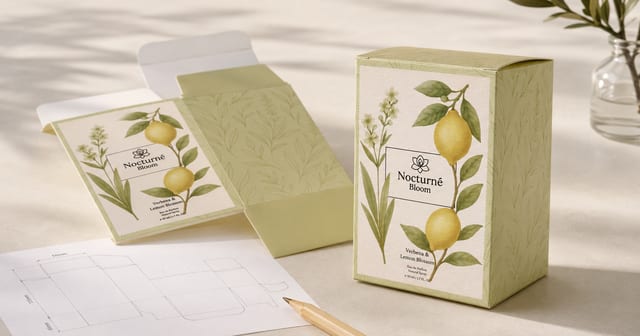
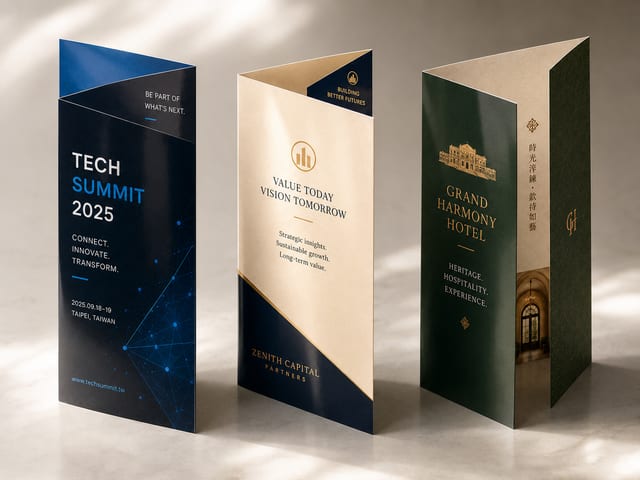
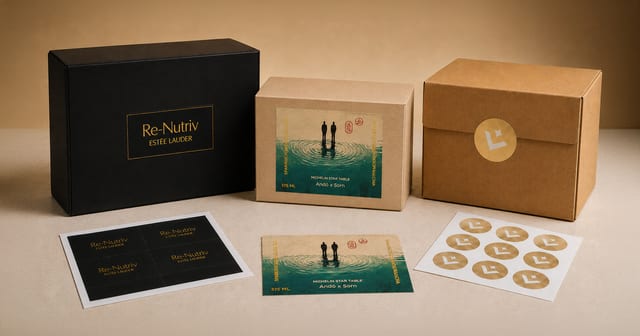
In a post-digital world drowning in social ads and email blasts, your customers are tuning out — and the numbers prove it. Around 88% of marketers say audiences are worn down by digital content, 75% of consumers feel they see too many ads and promotional emails every day, and 86% suffer from "banner blindness," scrolling past web ads without a second glance. A physical mail piece does the opposite: its tactility and sense of exclusivity make a customer feel singled out — and across every generation, direct mail is viewed as warmly as digital channels, with well-designed pieces converting better than email.
As digital printing and print-on-demand (POD) have matured, small-batch, personalised packaging and direct mail have become fully customisable — reaching the right people precisely while easing the pressure on inventory and budget. This guide walks through the digital-fatigue backdrop, the strengths of direct mail and POD, creative design essentials, local mailing sizes and costs, a real campaign, a checklist and an FAQ — everything you need to launch a high-return direct mail campaign in Hong Kong fast.
Why does the post-digital era call for direct mail?
- Digital fatigue is deepening: 88% of marketers point to customer burnout from too much digital advertising, and 75% of consumers agree they "see too many ads and promotional emails every day."
- Cross-generational appeal: 74% of Gen Z say physical experiences matter more than online ones, 59% of 18–24s feel direct mail usually contains "a good offer that's right for me," and 91% of recipients have converted on a direct mail piece within six months.
- Open rates and ROI: direct mail averages an 80–90% open rate, versus 20–30% for a well-run email. Adding direct mail to a multichannel mix lifts overall ROI by 12%, and integrating direct mail with digital channels has been shown to raise sales by 27% and grow customer acquisition by 40%.
- The personalisation effect: printing the recipient's name on a mail piece helps lift repeat purchases; 84% of consumers are more likely to open personalised mail, and 30% will contact the business about what's inside.
These figures all point to the same thing: once people learn to ignore digital ads, the scarcity and exclusivity of a physical mail piece grab attention effectively. In Hong Kong especially, mail in the letterbox rarely goes unnoticed — giving you a full-frame way to put the product a customer needs right in front of them.
Personalised printing and POD: the small-batch advantage
Today, digital printing and print-on-demand (POD) have erased the old minimum-order barrier: even a run of just 100 mailers can be produced at a sensible cost. For businesses, that brings several benefits:
- Cost control: produce only what you need, avoiding inventory and paper waste — and your postage works harder too.
- Custom content: draw on your CRM or membership data to print each recipient's name, a personal promo code, or even entirely different content on every piece, creating a genuine "sent just for you" feel. Personalised direct mail has been shown to lift response rates and win more sales.
- Fast iteration: because POD prints in small quantities, you can trial a piece on one segment before rolling it out — making it easy to test layouts or offers quickly and adjust for the next send.
We recommend pairing staggered sends with A/B testing: mail two designs to a small list first, see which wins on open and response rates, then scale up the winner. With POD, this kind of testing is cheap and efficient.
How to plan a targeted direct mail campaign
1. Define your target list
Start by pinning down exactly who you want to reach, for example:
- Lapsed customers who haven't purchased in the last six months
- New members who've signed up but not yet ordered
- Specific buying patterns (high-value items, or particular festivals and occasions)
Combine customer data with behavioural analysis to build your mailing list. Avoid blasting too many irrelevant segments at once — that's how you maximise return on investment. Hong Kong law also requires you to respect personal data, so check that customers have opted in to marketing mail before you send.
2. Design eye-catching, easy-to-read packaging and messaging
Remember: consumers typically give you just 3–5 seconds to scan. Keep these in mind when you design:
- Visual hierarchy: make the headline large and bold, with a second tier of text explaining the offer or CTA. Layer information line by line to guide the eye, and don't cram in too much copy.
- Colour contrast: choose high-contrast colours that stay on brand. For an eco theme, natural textures or earth tones work well; to really turn heads, consider the bright or gradient colours trending in 2025.
- Tactile finishes: spot UV, foil stamping or embossing on a mailer not only add a premium feel but leave a memory at the fingertips. Luxe print treatments help a brand stand out, though they do raise costs — so they suit higher-priced products.
- Personalised messaging: opening with the recipient's name, or adding other personalised details, lifts response rates.
- A clear CTA: tell the recipient exactly what to do next — "Claim your offer now" or "Bring this mailer in-store to redeem a gift." Make the CTA prominent and easy to act on.
3. Integrate online interaction
Blend offline and online: your mailer should link back to your digital channels.
- QR codes / NFC tags: let recipients scan straight through to a dedicated page, enter a prize draw, or book a service. Interactive packaging is a rising trend and lifts brand engagement.
- Personalised short links / PURLs: use a Personalised URL to track who converts, making ROI easy to analyse.
- Follow-up: after the mailer goes out, reinforce it with an EDM or SMS reminder, or keep it visible through retargeting ads. Research shows that integrating online with direct mail raises response rates, drives more site visits and generates more leads.
4. Set your sending rhythm and test
Pair big moments (anniversary sales, product launches) with smaller promotions on a quarterly or monthly plan. We suggest:
- One or two large mailers per quarter — a product launch or seasonal offer, say — with richer content and a gift;
- A small "reminder" mailing each month, such as a birthday gift, member perk or limited-time discount;
- A/B testing different layouts, copy or offers, then scaling up the best-performing version for the wider send.
5. Follow up and analyse
After sending, keep an eye on open rates, QR scan rates, conversion and response rates so you can fine-tune your strategy. For instance, if version A has a high open rate but low conversion, the CTA may not be compelling enough; if the open rate is low, revisit whether the cover design really stands out.
Hong Kong mailing sizes and postage guide
Hongkong Post classifies local mail clearly, with different sizes and weights mapping to different postage. Here are the main categories:
| Category | Size limits | Max weight | Starting postage (ordinary mail, 2025)hongkongpost.hk |
|---|---|---|---|
| Small letter | Min 90×140 mm; max 165×245 mm, thickness ≤ 5 mm | ≤ 50 g | 30 g: HK$2.2; 50 g: HK$3.3 |
| Large letter | Min 90×140 mm; max 305×381 mm, thickness ≤ 20 mm | ≤ 500 g | 50 g: HK$4.1; 100 g: HK$5.4; 250 g: HK$7.9; 500 g: HK$14.6 |
| Packet | Length + width + height ≤ 900 mm, longest side ≤ 600 mm | ≤ 2 kg | 100 g: HK$5.6; 250 g: HK$8.2; 500 g: HK$15.5; 1 kg: HK$30; 2 kg: HK$48 |
Tip: postage is charged in weight bands — go one gram over and you jump to the next tier. Aim for the 30 g, 50 g and 100 g breakpoints to avoid unnecessary charges.
Packaging tips
Local guidance suggests keeping these in mind when you pack:
- Right-size it: choose an envelope or box that just fits the contents, so you don't add weight — and postage — with oversized packaging;
- Protect the contents: for cards or small gifts, use a bubble mailer or corrugated board;
- Clear addressing: print sender and recipient details clearly on the front to avoid returns caused by illegible writing;
- Eco materials: consider FSC-certified or recycled paper; if you need a poly bag, choose a recyclable material and skip any excess plastic.
Local case study: a health brand's member direct mail campaign
A Hong Kong health-supplement company wanted to reactivate a dormant member list, so it printed 5,000 member welcome mailers on a POD basis. The design used a vibrant gradient and hand-drawn elements to echo a healthy, energetic image. Each cover carried the member's name, and an inside QR code let them claim a free gift box. The piece measured 160 × 230 mm and weighed about 45 g — within the small-letter first-weight band, at HK$2.2 postage.
How did it do? Three weeks after sending:
- A 25% QR scan rate;
- Around 22% of scanners went on to order, lifting the overall conversion rate 2.5×;
- Customers said things like "It was a lovely surprise to get a physical package," and loyal users shared it on social media.
Small-batch mailers, paired with personalised design and online interaction, can boost member engagement — and at a more flexible cost.
Quick checklist: before you launch your direct mail campaign
- ✅ Confirm your target audience and comply with privacy regulations
- ✅ Use personalised elements (names, matched offers) to lift open rates
- ✅ Design a clear visual hierarchy and a bold CTA; don't overload the message
- ✅ Add a QR code or dedicated link to track behaviour and responses
- ✅ Keep size and weight within a postage band to reduce cost
- ✅ Choose the right materials to protect the item without wasting resources
- ✅ Stagger sends and run A/B tests to refine copy and design
- ✅ Track scan and conversion rates after sending, and keep optimising
FAQ
Q1: How should I split my budget between direct mail and digital marketing?
A: Go multichannel: keep part of your budget on digital ads for brand awareness, and put 20–30% into direct mail. Studies show integrating direct mail can raise sales by 27% and grow customer acquisition by 40%. On a tight budget, start by mailing a small batch to your highest-value segment to gauge the response, then decide whether to scale up.
Q2: Isn't direct mail expensive?
A: Take Hongkong Post: a small letter under 30 g costs just HK$2.2 in postage. Controlling size and weight is the key to keeping costs down. Paired with POD printing, you only print what you need, sharply cutting waste.
Q3: What if my list is incomplete or has wrong addresses?
A: Verify member data before sending, and confirm by email or SMS where needed. You can also use Hongkong Post's address-verification service to reduce returns.
Q4: Which industries suit direct mail?
A: Retail, health products, education, non-profits and more can all use direct mail to reactivate members or attract new customers. Brands with large membership bases or regular promotions especially benefit from staying in touch this way.
Q5: What season is best for a direct mail campaign?
A: Prime moments include New Year, Valentine's Day, Father's Day and Mid-Autumn Festival, plus brand anniversaries and product launches. Send 2–3 weeks ahead to leave time for opening and response.
Ready to experience the magic of direct mail? Talk to the Printing Banana team — we'll help you navigate mail sizes and postage, design and proof your piece, and estimate the cost, with delivery across Hong Kong and Macau. Message us on WhatsApp at +852 3001 5678 (English is fine) and let your brand cut through the noise in the post-digital era, for higher open rates and more sales.