When you first look into printing a book or booklet, you quickly discover there are far more binding methods than you'd expect — and it's rarely obvious which one to choose. In this guide, Printing Banana walks you through each of the common binding options in detail, so that by the end you'll know book binding as well as we do.
The most common option you'll see on the market is saddle-stitch binding — the method used for booklets and magazines. If you need to hang the book up, loop stitching (Ω binding) is your best choice; it's very similar to saddle stitch, the main difference being the raised loops along the spine. Both suit lower-page-count books, magazines and price lists. For higher page counts, perfect binding is the way to go — most of the books we handled as students were perfect-bound. The drawback of perfect binding is that opening it repeatedly can cause it to come apart; to solve that, choose spiral binding or section-sewn (thread-sewn) perfect binding.
Below we walk through several of the most commonly used binding methods:
1. Saddle stitch
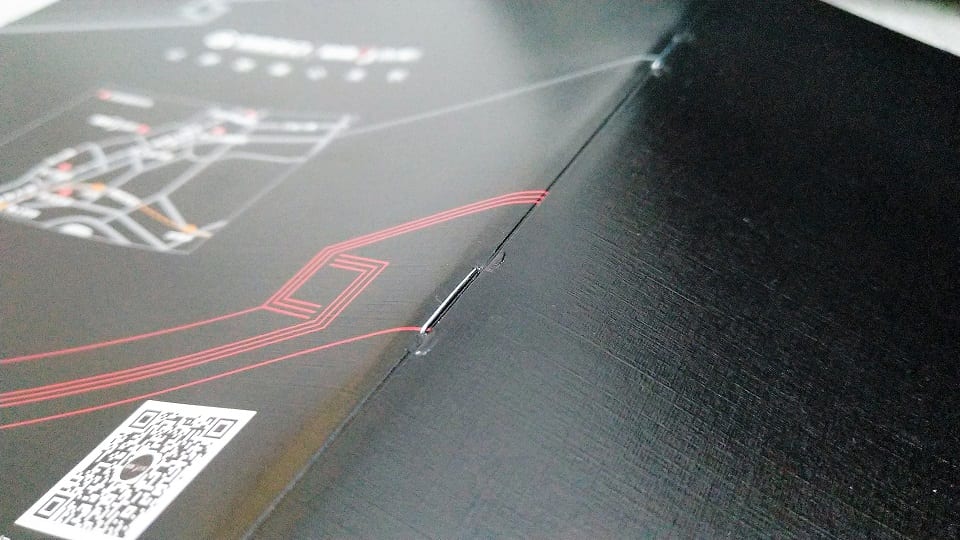
Saddle stitching is the most common way to bind a booklet. The printer lays out and prints the pages by computer, then runs the printed sheets through a machine that staples them at the correct spots along the fold line at the spine. Finally, the sheets are folded and trimmed on three sides to finish. Note that saddle stitch works in four-page sections, so the finished page count must be a multiple of four to be printable.
If you fall short, you can leave the inside front or back cover blank — that keeps the book reading smoothly while still meeting the multiple-of-four requirement.
Best for: product catalogues, promotional booklets, price lists, magazines
Page count: 8–64 pages
Common stocks: matte art paper, woodfree (book) paper, gloss art paper (its shine can reflect light and hurt readability, which a matte lamination avoids)
2. Perfect binding
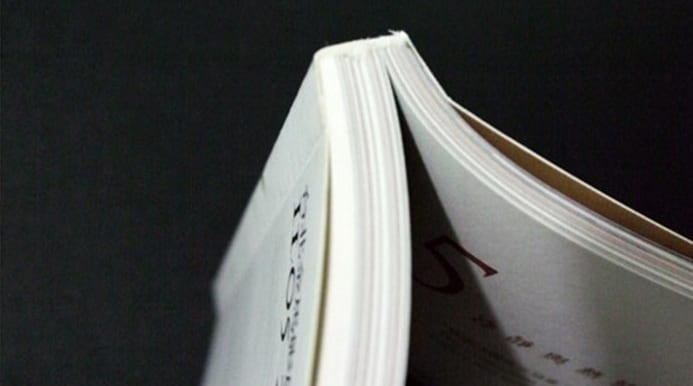
Perfect binding is another common method. The pages are folded in page order and stacked, then bonded together with hot-melt glue. A roller presses the glue firmly onto the spine, and the cover is then glued onto the bound stack. Because perfect binding places far fewer limits on page count and is quick to print and bind, many mass-produced books use it. Textbooks, instruction manuals, staff handbooks and other books running to hundreds of pages are mostly perfect-bound.
The biggest issue with perfect binding is that if the glue is poor quality or poorly applied, pages can work loose after the book has been opened many times; low-grade glue also ages faster in the cold, which leads to pages detaching. And if you press down hard on the centre join while reading, the spine can crack and pages can fall out.
Best for: textbooks, travel guides, novels, staff handbooks
Page count: 50–350 pages
Common stocks: matte art paper, woodfree (book) paper, gloss art paper (its shine can reflect light and hurt readability, which a matte lamination avoids)
3. Section-sewn (thread-sewn) perfect binding
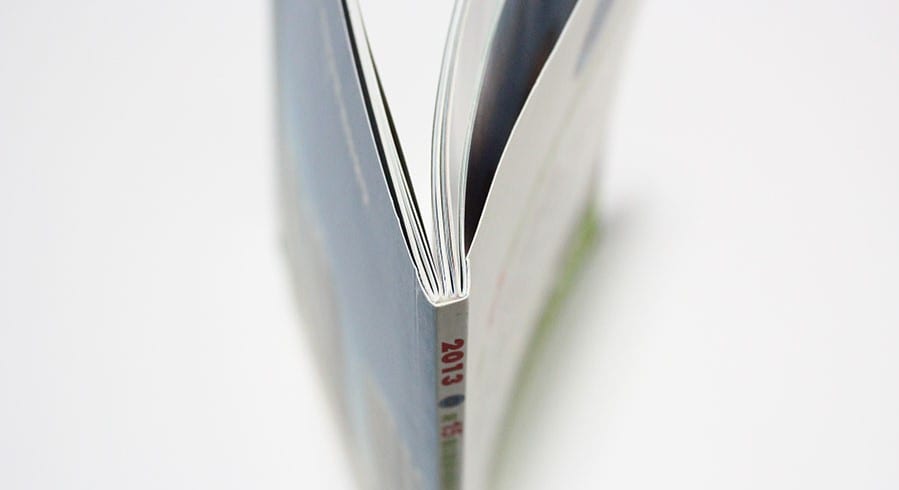
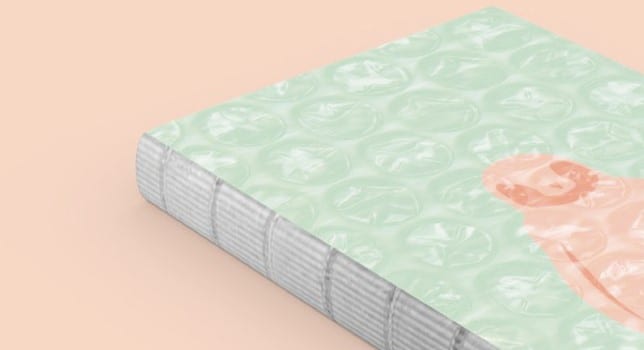
Section-sewn perfect binding is essentially an upgraded version of perfect binding; the difference is the sewing. Adding a sewn thread makes the binding more durable and far less likely to come apart after repeated reading. So if your book has a high page count, Printing Banana recommends section-sewn binding. Because it requires sewing holes and a scored channel along the spine, the finished book is about 2mm thicker than standard perfect binding, and slightly wider too. Unless you press hard on an open book, the stitching won't be visible during normal reading.
Best for: textbooks, travel guides, novels, staff handbooks
Page count: 45 pages or more
Common stocks: matte art paper, woodfree (book) paper, gloss art paper (its shine can reflect light and hurt readability, which a matte lamination avoids)
4. Spiral (coil) binding
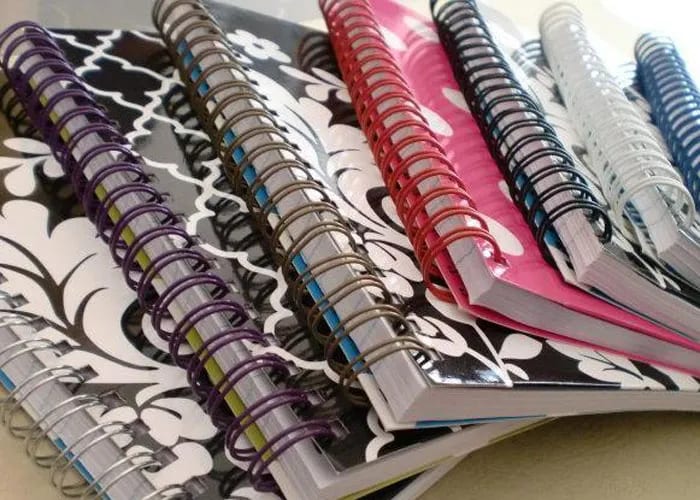
Spiral (coil) binding will be familiar to anyone who's been a student — the notebooks, diaries, monthly planners and calendars we use every day are all spiral-bound. Coil binding doesn't demand much of your layout; printing to the standard margins of a Word file is enough. The printer punches holes along the edge and then threads the coil through. Coils come in two main types — metal wire and plastic — and the punched holes can be round or square.
Best for: notebooks, diaries, monthly planners, calendars
Page count: around 10–100 pages
Common stocks: matte art paper, woodfree (book) paper, gloss art paper (its shine can reflect light and hurt readability, which a matte lamination avoids)
5. Hardcover (case) binding
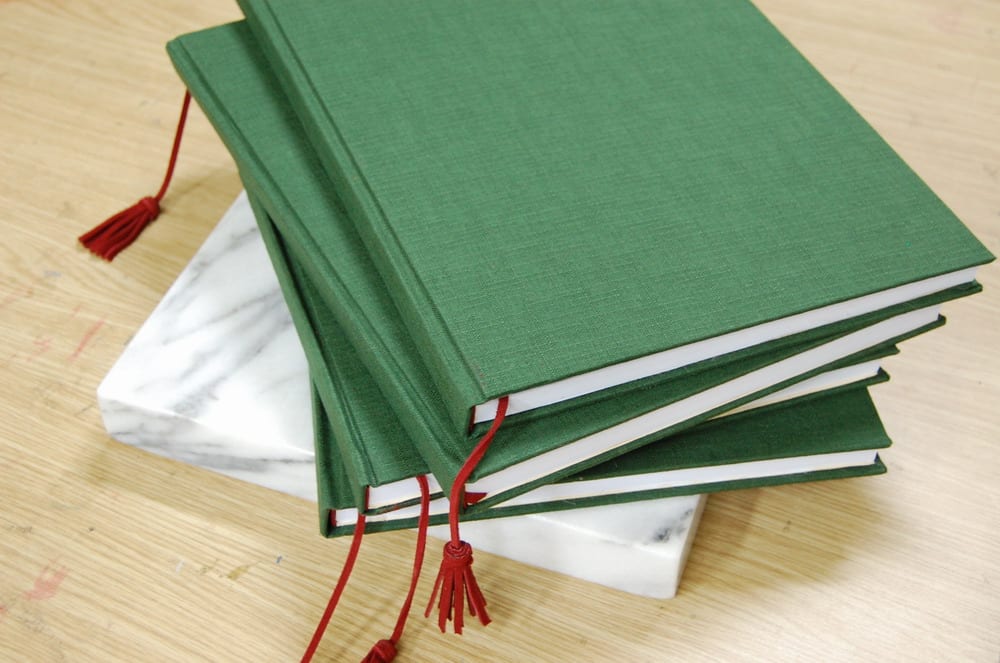
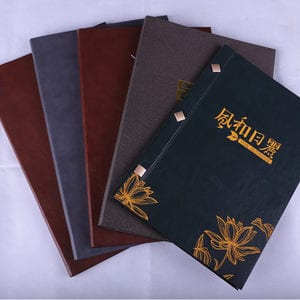
Hardcover binding is the most complex and most expensive of all the binding methods. The process involves many different steps, and there are relatively more choices for the customer to make — the case, the inner pages, the finishing, and so on. Most hardcover covers are made from rigid board — think novels, textbooks and commemorative books. For premium, keepsake pieces, a leather case is usually recommended. The inner section is made up of the body pages and the endpapers (butterfly pages). Endpapers are the pages between the cover and the text block; besides their decorative role, they reinforce the join between cover and inner pages, so a tougher paper is used to make them.
Hardcover production flow:
collating the sheets, folding, sewing, gluing, trimming on three sides, reinforcing and lining the spine, mounting the cover, scoring and setting the joint, quality check, packing.
Best for: books, memory albums, wedding albums, menus, restaurant menus, school-anniversary publications
Page count: 60–400 pages
Common inner-page stocks: matte art paper, woodfree (book) paper, gloss art paper (its shine can reflect light and hurt readability, which a matte lamination avoids)
Common cover materials: rigid board, leather case
Need help with your book design, or have a specific question? Talk to the Printing Banana team directly — we deliver across Hong Kong and Macau, and English is fine.
WhatsApp us at +852 3001 5678