Embossed and debossed business cards have always been a personal favourite. They don't shout for attention the way gold foil or 3D UV does — but paired with the right design, the finished result is absolutely first-class. Embossing and debossing are really two sides of the same craft: both add dimension to an otherwise flat card by using heat to press the sheet against a relief die, deforming the paper into a raised or recessed shape. Three approaches are the most common today — blind (colourless) emboss/deboss, coloured emboss/deboss, and foil emboss/deboss. Which one you reach for depends on the design, so to help you see what each achieves, below we break down a range of real examples found online.
Further reading: Emboss & Deboss Print Basics — and Handy Tips for Preparing Your Artwork
Blind (Colourless) Emboss & Deboss
A blind emboss or deboss looks wonderfully clean and gives a simple-but-powerful impression. It's most often used on a logo, leaving a deeper impression of the company on whoever receives the card. In English it's called "blind embossing," because — like the raised type that helps blind readers — it carries no ink at all.
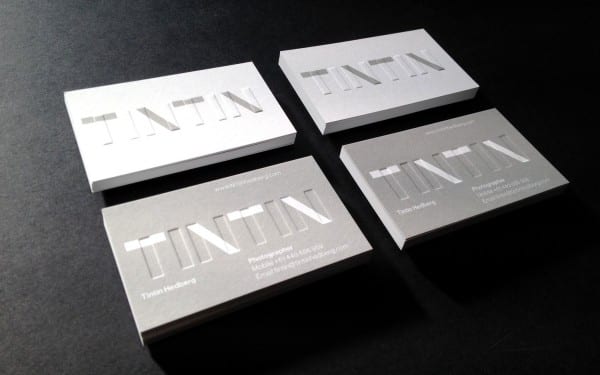
Example 1 — Blind Emboss

Card stock: 300gsm Yuanmei paper
Analysis: After embossing, the front is raised while the back is pushed in. So when you design, keep the text on both sides clear of the embossed area — otherwise any type or artwork sitting over it becomes hard to read. Here, because the emboss occupies most of the card, the content is forced to stay lean and punchy: only the essential information remains.
Example 2 — Blind Emboss
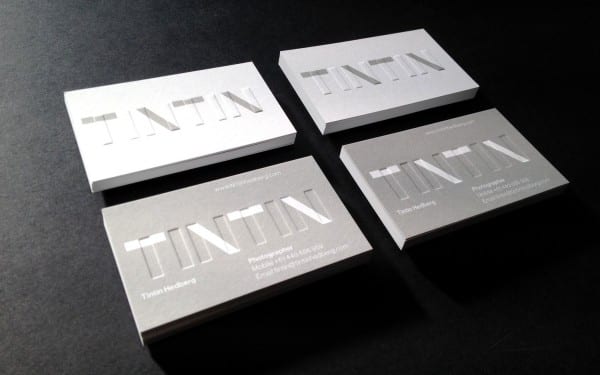
Card stock: 300gsm pure white eggshell stock
Analysis: At 300gsm this isn't a thick card, which makes it well suited to embossing — thin stock actually embosses more cleanly than heavy stock. The design here is genuinely inventive: the designer played with the way the embossed panels overlap the lettering so that the six letters "TINTIN" read correctly on both the front and the back. The emboss is made up of eight vertical rectangles, and filling the front and back with different colours makes the card feel even more special. Most designs treat the raised side as the front and let the back carry a mirror image of the logo — but if the logo isn't left-right symmetric, that recessed impression on the back can look awkward. If you'd rather not sacrifice the recessed side, take a cue from the design above.
Example 3 — Blind Deboss
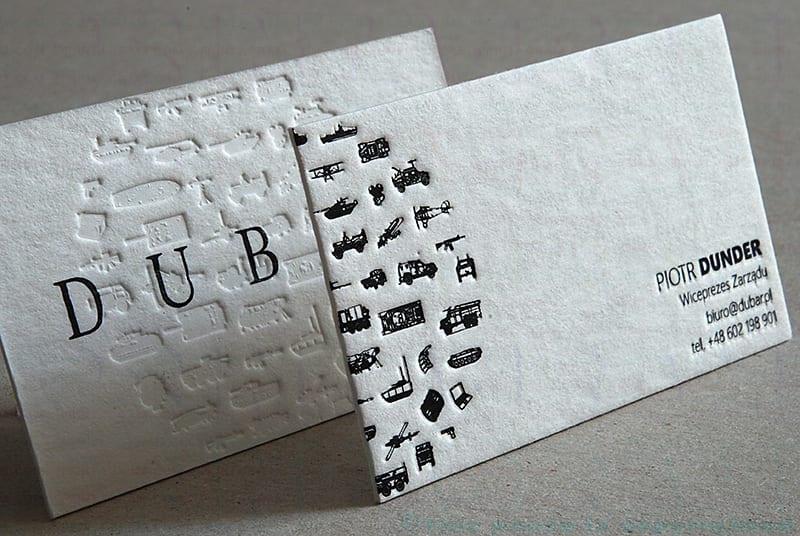
Card stock: 600gsm cotton card
Analysis: At 600gsm this is a thick card, which makes it ideal for debossing — there's no risk of pressing so deep that the impression bulges out on the reverse. As you can see above, the deboss on the logo side doesn't intrude on the information side behind it. That gives the designer more room to work with, and keeps the details side clean and easy to read.
Coloured Emboss & Deboss
A coloured emboss or deboss combines printing with the press work, so the raised or recessed area also carries printed colour. It demands more of the print process: if registration isn't tight enough, the colour can stray outside the embossed or debossed area. Why does it drift? Because the print and the press are two separate passes — the ink is laid down first, and the emboss or deboss is struck afterwards — so any slip between them shows up as colour running past the edge.
Example 1 — Coloured Emboss
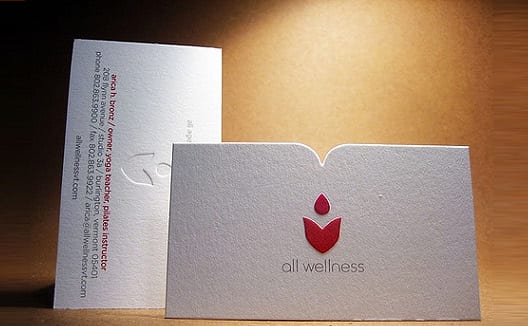
Card stock: 300gsm eggshell stock
Analysis: The designer embossed the logo on the front and printed that raised area in red, giving the whole card real depth. Because the logo is a symmetrical shape, its outline still reads clearly when you look at the information side. Worth noting, too, is the V-shaped die-cut on the card: the die-cut echoes the logo, lifting the whole piece.
Example 2 — Coloured Deboss
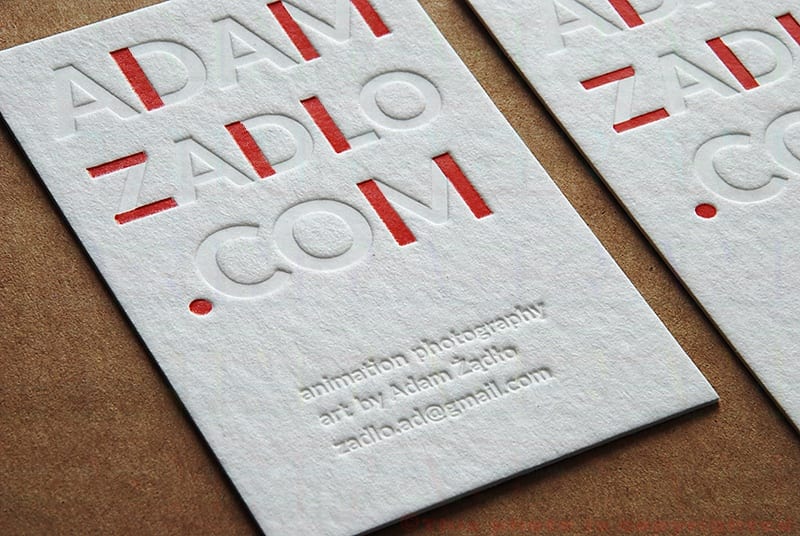
Card stock: 600gsm cotton card
Analysis: Here the designer combined a blind deboss with a coloured deboss to make the web address stand out in a playful way — only the vertical lines, horizontal lines and dots are red, and everything else stays inkless. Good design keeps stepping outside the box and surprising the viewer; that's what leaves a lasting impression. That said, we wouldn't recommend debossing your information copy, because that text usually sits tightly together and isn't set very large. When type is small or the line and letter spacing is tight, debossing can blur it — and the whole point of a card is to hand over your details. If they aren't legible, the card has lost its purpose.
Foil Emboss & Deboss
Foil emboss/deboss combines foil stamping with the press work. There are two ways to do it: foil first and then emboss, or foil and emboss in a single pass. The former is the more common approach and the cheaper one. A foil emboss or deboss feels more luxurious than either of the other two techniques — and since plenty of clients feel flat foil has become too common, this is the finish that satisfies them.
Example 1 — Foil Emboss
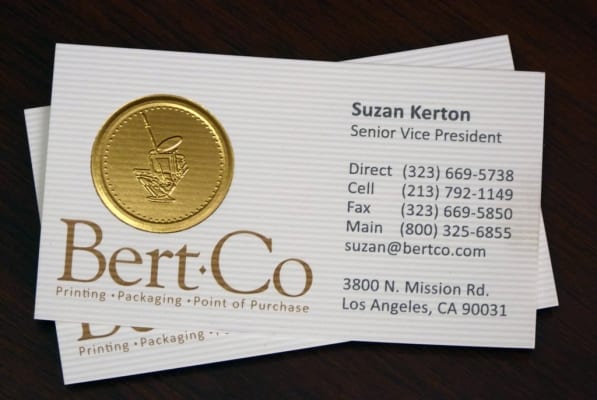
Card stock: 300gsm Conqueror paper
Analysis: The designer applied an embossed foil to the logo, and the finished effect looks just like a wax seal. Used well, embossed foil delivers a genuinely distinctive feel — even applied to nothing more than lettering, it makes the type stand out with ease.
Example 2 — Foil Deboss
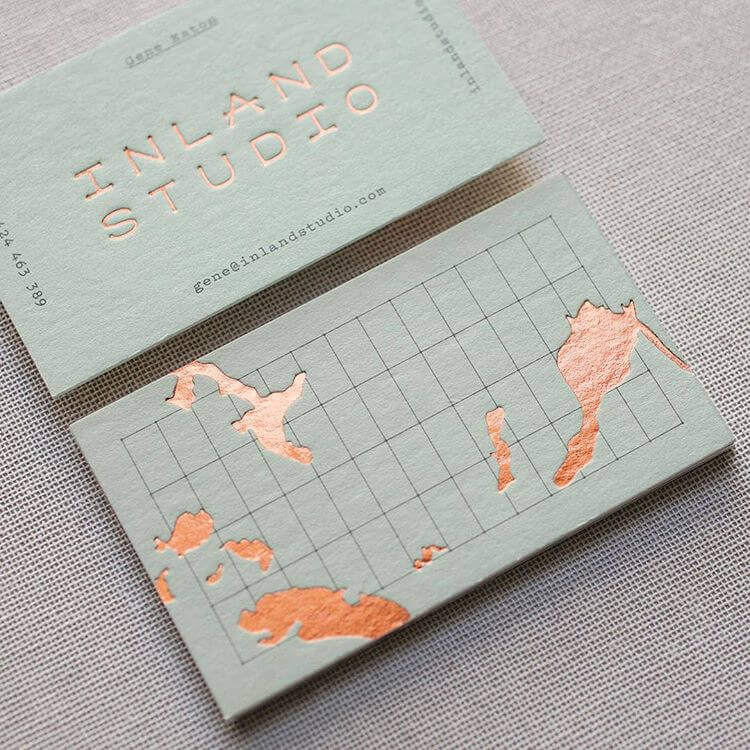
Card stock: 600gsm cotton card
Analysis: Debossing cotton card is common enough, but a debossed foil is rarer. This design uses debossed foil for the text on the front and the topographic pattern on the back — in rose gold, a longtime favourite. (Rose gold comes in several different shades, so check with your printer before you go to press to make sure it matches what you have in mind.) Even the simplest debossed-foil lettering already looks beautiful; make good use of card finishing and you can save yourself a lot of work on the design itself.
Ready to give your own cards a tactile finish? Our cotton business cards take debossing and foil beautifully, with delivery across Hong Kong and Macau. WhatsApp us at +852 3001 5678 (English is fine) and we'll help you pick the right stock and finish.
(Some of the images shown here were found online; if there's any issue with them, please get in touch with the site owner.)