The first decision in mooncake box packaging isn't "which paper looks best" — it's what goes inside the box, how it opens, whether it needs a paper bag or stickers, and whether you have enough detail to quote and proof. Once the mooncake size, box style, paper, finishing and use-by date are settled, the design and quoting that follow take far fewer rounds of back-and-forth.
If you're working on Mid-Autumn packaging, follow this path: start with the big picture of mooncake box packaging here; if you want to focus on a premium feel and paper stock, read choosing premium paper for mooncake boxes; and before you hand off artwork or ask for a quote, run through the pre-order checklist for mooncake boxes to check sizes, die-lines, fold lines and proofing details.
Define the job first: gifting, retail shelf, or corporate thank-you?
They're all called mooncake boxes, but different uses lead to completely different packaging decisions. Retail needs shelf impact and a box that feels stable in the hand; corporate gifting has to serve brand image, a greeting message and bulk distribution; online or small-shop pre-sales should think first about shipping, protection and supporting materials.
Retail or trade-show: the front of the box has to read at a glance — flavour, brand name and visual theme shouldn't be scattered.
Corporate gifting: the logo, greeting message, how the recipient feels and a matching paper bag usually matter more than a complex structure.
Online or small shop: think first about whether the packaging is easy to store, ship and photograph — you don't have to start with the most complex box shape.
If you're still planning a full Mid-Autumn baking-packaging set, start with our baking packaging and consider the mooncake box, paper bags, stickers and small cards along one path.
Six details to gather before you ask for a quote
A mooncake box is an enquiry-based product; "make it look nice" isn't enough to start from. The sooner you spell out size, quantity, use and the state of your artwork, the easier it is for our team to work out whether to ask about paper, box shape and finishing, or to chase down die-line details first.
Mooncake details: the rough size, thickness, weight and quantity of each mooncake, and whether you already have an insert tray or wrapper.
Box style: lid-and-base, drawer, book-style, display or another opening method; if you're not sure, a reference image is fine to start.
Use case: retail sale, corporate gifting, event gifts, online fulfilment, or a limited promotional run.
Design status: you already have AI/PDF artwork, only a logo, or you're still hunting for a style reference.
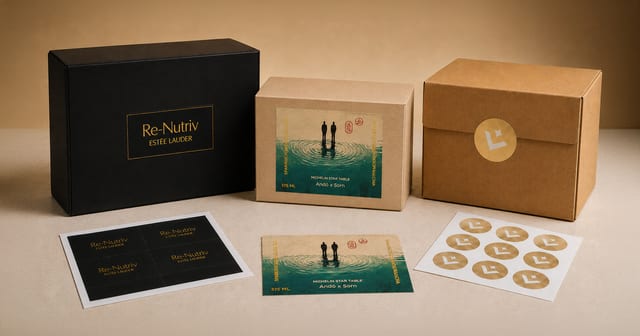
Supporting materials: whether you also need paper bags, seal stickers, thank-you cards, flavour cards or product labels.
Estimated quantity and timing: give a rough range so we can judge whether to proof first or work in stages.
This step isn't about knowing every printing term at once — it's about being clear on product, use case, design and quantity. When you need a human eye on it, send the details to Printing Banana over WhatsApp for packaging enquiries (English is fine).
Paper and structure: don't memorise specs — ask what the box has to hold
White card, specialty papers, grey board with a laminated face — each has its use, but a mooncake box shouldn't be decided on paper name or GSM alone. What you really need to judge first: how many mooncakes the box holds, whether it needs rigidity, whether it should feel premium to the touch, whether it will pair with a paper bag or be shipped, and what experience you want when it opens.
If budget is the priority: settle the mooncake size, quantity and basic visuals first, and don't pile on every finishing option from the start.
If a premium feel is the priority: paper, colour, logo placement, white space and the opening moment should feel consistent — not just picking one "expensive paper".
If stable support is the priority: box shape, insert tray, fold lines and glue tabs have to be looked at together, not just the flat artwork.
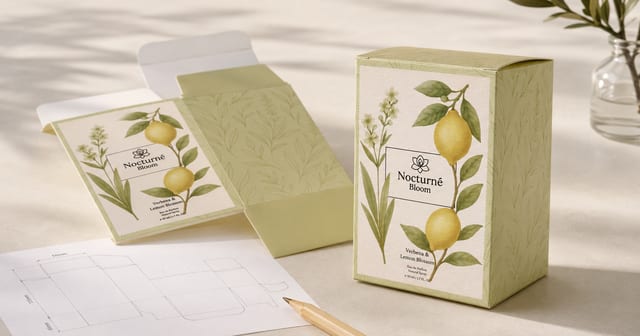
Paper feel is hard to judge from a screen. If you're comparing textures, start with a paper sample pack, then decide whether the box cover, insert tray, paper bag and stickers should share one visual language.
Printing and finishing: keep one hero, let the rest support
Hot foil, lamination, embossing, spot UV, a window cut-out and a magnetic closure can all give a mooncake box more depth — but adding all of them doesn't automatically read as more premium. For a small or mid-size brand, or for corporate gifting, it's more practical to pick one hero first: make the logo stand out, give the box a tactile surface, build a sense of ceremony on opening, or make it photograph clearly.
Logo as hero: keep the finishing in one area so the headline, pattern and brand name don't fight for attention.
Paper as hero: hold back on colour and pattern so the paper's own texture and feel get seen.
Unboxing as hero: structure, insert tray, ribbon, greeting card and the order things sit in all need to be thought through together.
Finishing artwork is best kept on separate layers or clearly labelled — especially hot foil, embossing, spot UV, die-lines, fold lines and glue tabs. These aren't details you tack on after the design is done; they're where quoting and proofing most often stall into back-and-forth.
Mooncake box timeline: prepare in four stages from design to dispatch
The real risk with mooncake box packaging isn't "not having chosen the nicest paper yet" — it's cramming design, structure, proofing and dispatch into the same stretch of time. Actual lead time varies with structure, quantity, finishing, proofing and the state of your files, so instead of pinning a fixed turnaround, here are the work stages to check whether you're ready.
Before design: confirm mooncake quantity, size, whether there's an insert tray, the brand logo, flavour information, barcode, QR code and greeting message.
Before proofing: confirm the box style, paper direction, die-line, fold lines, glue tabs and finishing positions — not just a flat mock-up.
Before mass production: check text, colour, logo, safety margins, finishing artwork and the feel of the sample; every change needs a final version.
Before dispatch: confirm whether you need paper bags, seal stickers, thank-you cards, a corporate recipient list or staggered delivery.
If you're already gearing up for the Mid-Autumn window, pull the above into a one-page brief before handing it to your designer, colleagues or the Printing Banana team. That gets you to a quotable state far faster than sending reference images alone.
Artwork and proofing: die-lines, fold lines and content placement go wrong most
Designing a mooncake box is more than making the flat art look good. The box folds, glues and opens; if important content sits in the wrong place, it can end up crushed under a fold line, hidden by a glue tab, or the QR code turns out too hard to scan on the physical box. These aren't problems to catch for the first time off the press — check them item by item before quoting, proofing and handing off artwork.
Sizes: keep the inner box, mooncake, insert-tray and outer-box dimensions clearly separate.
Die-line: mark cut lines, fold lines, glue tabs and the opening direction clearly.
Safety margins: keep the logo, headline, flavour name, barcode and QR code off the fold and edge zones.
Files: images, fonts, colour mode, finishing artwork and mock-up all supplied together, so no one has to keep chasing details.
If you're close to handing off, run the final check with the pre-order checklist for mooncake boxes; if you're still at the start, get your packaging direction, sizes and enquiry details in order first.
Turn your mooncake box into an enquiry brief
If you'd rather not go back and forth too many times, organise it with the format below. It's not a formal quote sheet — it's a starter brief that lets our team, your designer and the print floor understand the requirement fast.
| Item | What to provide |
|---|---|
| Product direction | Mooncake box packaging / Mid-Autumn gift box / corporate gift packaging |
| Mooncake details | How many per box, single-piece size, whether an insert tray or individual wrapper exists |
| Box style ideas | Lid-and-base / drawer / book-style / display / undecided; include a reference image if you have one |
| Visual direction | Brand colours, logo, theme copy, whether it needs a premium or youthful feel |
| Finishing ideas | Hot foil, embossing, spot UV, window cut-out, magnetic closure or other; write "want to compare" if undecided |
| Supporting materials | Paper bags, seal stickers, thank-you cards, flavour cards, product labels |
| Quantity and timing | Rough quantity, target use-by date, whether you need a proof first |
| Existing files | AI / PDF / logo / reference images / sketches |
Once it's organised, send it to Printing Banana over WhatsApp for packaging enquiries. If you just want to look at the baking-related landing page first, see baking packaging; if paper texture is your focus, start with the paper sample pack.
FAQ
Should I decide paper or box shape first for mooncake box packaging?
Usually you decide the contents and use case first, then the box shape, and only then narrow down paper and finishing. How many mooncakes go in, whether there's an insert tray, and whether it's gifted or shipped all directly affect the paper and structure call.
Can I ask for a mooncake box quote before I have finished artwork?
You can ask about direction, but provide the mooncake size, quantity, a box-shape reference, the use case and an estimated quantity. "I want to make a mooncake box" on its own usually still needs a lot more detail before anyone can take it further.
How does a paper sample pack help with a mooncake box?
A paper sample pack lets you compare paper feel, how colour reads and the sense of brand quality first — especially useful for a brand still deciding between a premium, minimal, traditional or youthful direction. It doesn't replace a proof, but it takes the abstraction out of early paper discussions.
Does a mooncake box need lots of finishing to feel premium?
Not necessarily. A premium feel usually comes from the paper, white space, logo placement, colour consistency and the unboxing experience. Finishing should serve the main visual, not all pile onto the box face.
Which materials should I look at first for mooncake box packaging?
If you're still starting out, organise the overall packaging direction first; if you've begun comparing textures, look at paper and finishing next; and if you're ready to order, use a checklist to verify sizes, die-lines, fold lines and artwork details.
Time to prepare your Mid-Autumn mooncake box
When you're preparing a Mid-Autumn mooncake box, the next step isn't to lock in every material at once — it's to get the mooncake size, quantity per box, box style, artwork status, supporting materials and target use-by date in order. Start with baking packaging and a paper sample pack, then send your brief, reference images or artwork to Printing Banana on WhatsApp at +852 3001 5678 (English is fine). We deliver across Hong Kong and Macau.