Most small businesses — and almost every startup — don't have an in-house design team, so the bulk of their design work goes out to a third-party studio or freelancer. That's where a common problem creeps in: every piece comes back in a wildly different style. Some companies don't even keep a master file of their own logo, and with no fixed visual identity, their brand image takes a real hit.
For a small business, outsourcing to a third-party designer is the most budget-friendly route: you pay per project, so it stays flexible. And every SME wants to squeeze the most value out of each engagement.
If you're about to brief a designer, this article walks you through how to communicate with them effectively. We gathered feedback from a range of clients — one SME client in particular shared a lot — and boiled it down to four things to prepare or keep in mind before you start talking:
- Build a design brief;
- Agree on clear expectations;
- Communicate often;
- Allow enough time for revisions.
Build a Design Brief
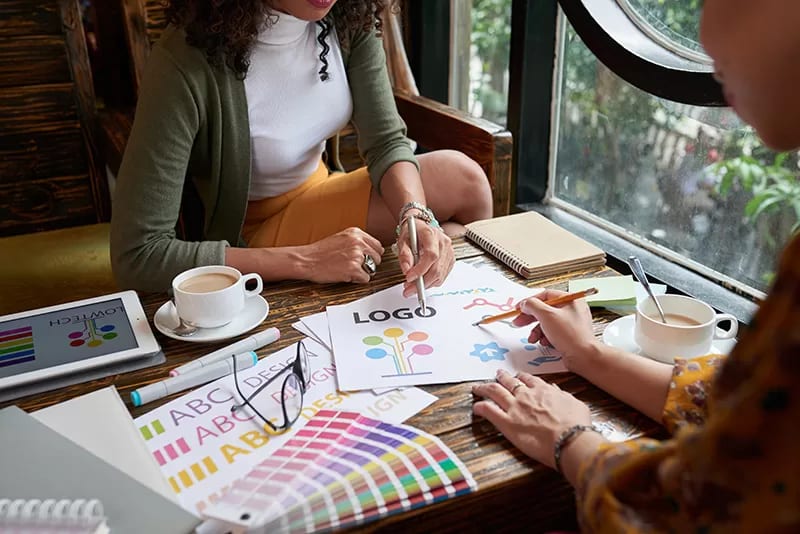
Remember: no designer can read your mind, no matter how seasoned or creative they are. If they don't have a clear grasp of what you've given them, they can't turn your vision into reality. "Before you start designing, the most important thing is to be clear about what you actually need from the design," advises our client Jason. And the best way to do that is to create a design brief.
A design brief should be a detailed document that captures every key detail of the work. When you talk to your designer, it lowers the cost of communication. Jason reckons the more specific the brief, the easier the designer's job.
"The brief should cover creative elements like your brand colours and visual style, and business elements too — your target audience, your industry, and the purpose of the design," Jason adds.
Drawing on Jason's advice and what other clients told us, here's what a good brief should include:
- Your company mission or tagline
- A description of your company and industry
- An explanation of your products and/or services
- A description of your target audience
- Your brand colours and logo
- Your brand's personality
- Past design work from your company
- Any designs or images you think would suit this project
The more information you provide, the closer the designer's output will land to what you actually want.
Set Clear Expectations
We all carry our own expectations, and we often assume things will simply unfold the way we pictured them. The reality: if you don't spell those expectations out to your designer, you'll usually burn a lot of time on revisions. "You want to give the designer as much creative freedom as possible, but a lot of the time the design will miss the thing you consider most important — because nobody knows what you want better than you do," says Jason. "To avoid any needless misunderstanding and stress, just be clear about the message you want to get across."
One thing both clients and designers often overlook is the way of working. Before the project starts, it's best to ask about the designer's usual process — draft turnaround, review points, working hours, feedback dates and so on — so neither side ends up feeling out of sync. People who don't work in design often assume a design can be done in a day: just get started and it's ready. That's a big misconception. Good design needs time to settle. Understanding the workflow up front cuts down on timing-related misunderstandings.
Most designers aren't handling just one client at a time — they're usually juggling several, and an urgent job elsewhere can hold yours up. You should spell out your situation and your final-copy deadline, and build in time and rounds for proofing. That doesn't just protect the designer; it protects your own delivery timeline too.
Communicate Often

Ongoing communication matters enormously. A designer's craft is presenting your content to your audience in a more beautiful way — but they don't understand how your business actually runs or the goal you're trying to hit. "The worst thing an SME owner can do when working with a designer is assume the designer can read their mind. Just saying you want 'a design that stands out' is no help at all," says Jason.
A designer is not a mind reader; they have no way of knowing what's in your head. A good professional will ask questions to deepen their understanding of your business, of course — but not every designer has that instinct. So communication is the single most important tool: it costs very little yet delivers a great deal. That's exactly why we keep stressing the brief — a good brief makes communication easier.
When you review a draft, give feedback actively — but never fall back on vague put-downs like "I don't like it" or "it looks off." That kind of comment is useless; the designer can't tell which part is actually the problem. Your feedback has to be specific. For example: "This colour isn't lively enough — it doesn't bring out a happy feeling," or "The headline text doesn't pop; could you make the title more prominent?" With comments like these, the designer can explain the reasoning behind the design, or tell you how they'll adjust it next.
Allow Enough Time for Revisions
Most design projects go through at least a few rounds of revisions. Unless you have very few requirements for your own business, the revision stage is unavoidable. "Design is a collaborative process. Even the most brilliant designer rarely nails it in a single draft — unless the client trusts the designer completely," Jason points out.
During revisions, remind yourself that you're not the design expert — the aesthetics should be left to the designer. As you go, share what you like and don't like, but stay open-minded and hear out and respect the designer's point of view. "Design is subjective." As the client you might dislike a particular element — a font or a colour, say — but when your designer chose it based on your needs, that's the moment to talk it through and really understand their thinking.
Good Design Comes Out of Good Communication
No one understands what a client wants better than the client, and no one knows how to express it through design better than the designer. So you have to use effective communication to build mutual understanding on both sides — and that's how great work gets made.