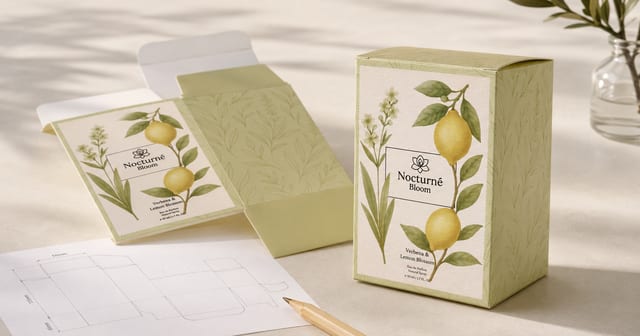
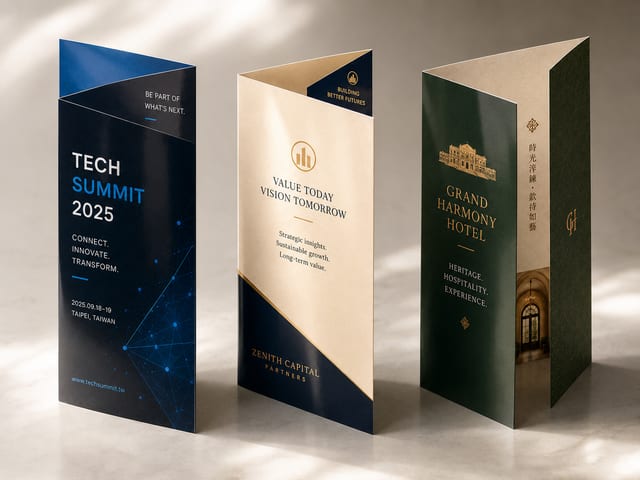
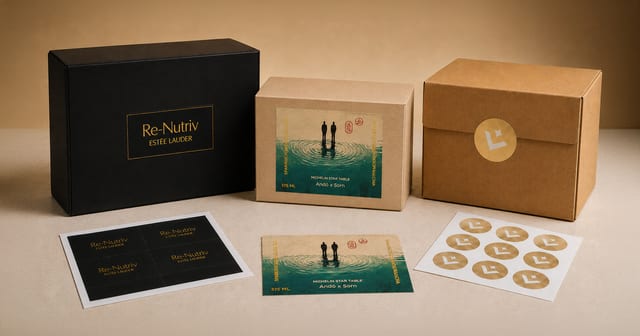
A business card looks simple — but a good one runs through many production steps before it’s finished, spanning the design, the printing method, the paper stock and weight, the quantity, and the finishing. The finishing stage in particular is surprisingly involved, needing professional equipment and skilled operators to turn out a genuinely sharp card. Thanks to online print shops, you no longer have to trek back and forth to a print house to pick your paper, weight and finishing — you just send over your design. Instead of wasting time running around, log in to our online print shop and you’ll easily find the right production plan for you.
Here’s a walkthrough of how business cards are printed.
1. Choose your printing method
Before you print anything, the first decision is which printing method you need — it affects the finished look, the production time and the price of your cards. We’ve grouped the common options into three types, below.
| Gang-run offset printing | Digital printing | Dedicated-plate printing | |
| Main technology | Large offset press | Laser / UV digital press | Small offset / digital press |
| Print colours | CMYK | CMYK | Spot colours, Pantone |
| Available papers | 260gsm gloss / matte art paper or white card | Specialty papers (hundreds of options) | Specialty papers (hundreds of options) |
| Production time | One to two working days | A few hours | Three to seven working days |
| Colour result | Rich, vivid colours; good for image-heavy printing | Close to a home printer — colours are brighter; if you use textured / patterned paper, you can’t print images on the card | Can reproduce special colours; minimal colour variation between reprints |
| Price | Low (HKD 6–28 / 100 cards, depending on quantity) | Medium (HKD 40–80 / 100 cards, depending on quantity and paper) | High (HKD 120–500 / 100 cards, depending on quantity and paper) |
| Physical proof | No* | Yes | Yes |
| Pros | Affordable, short turnaround, good print quality, plenty of finishing options | Wide paper choice, brighter colours, fast turnaround | Can print an exact specified colour, wide paper choice, minimal colour shift on reprints |
| Cons | Fewer paper options, can’t print special colours, roughly 10% colour variation between each batch / run | Fewer finishing options, slightly pricier | Expensive, fewer finishing options, complex production process |
| Best for | Frequent hand-outs, promotions, sales reps | Urgent jobs, mid-to-senior staff | Fixed corporate brand colours, senior executives at large firms |
*Notes:
- Because gang-run offset cards always carry a 10–15% colour variation, and proofs are produced digitally, a proof cannot be used to colour-check a gang-run offset job.
- You can choose single- or double-sided printing, and in the trade cards are usually the same price whether single- or double-sided.
2. Choose your paper stock and weight
Once you’ve matched the right printing method to your needs, the next step is choosing the paper. Different stocks affect both your design and the finished card, and each gives the recipient a different feel. For weight, we generally recommend 250gsm or heavier, because paper that’s too light or thin can look unprofessional. Here’s a quick introduction to the paper stocks in common use today.
| Sample | Characteristics | |
| Matte laminated cards | 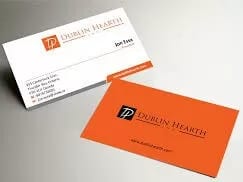 |
Matte laminated cards are printed on the most common double-sided art paper. Art paper absorbs ink well, giving rich, vivid colours, and the matte laminate coating on the surface is water-resistant. |
| White card | 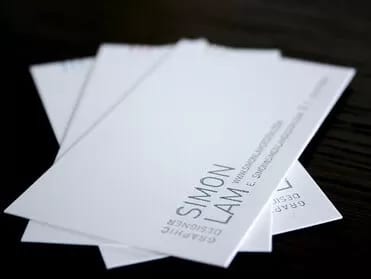 |
White card is characterised by its whiteness — as white as an A4 sheet of office paper — with high rigidity, burst resistance and smoothness. The surface is flat and clean, free of streaks, spots and other paper defects, and won’t warp or deform even over long-term use. |
| Ice-white pearl cards | 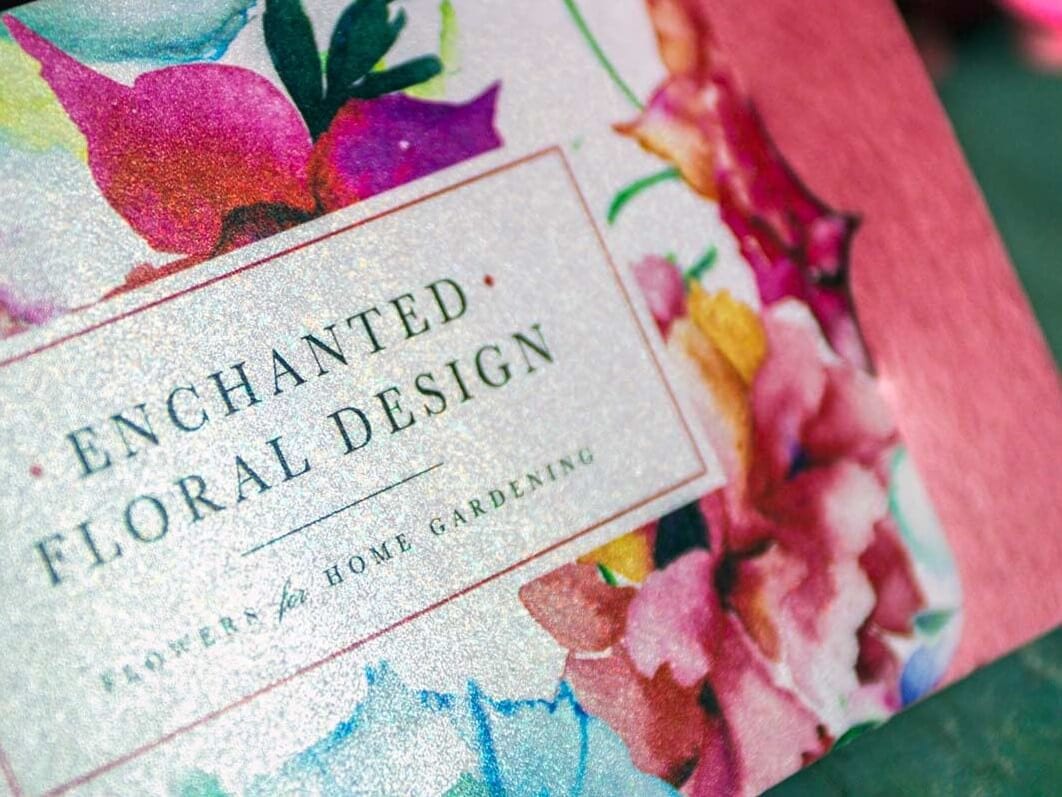 |
Ice-white paper shifts colour depending on the viewing angle, and the pearlescent stock reads as a cool white. Its sheen comes from the surface refracting light into countless bright points, creating a shimmer — metallic-style artwork prints beautifully on it. It’s ideal for high-end, boutique, modern printed pieces; dark colours or large solid blocks will spoil the premium feel of the paper. |
| Conqueror paper cards | 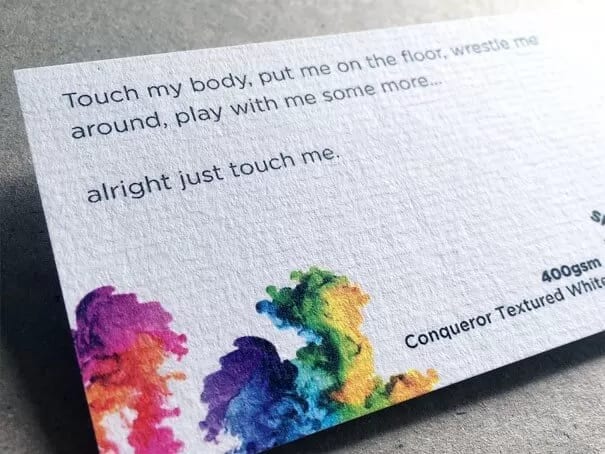 |
Conqueror paper is widely used by high-end clients for cards, tags, greeting cards, calligraphy, menu inner pages and more — even letterheads and envelopes. Its texture resembles water ripples: parallel wave-like lines with relatively wide spacing between them. Acid-free, it can be preserved permanently and is made with 65% eco-friendly pulp, making it a favourite for environmentally conscious buyers. Dark colours or large solid blocks will spoil the premium feel of the paper. |
| Linen-texture paper cards | 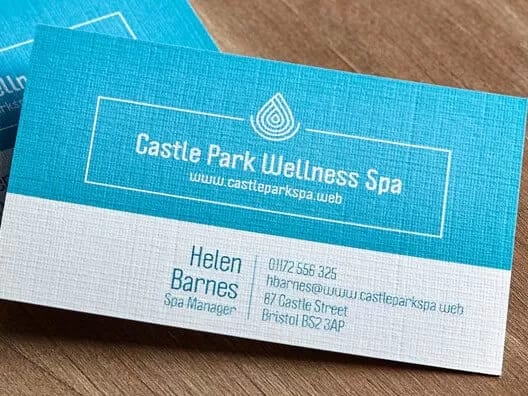 |
Linen paper is an imported art paper with a distinctive tactile feel and a regular cross-hatch embossed texture, giving printed pieces a balanced, screen-like visual base. Made from non-woven fibres, it is highly abrasion-resistant, bright, colour-fast, tough and fold-resistant, with a unique grain and strong three-dimensional feel. On this stock, dark colours or large solid blocks will spoil the premium feel of the paper. |
| Natural-texture paper cards | 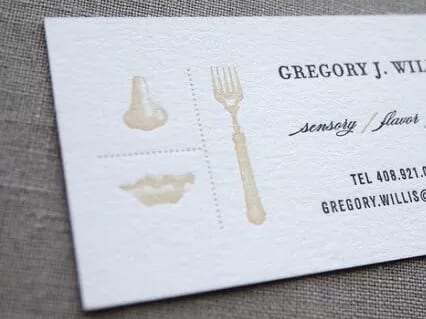 |
This natural-texture paper has a shallow, sparse surface grain with a cotton-like touch and a slight embossed feel — understated yet distinctive. It suits business settings well and helps the user leave a memorable impression: the grain isn’t deep, but it’s full of elegance. Dark colours or large solid blocks will spoil the premium feel of the paper. |
| Inspiration textured paper cards | 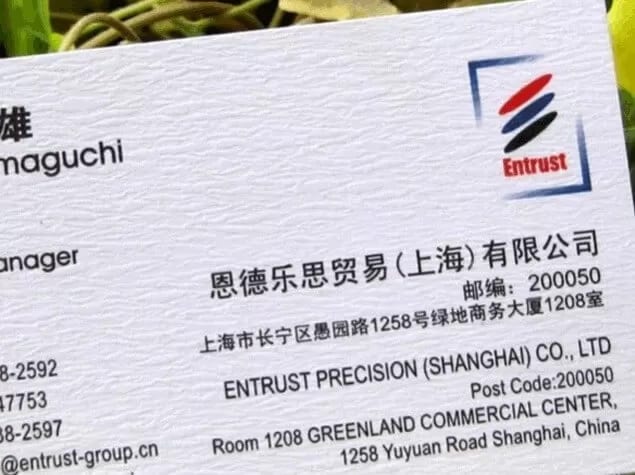 |
Inspiration paper has richly varied grain with an embossed feel — refined, deep and classic. It conveys a solid, dependable, trustworthy impression, making it very well suited to senior-level business settings. One of the more texturally rich papers, it makes a distinctly upmarket card. Avoid dark colours or large solid blocks on this stock, so you don’t spoil the premium feel of the paper. |
If you’re interested in other stocks, leave us a message and we’ll go into more detail on the many other specialty papers.
Further reading: 80gsm, 128gsm? Gloss art, matte art or woodfree paper? How to tell paper types, weights and thicknesses apart
3. Choose your finishing options
Once you’ve settled on your paper, consider whether your cards need any finishing. Finishing makes a card stand out from the crowd and leaves a deeper impression of your company on whoever receives it. Because finishing is an extra step carried out after printing, each process adds to the finished card’s turnaround — so decide based on the timeline your job allows.
| Rounded corners | Foil stamping | Spot UV | Die cut | |
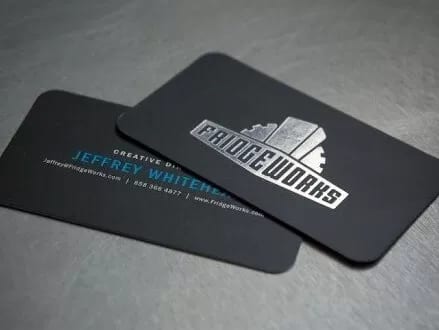
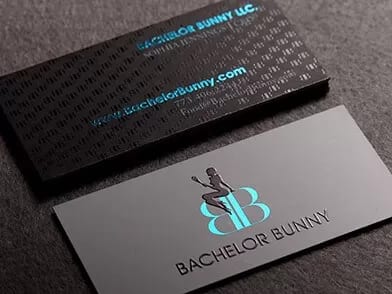
| What it is | Cutting the four corners of the card into rounded corners with a 3mm radius. | Transferring metallic foil or pigment onto the card by hot stamping, giving it a shimmering metallic effect. | Applying a UV-cured coating to specific areas so they gain a raised texture and a glossy, reflective finish that contrasts sharply with the rest of the card. | Split into steel-die cutting and laser die-cutting; if your die-cut design has lots of corners and angles, laser die-cutting is needed to achieve the ideal result. |
| Sample | 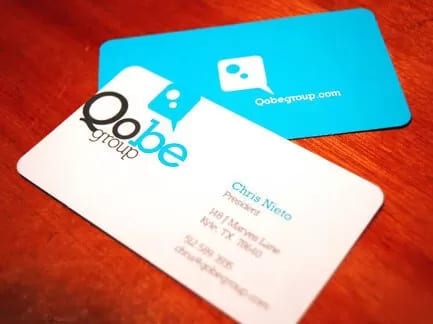 |
 |
 |
 |
| Price | ~HKD 1–3 / 100 cards | ~HKD 30–40 / 100 cards | ~HKD 40–60 / 100 cards | ~HKD 200–400 / 100 cards |
| Suitable paper | Any paper | Smooth-surface paper | Smooth-surface paper | Any paper |
Ready to print? Browse our matte laminated business cards and choose from the stocks and finishes above. We deliver across Hong Kong and Macau, and you can WhatsApp us at +852 3001 5678 (English is fine) if you’d like a hand picking the right combination.