A promotional brochure earns its place in any business's marketing kit. Whether you use it as a rich company-and-product introduction, a photo-and-copy-heavy restaurant menu, or an event and offer promotion, a brochure gives you far more room to tell your story than most other printed pieces — and designing one is not as hard as it looks. Follow the steps below and you'll end up with a brochure that holds its own.
Before you start designing
To create a brochure that's genuinely your business's own, get your content ready before you open a design file. It also helps to set up a dedicated project folder first, so a pile of assets doesn't turn into chaos — organising your files is one of the most underrated parts of the design process.
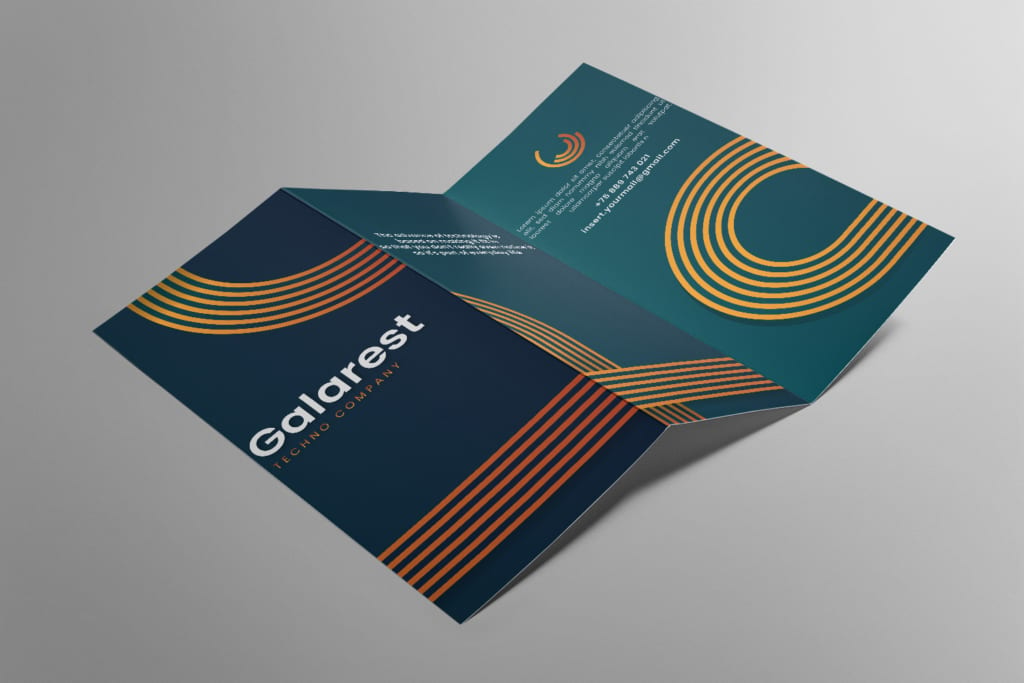
Company / brand logo: If your design uses the company logo, source a high-resolution version. A vector logo file is ideal — it keeps the printed result razor-sharp.
Images: Choose relevant product or service photos. Shots you've taken yourself make the whole design more convincing — and, more importantly, make sure they're high quality. Poor-quality images will drag down the print result.
Copy / content: Text is the most important element of any flyer — without words, it's hard to get your message across directly. So spend real time on the copy and keep refining it around your content.
A company brochure should include:
- Introduction / About us: let customers understand who you are and what you stand for — whether that's the company's reliability, your services, or your product quality. Focus on one or two key messages and build them out rather than trying to say everything.
- Product / service information: gather all your products and services and sort them into categories. Most companies already have a product taxonomy you can put to good use — and you can single out one or two products as your hero offering.
- Contact details: leave customers a way to reach you — opening hours, location, phone number.
Designing your brochure
Once the content above is ready, you can start designing. Whether you're doing it yourself or handing it to a design studio, all four of these points deserve a place in your thinking.
- Choose your fold
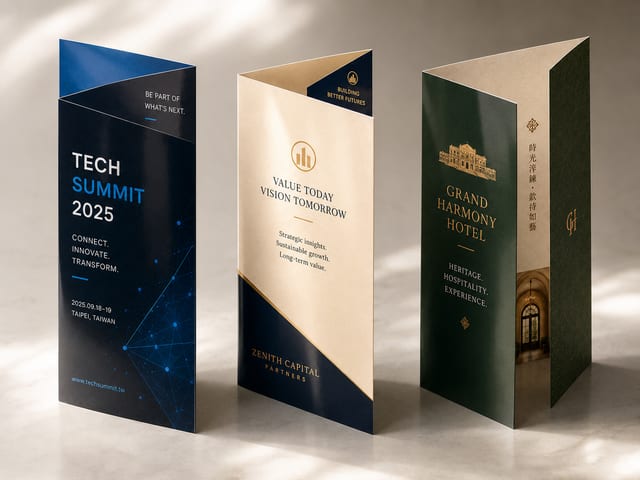
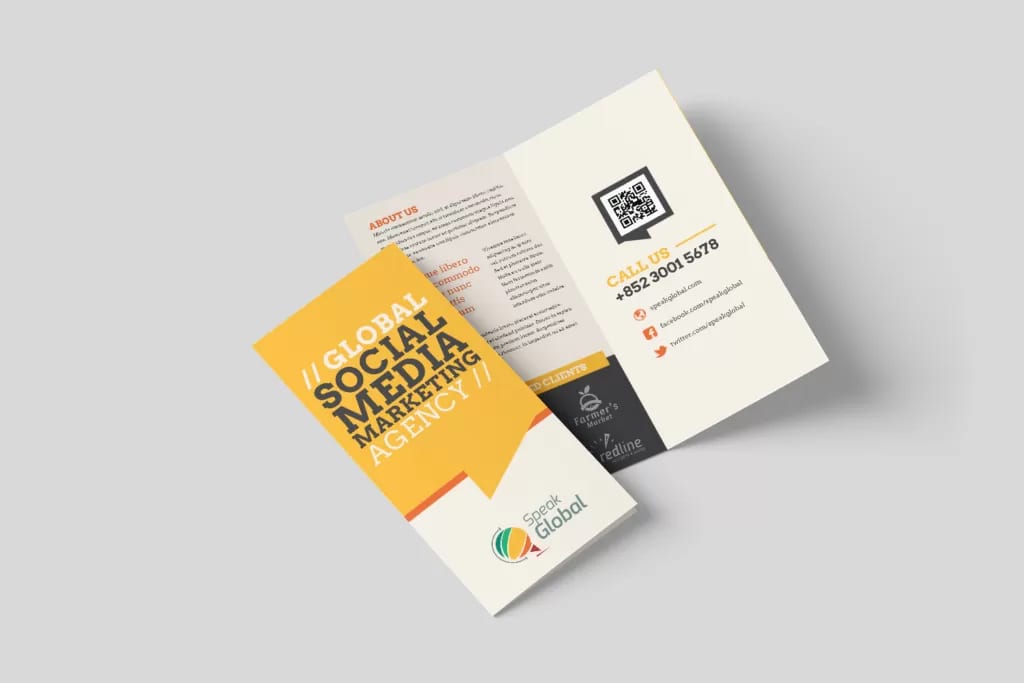
Different folds create different visual effects, so decide which one you're using before you design. Of the many brochure folds, the wallet (tri-)fold is the most popular, while the accordion fold suits leaflets with more content. There are more unusual folds too — for a deeper look, see A close look at wallet folds, accordion folds and other folded leaflets — design, told through print, which walks through the various folds and the things to watch for when printing them. - Pick a design style that fits
Brochure style varies from company to company — no single style is "best" or "worst". If you're in education, lean playful and use a bright, colourful palette; if you offer professional services, keep it clean and credible, reaching for steady colours like blue, black, white and grey. It's hard for anyone — you or your designer — to picture the finished look in the abstract, so the best move is to browse designs you like online for reference. Behance and Pinterest are both great platforms for published design work, where you can find brochure pieces you love and connect with other designers. - Lay your content out clearly
For a brochure, the copy is everything. Words are your most powerful tool for getting an idea across cleanly, so make sure the text reads clearly within the design — every other design element exists to serve it. Too many designers treat the copy as an afterthought and end up unable to communicate the content clearly. - Choose the right paper
With the whole design worked out, the last step is choosing the paper you'll print on — often a headache for anyone who doesn't know paper stocks. Unless you have special requirements, these make good defaults:
Most affordable: 128gsm gloss art paper; gang-run printing makes it even cheaper.
Higher quality: 250gsm gloss art paper with matte lamination on both sides — the finished piece has real hand-feel and never looks cheap.
Arty: 120gsm woodfree paper; a natural, artistic feel, but not well suited to full-bleed designs, so keep the layout simple.
Let your brochure do the promoting
When your printed brochures arrive, you'll no doubt be thrilled — this is your company's own brochure. But the whole point of the piece is getting it into the places where it will catch potential customers, and above all into your own premises, so you can hand one to every customer who walks in.
Wherever you choose to distribute it, you'll find your brochure is one of the most effective — and most versatile — marketing tools you have. We deliver across Hong Kong and Macau, and if you'd like a hand choosing folds or paper, message us on WhatsApp at +852 3001 5678 (English is fine).