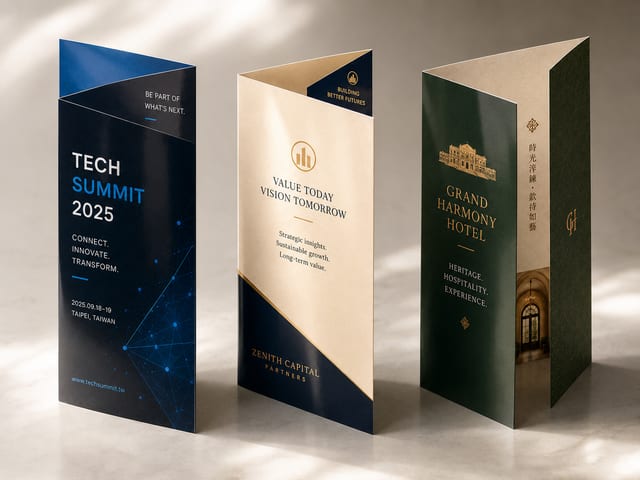
You've seen folded leaflets a thousand times — they're one of the most common pieces of print you pick up on the street. The three you meet most often are the roll fold, the accordion fold and the cross fold. But those aren't the only ways to fold a flyer, and even those three come in plenty of variations. Let's take a closer look.
Understanding the different flyer folds
Roll fold (wallet fold)
The roll fold is the workhorse of folded print — one of the most widely used finishing options there is. Folded up, it looks like a wallet: you divide the long edge of the sheet into three equal panels, then fold the left and right panels in toward the centre. Almost any size works, as long as it stays within the printable range.
Upside: it won't spring open, and the format makes it easy to design something interactive.
Watch out: paper 200gsm or heavier, or laminated stock, needs to be scored before folding.

Accordion fold (Z-fold)
The accordion fold is another one you'll recognise instantly — folded, it makes a "Z" shape. As long as the paper isn't too thick and the size stays within the printable range, there's no limit to the number of accordion panels. That said, too many folds get awkward to collate and read.
Upside: great for information-heavy content, because each panel can stand as its own topic — no need for complicated layouts.
Watch out: paper 200gsm or heavier, or laminated stock, needs scoring first. For accordion flyers with three or more folds, avoid paper above 200gsm — it won't fold flat once finished.


Cross fold
A cross fold is simply a sheet folded in half and then in half again the other way. You see it less often, because opening it out is slower and more fiddly. There isn't much to watch for on the printing side, but in the design you need to tell the printer clearly which side is the front and which is the back — otherwise a mix-up can lead to the wrong fold. You also have to design around the fold sequence, or the finished piece can end up hard to read.
Watch out: paper 200gsm or heavier, or laminated stock, needs scoring first. For pieces with three or more folds, avoid paper above 200gsm — it won't fold flat once finished.
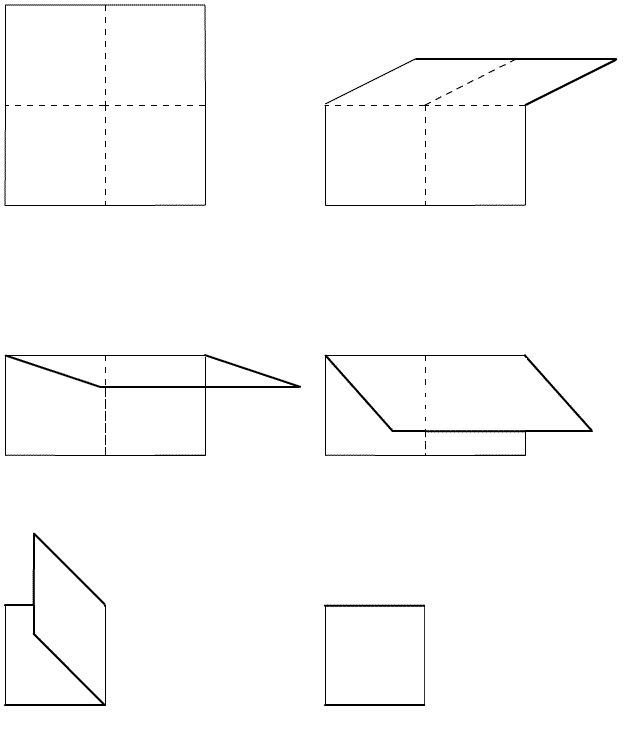
Half fold (single fold)
The half fold has more uses than most — it's common for invitations and greeting cards, membership booklets and name cards. Often you reach for it simply because two pages aren't enough to hold everything, so you add one more.
Watch out: paper 200gsm or heavier, or laminated stock, needs scoring first.

Double gate fold
For the double gate fold, you divide the long edge of the sheet into four equal panels, fold the two outer panels inward, then fold the whole thing in half. It gives designers more room to play, because there are three layers to work with — the closed cover, the half-open state and the fully open spread. Its best trait is the sense of discovery as the reader opens it up.
Watch out: avoid paper above 200gsm — it won't fold flat once finished.

The limits of printing and designing folded flyers
Mark the front and back
The single most important thing in a folded-flyer design is making the front and back of the finished piece crystal clear to your printer. If you don't spell it out, a simple misunderstanding can throw everything off. The best approach is to mark the cover and back cover directly on a screenshot of your artwork — it keeps everyone efficient.
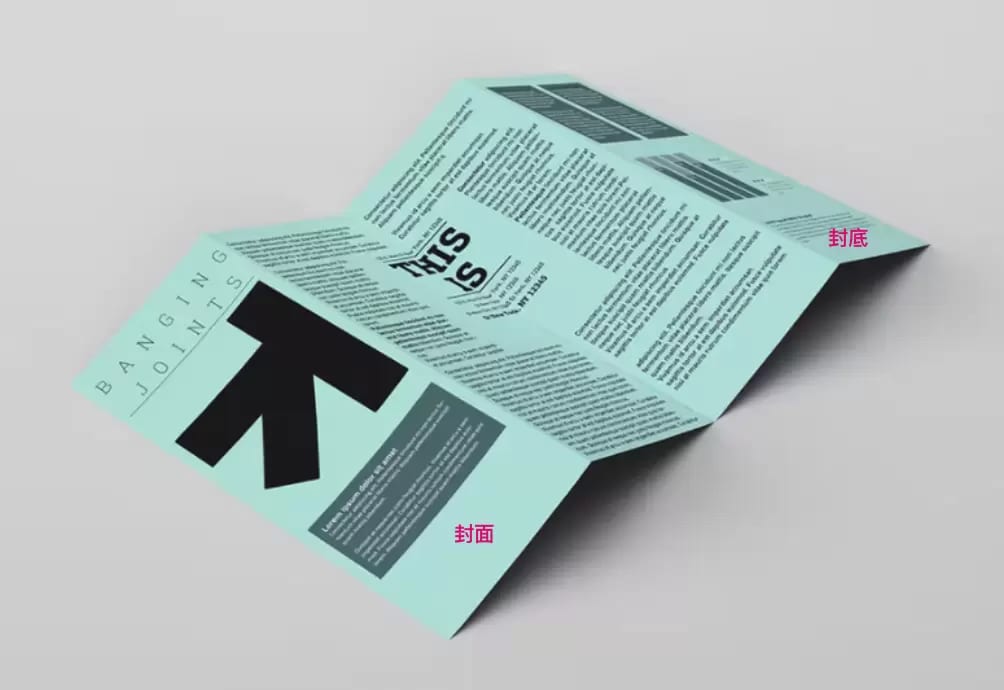
Dark designs need lamination and scoring
Dark-coloured flyers crack along the edges more easily when folded. Because dark ink sits thicker on the sheet, folding can tear the ink and paper — and that's exactly where those white cracks along the fold come from. To avoid it, we recommend laminating and then scoring: the lamination protects the paper through the scoring process so it doesn't split under pressure.

The thickness of the finished flyer
Some customers post their flyers through the mail, but postal services are strict about weight and packaging. If the paper is too thick, or there are so many folds that the piece doesn't close neatly, they may refuse to deliver it. So before you design, it's worth understanding how and where the flyer will be used — that way you can pick the right fold from the start.
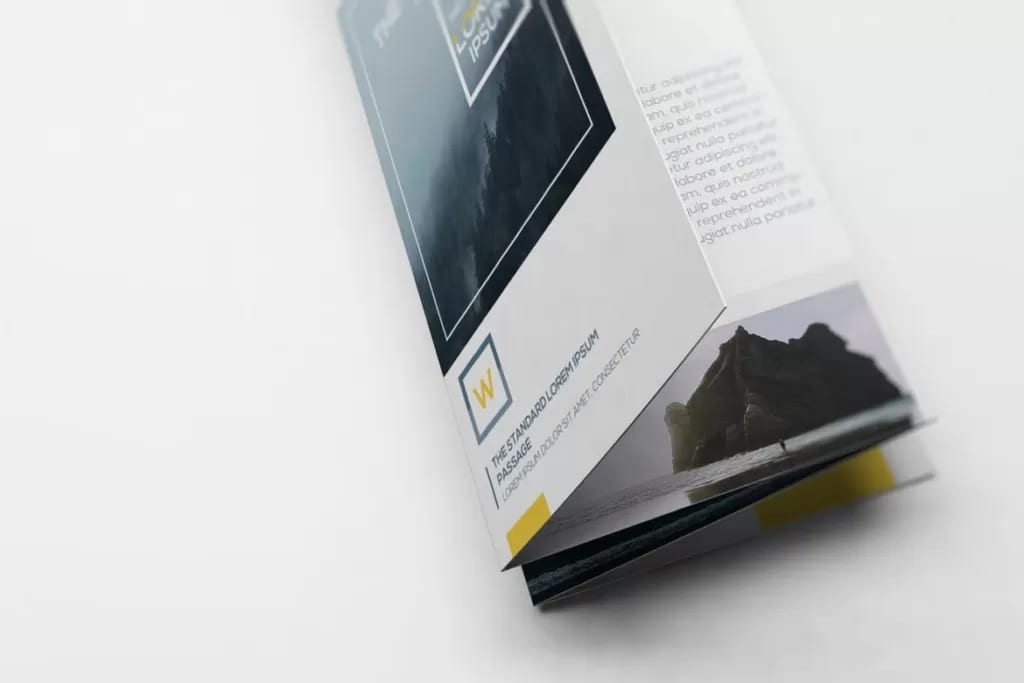
Many folds — choose one that works
Folded flyers come in plenty of styles, but not every fold suits every job. We hope this piece helps you understand what each fold does best, so you can choose the one that delivers the strongest result.
Ready to print? Order folded leaflets online with delivery across Hong Kong and Macau — and if you'd like a hand choosing a fold, message us on WhatsApp at +852 3001 5678 (English is fine).