
Hot foil stamping is one of the most popular finishing processes in print, yet while almost everyone recognises the shimmering result, far fewer understand what has to happen before the press. Misunderstandings about where foil works — and where it doesn't — are common, and a foil file that isn't set up properly can ruin an entire run. If you want to understand the whole process and produce sharp, luxurious foil-stamped cards, this guide walks you through how foil stamping works, the colours available, and where it's used beyond cards.
Is foil stamping really made of gold?
Back in the twentieth century, gold and silver genuinely were used to create gold and silver foil. The main reason is that gold and silver are stable metals that don't oxidise easily. Their malleability was put to use too: the metal was beaten into thin leaf and then heat-stamped onto paper or other objects.
How foil stamping works today
Because gold and silver are now expensive, modern foil stamping no longer uses genuine metal leaf — electroplated aluminium has taken its place. Beyond its low cost, aluminium has a metallic lustre, resists oxidation and can be changed to different colours, so it developed quickly and is now widely used, though out of habit we still call it "foil stamping". Aluminium is naturally silver-white; to make it appear gold, you simply coat it with a layer of gold dye, and other dyes produce other colours.
The technical name for foil stamping is heat-transfer printing — hot stamping for short, though "foil stamping" is the term most people use. The process relies on pressure and temperature to transform the electroplated aluminium foil and stamp it onto the paper. To see the whole process, watch 0:25–1:02 in the video below.
Foil stamping types and colours
Foil stamping isn't limited to gold; gold is just one of the available colours. Alongside gold there's silver, red, blue, green, clear film, holographic and more. The finishing works by using a stamping die mounted on the machine which, under a set amount of pressure and heat, presses the paper and the die together for a brief moment — transferring the metallic foil onto the paper surface according to the image and text on the die.

Where foil stamping is used
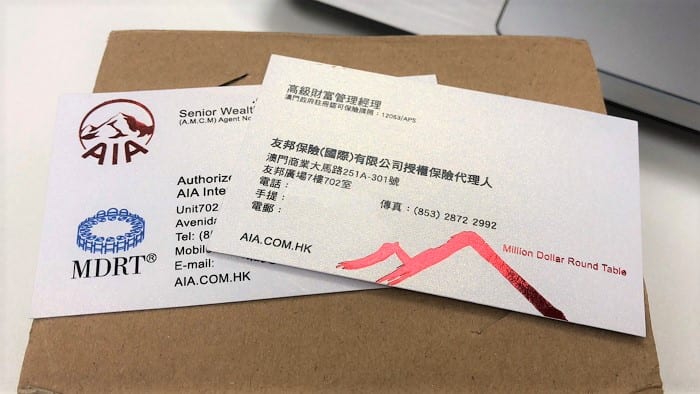
Foil stamping gives a printed surface metallic patterns and text — sometimes in several colours at once. It usually appears on mid- to high-end print and can elevate a company's prestige. When a client receives a foil-stamped piece, it quietly raises their impression of the brand. The most common use is on cards — often the very first piece of marketing a client encounters at an event. Foil is also widely used on book and catalogue covers, especially art books, where it lends a sense of refinement.
Beyond its decorative role, foil stamping serves another important purpose: security. Many IDs and certificates use foil and holographic stamping as anti-counterfeiting measures, and even high-value products — such as cigarette packaging and wine and spirit labels — use foil to help verify authenticity.
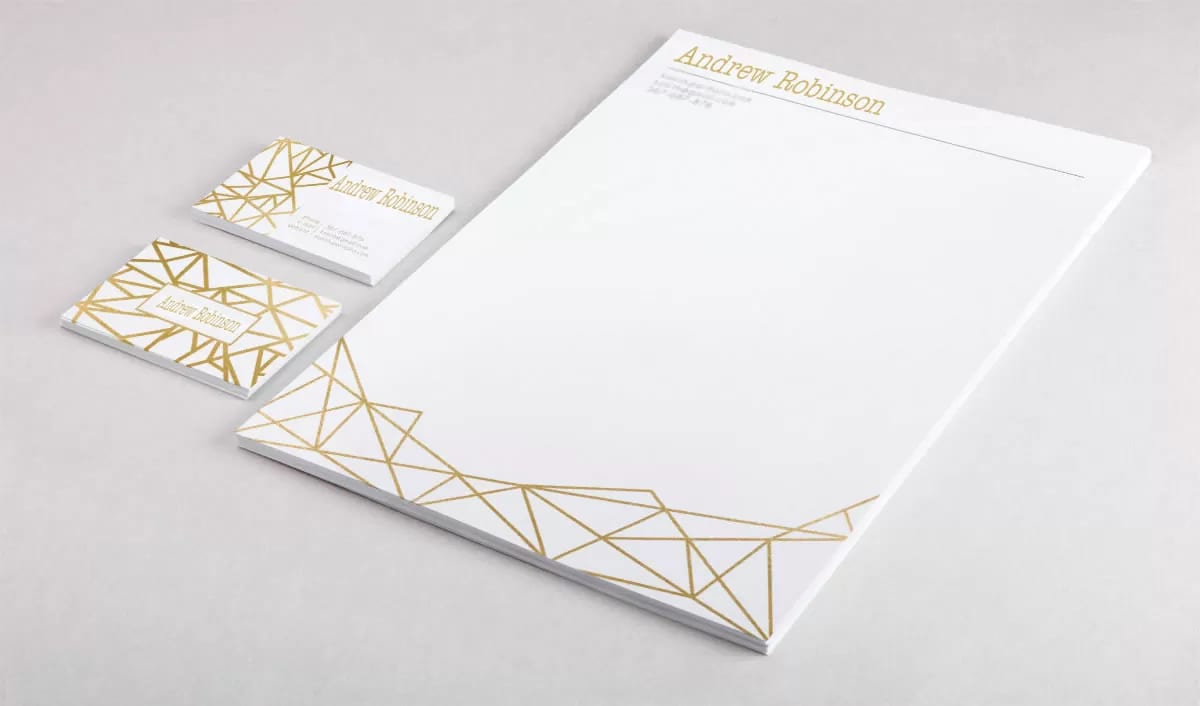
(2) Letterhead and envelopes
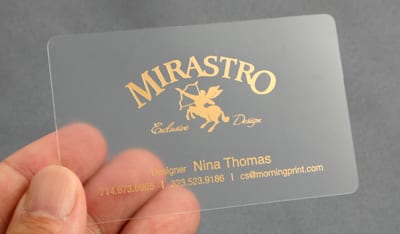
(3) PVC cards
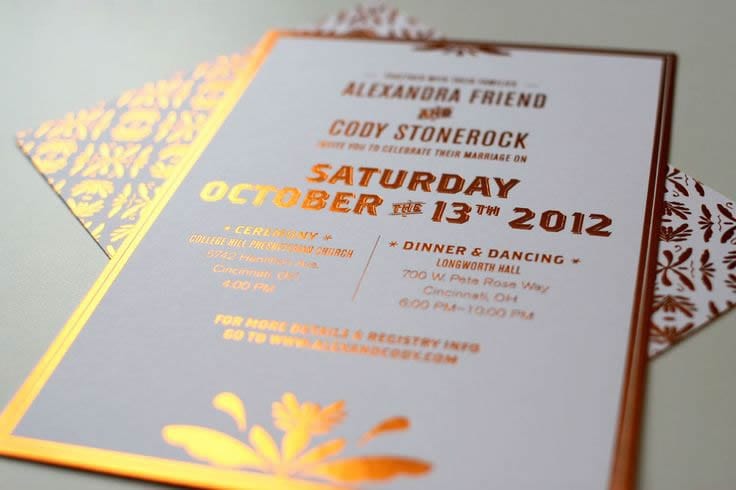
(4) Wedding invitations
Setting up your foil artwork
- You must create a black artwork layer for the foil areas, and the file must be an AI vector file.
- Foil cannot produce gradients or semi-transparent effects.
- Graphics and text can't be too small, too fine, or too intricate, or the finished result won't look good.
- Text should be larger than 8pt, lines thicker than 0.6pt (0.2mm), and the gap between two foil areas greater than 0.7mm.
- A registration tolerance of 2–3mm on the foil position is normal.
- When you send your file, label the foil colour clearly so the printer fully understands what you need.
Further reading: The essential card prepress guide: answers to every business-card question
What to watch for when foil stamping
(1) Choosing paper for foil stamping
As the video above shows, the whole process uses heat to stamp the foil film onto the paper, so a smooth coated art paper — or a paper with pores that let air escape — is usually recommended. If you foil onto non-porous materials such as synthetic card or clear stickers, the foil film may not be able to vent the trapped heat, which can cause hazy patches or blistering that spoil the look of the finished piece. On large solid areas of foil, the problem is even more obvious.
(2) Text and lines merging together on the finished print
If text or graphics are too small, or lines too fine, adjacent lines can end up merging into one another. The same happens when patterns or characters sit too close together. This is exactly why you need to follow the foil design guidelines above to keep everything from fusing together.
Add a touch of gold to your next print job
Ready to make your brand shine? Explore our foil-stamped cards, with delivery across Hong Kong and Macau. If you'd like a hand checking your foil artwork before it goes to press, WhatsApp us at +852 3001 5678 — English is fine.