Ever opened a print delivery, counted the pieces, and come up short of what you ordered — fewer than 1,000 when your order clearly said 1,000? Most gang-run printers will actually tell you upfront that the final count can vary by 5–10%.
Almost everyone has printed something, yet few of us know much about how the process really works. Take stickers as an example: walk into a copy shop with your own paper and the person at the counter will remind you to bring a few extra sheets. Printing always wastes some material — even a home printer jams now and then. Commercial presses hit the same problem, only more so.
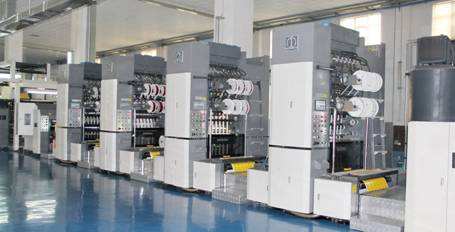
Today's presses run almost entirely on automated machinery — and where there are machines, there are problems. Different parts constantly need adjusting: a rubber roller inside the press, or a sheet that gets scratched or jams, leaving you with tiny ink specks and misregistration on the final print.
All sorts of mishaps, big and small, happen on a print run. Set the extreme cases aside and the everyday small ones still can't be avoided. That's why a print shop usually runs a few extra — a practice known as overs (放數). The point of overs is to pull out the substandard sheets, so that a run of 1,000 doesn't lose too many to defects. Say a customer needs 2,000 flyers — the printer might run 100 extra as a buffer (every shop does it a little differently). Once printing is done, they weed out the pieces damaged by cutting or finishing and hand over only the clean, complete stock.
Every stage of production takes its own bite out of the final count. Put simply: the more finishing steps a job goes through, the more pieces you lose along the way.
Let's assume each step loses 5%. You print 100 cards, and the job needs UV coating, foil stamping, and die-cutting. With no overs added, the finished quantity works out to:
100 × 95% (printing) × 95% (UV coating) × 95% (foil stamping) × 95% (die-cutting) = ~82 cards
As the math shows, after just three finishing processes only 82 of those 100 cards survive. Naturally, most print shops estimate this loss in advance and add enough to avoid coming up badly short. But because the loss is unpredictable, an exact figure is hard to pin down — it comes down to the operator's experience. A conservative estimate puts the final-count variance at up to 5–10%.
Building in overs is how printers keep finishing defects from eating into the delivered count. And when luck is on your side — loss comes in below normal and quality holds up — the leftover pieces are simply passed on to you as spares.
If you haven't ordered from a print factory yet, this quick primer should give you the basics, so the jargon won't trip you up when you're talking specs. Printing across Hong Kong and Macau and want the numbers explained? Message us on WhatsApp at +852 3001 5678 (English is fine) and we'll walk you through it.