Picture yourself walking through Times Square in Causeway Bay, along the streets of Mong Kok, or past the Convention Centre in Wan Chai. Look up and you'll see advertising banners from all sorts of companies overhead. Each one is a business's tireless salesperson, working every day to show the public the best of what it offers. They look striking, and they make a company's products and services stand out. But every so often you'll spot a banner in terrible shape — faded, tattered, coming apart — dragging the whole display down.
If you don't choose a banner suited to the venue, yours could end up being one of those. A banner is there to show off the products you're proud of; if it looks poor, potential customers may lose interest, or even form a bad impression of your business.
The wrong banner costs you money and costs you customers. To avoid that, you need to understand the limits of the site where it will hang, then pick the most suitable banner for it. Below we walk through the differences between vinyl and fabric banners so you know how to choose between the two.
Durability
Vinyl banner
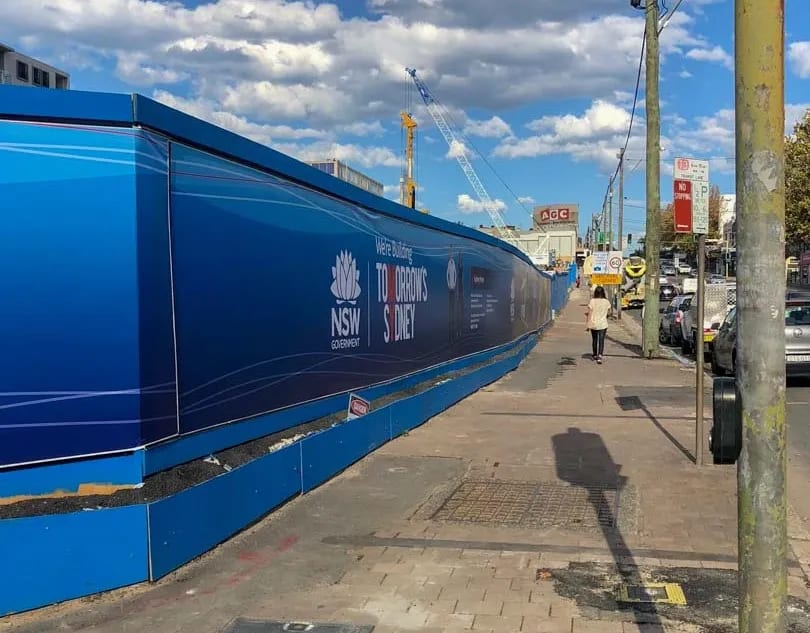
The battle between a banner and the wind never ends, and a vinyl banner is made from PVC, which stands up to strong gusts. It's tougher than fabric and far less likely to be torn apart by high wind. Vinyl banners are also relatively heavy, so under normal conditions the wind has little effect on them — even outdoors, a windy day won't do much damage. During a typhoon, of course, nothing is safe.
A vinyl banner also holds up fine on display in the rain, because the material is waterproof.
Fabric banner
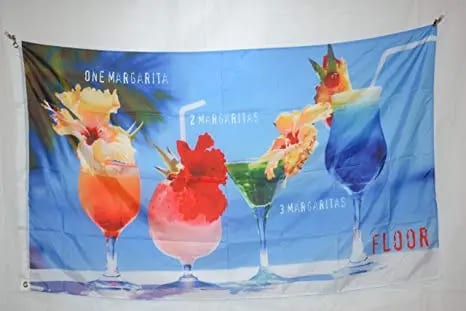
Fabric banners are woven from a blend of synthetic fibres. Because those fibres are so light, the material catches the wind easily. Used outdoors, a fabric banner is constantly tugged and pulled by the wind, so it wears out faster than vinyl in an open-air setting. Try to keep fabric out of the rain, too — it can't take a large amount of water.
Sharp images and display quality
Vinyl banner
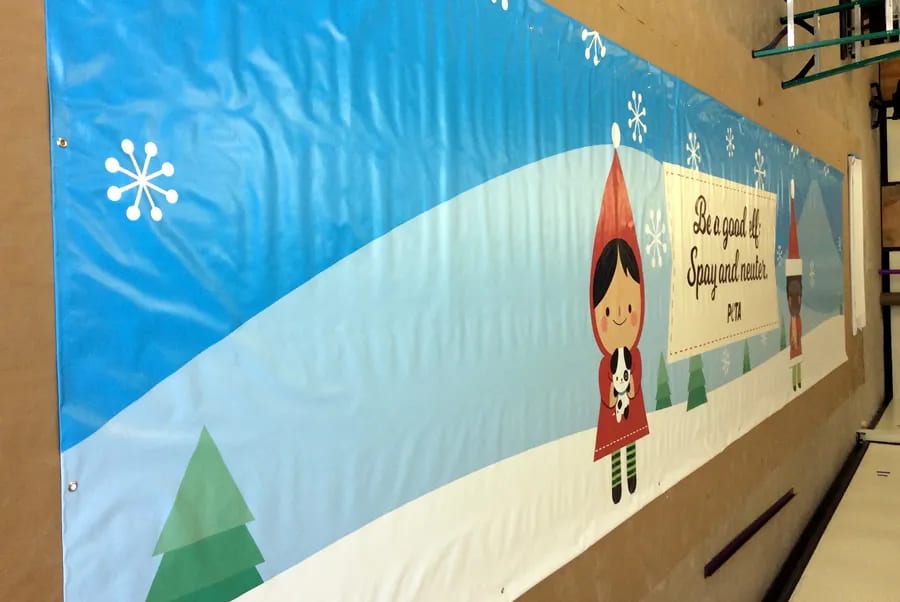
If you have a lot to show and one side isn't enough room for all your advertising, you can print a double-sided vinyl banner. It costs more than single-sided, but your message is visible from both the front and the back. Generally a vinyl banner lasts around one to two years, and within the first year the colours stay bright and the banner keeps its shape, so short-term use is no problem at all. If you need it to last longer while staying vivid, UV printing is your best option. Unlike standard inks, which fade within a year or two, a UV-printed banner can normally last up to five years.
Fabric banner

If you need a banner that draws attendees or visitors in to take a photo in front of it, fabric is the best choice. Fabric banners are printed with dye-sublimation, so the surface doesn't reflect light and the image comes out bright — which is why fabric photographs better than vinyl.
The trade-off is that fabric prints are semi-transparent, so to the naked eye a fabric banner looks darker than vinyl and not quite as vivid.
Carrying it while you travel
Vinyl banner
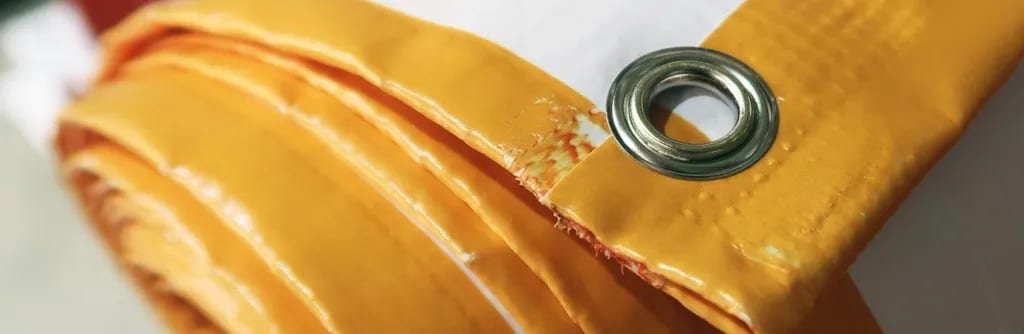
To keep a banner's image intact you can't fold vinyl — you have to roll it up and store it inside a tube. Vinyl already has some weight to it: a 2 × 1 m vinyl banner weighs roughly 2 kg, and once you add the storage tube you're carrying close to 3 kg of extra luggage.
So for travelling, vinyl isn't a great choice.
Fabric banner
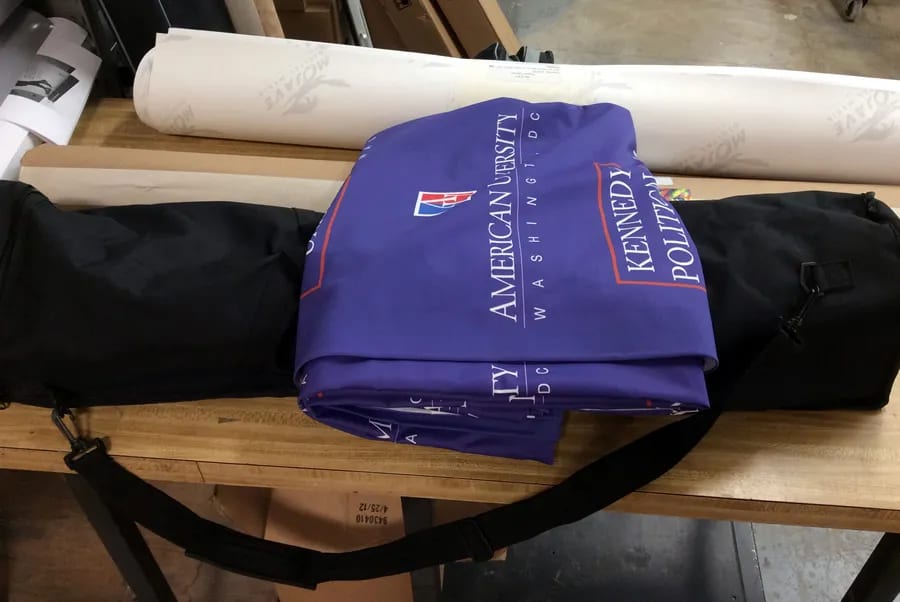
Fabric is lighter and folds up for storage. Before you use it, just iron it flat and you're set — so it doesn't matter how long you've been carrying it around. Drop it in a box or a plastic bag and you're ready to go.
How long you'll use it
Vinyl banner
If your ad is only running for a week, a vinyl banner is absolutely the best pick — cheap, good-looking and solid. For long-term outdoor use, consider UV printing instead. It costs a bit more than double a standard banner, but it lasts twice as long and the colours are noticeably richer.
Fabric banner
If your banner needs to be reused over the long term and carried from place to place, fabric is the best choice: it's easy to transport, and the printed colours don't fade nearly as fast as vinyl's.
Price comparison
Fabric costs more than a vinyl banner, because the two rely on completely different printing methods. Fabric uses more ink, and the material itself is pricier than vinyl. If your event budget is on the tighter side, a vinyl banner is the more sensible option. For travel, though, a vinyl banner is simply too heavy — once you factor in shipping and labour, fabric works out far more economical.
The bottom line
To decide whether a vinyl or a fabric banner is right for you, start with the purpose and the venue. Once you know most of those conditions, you can work out which material is the cheapest and most practical. Each has its own strengths — choose the product that fits your needs and you'll get the most value for your money.
Ready to print? Browse our vinyl banners and fabric banners, with delivery across Hong Kong and Macau. Not sure which one suits your venue? WhatsApp us at +852 3001 5678 — English is fine — and we'll help you choose.