If you've ever wondered what UV printing actually is — and how it differs from the conventional printing most of us are used to — the short answer comes down to two things: how the ink dries, and what it can be printed on. Here's a plain-English breakdown for anyone weighing UV against conventional printing.
How UV is used in printing
"UV" is short for ultraviolet — light that sits beyond the visible spectrum, invisible to the human eye. It turns up across countless industries, and printing is no exception. In print, UV technology improves the consistency and durability of colour. With conventional printing, once a run reaches roughly 50–75 sheets the ink's viscosity begins to drop, which weakens colour performance; the press then rebuilds the ink film, and the sheets that follow come out darker than the earlier ones. UV ink, by contrast, offers high colour saturation, fine detail, strong tinting strength and excellent overall quality — so compared with conventional printing, it delivers a higher-quality colour result.
Put simply, the two biggest differences between conventional and UV printing are the drying method and the materials you can print on.
Drying method
Conventional ink printing relies on spray powder dusted over each sheet as it comes off the press. The powder stops wet ink on one sheet from transferring onto the back of the next and helps the ink dry faster. Even so, the ink still has to dry — skip the powder and the sheets stick together or set off, ruining the job — and under a normal print-and-powder process a sheet needs roughly 1–2 days to dry completely.
UV ink works differently: it contains a reactive agent that responds to ultraviolet light. A pass under a UV lamp cures the ink almost instantly, cutting drying time from days down to a matter of hours, and the sheets can go straight into finishing. UV prints also hold up well over time and resist fading.
So what exactly is UV ink?
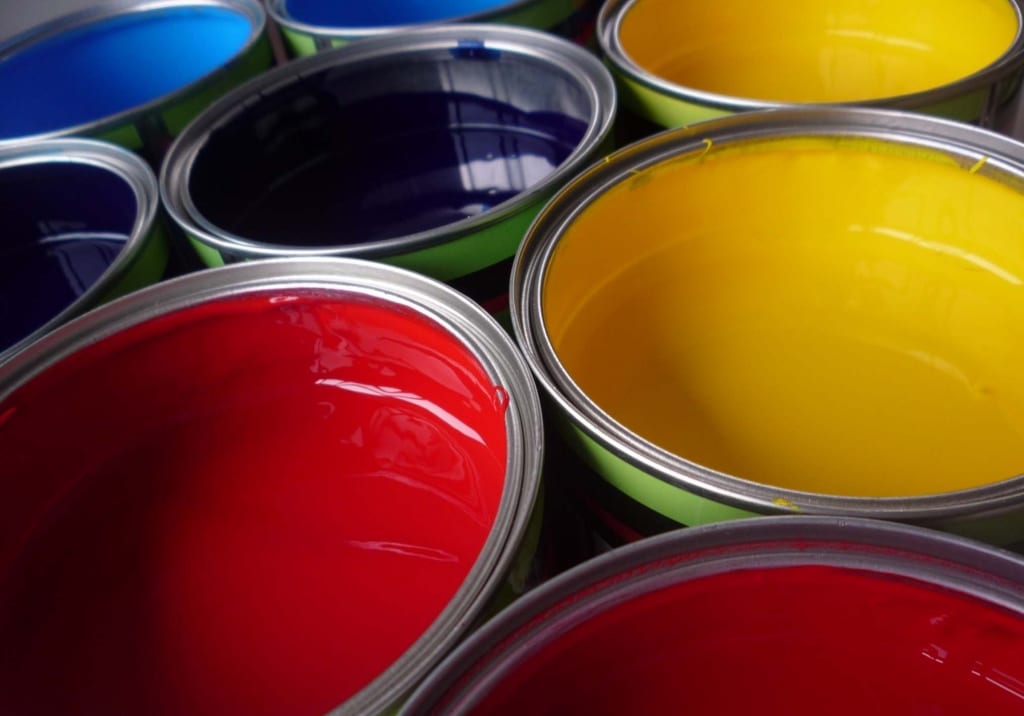
UV ink is made up of pigment, oligomers, monomers (reactive diluents), photoinitiators and a range of additives. The resin and reactive diluents fix the pigment in place and give the ink its film-forming ability; the pigment supplies colour and enough opacity to cover the substrate; and the photoinitiator has to absorb photons — even with the pigment getting in the way — to trigger polymerisation.
The secret behind UV printing

Where UV printing is used
From a production standpoint, UV ink fixes quickly, forms a solid film and adheres well to a wide range of substrates. It also outperforms ordinary ink on scratch resistance, abrasion resistance and resistance to acids and alkalis. That's why — even though it costs far more than ordinary ink — it's so widely used. The main areas where UV ink is printed today include:
- Non-absorbent materials. Think PE, PVC and PP films, metal foil and other non-absorbent specialty stocks. Printed with ordinary solvent inks, these need drying time and usually call for spray powder, drying racks or extra additives — with UV ink, none of that is a problem.
- Metal materials. Printing UV ink onto metal surfaces shortens the curing process and simplifies the curing setup. The well-cured, well-filmed ink layer improves both post-press finishing and the finished product's appearance.
- Commercial bills and tickets. This work uses unusual substrates and inks such as carbonless paper, thermal paper, magnetic ink and anti-counterfeit ink, and it demands colour-fastness, heat resistance and stability — so UV ink or UV varnish is the best fit. Bill-printing presses also run fast and use little ink, which further favours UV.
The challenges UV printing still faces
UV printing has clear advantages over conventional ink printing, but wider adoption still depends on solving a few problems.
- The cost of UV ink. For all its instant curing and film-forming strength, UV ink is relatively expensive — and it has to be paired with dedicated UV blankets and UV ink rollers, which pushes product costs up considerably.
- Ink adhesion. As UV ink cures, its components crosslink and polymerise, and the sudden change in volume creates significant internal stress that undermines the ink's grip on the substrate. Treating or modifying the surface helps, but the real fix is developing UV inks with better adhesion, lower shrinkage stress and a lower price.
- A suitable fountain solution. UV ink is used mainly on non-absorbent substrates, and the formulation varies from one material to the next — so the fountain solution has to be adaptable enough to hold print quality across them all.
Even with these hurdles, as the technology matures and its applications broaden, the rapid growth of UV printing looks inevitable — and before long it should be more widely used than ever.
Not sure whether UV or conventional printing is the right call for your next job? WhatsApp our team at +852 3001 5678 (English is fine) — we deliver across Hong Kong and Macau.