Transparent PVC cards have a charm all their own. There's something magnetic about a card you can see straight through — that see-through quality ties the printed piece to whatever sits behind it, and that connection to the real world is exactly where the appeal lies.
Transparent cards fall broadly into three types: translucent, frosted, and fully clear. Each has its own character, so we'll walk through all three in turn — what makes each one distinct, and where transparent stock has limits worth knowing about before you print.
Clear (Fully Transparent) PVC Cards
A fully clear PVC card behaves almost like glass — completely see-through. Looking at a scene through one is a bit like looking through a pair of plain, non-prescription lenses. The trade-off is that clear PVC scratches easily: under the right light, you'll notice fine lines running across the surface. To cut down on the scuffing that comes from everyday handling, you can ask for a protective film to be added during production, which lowers the chance of scratching.
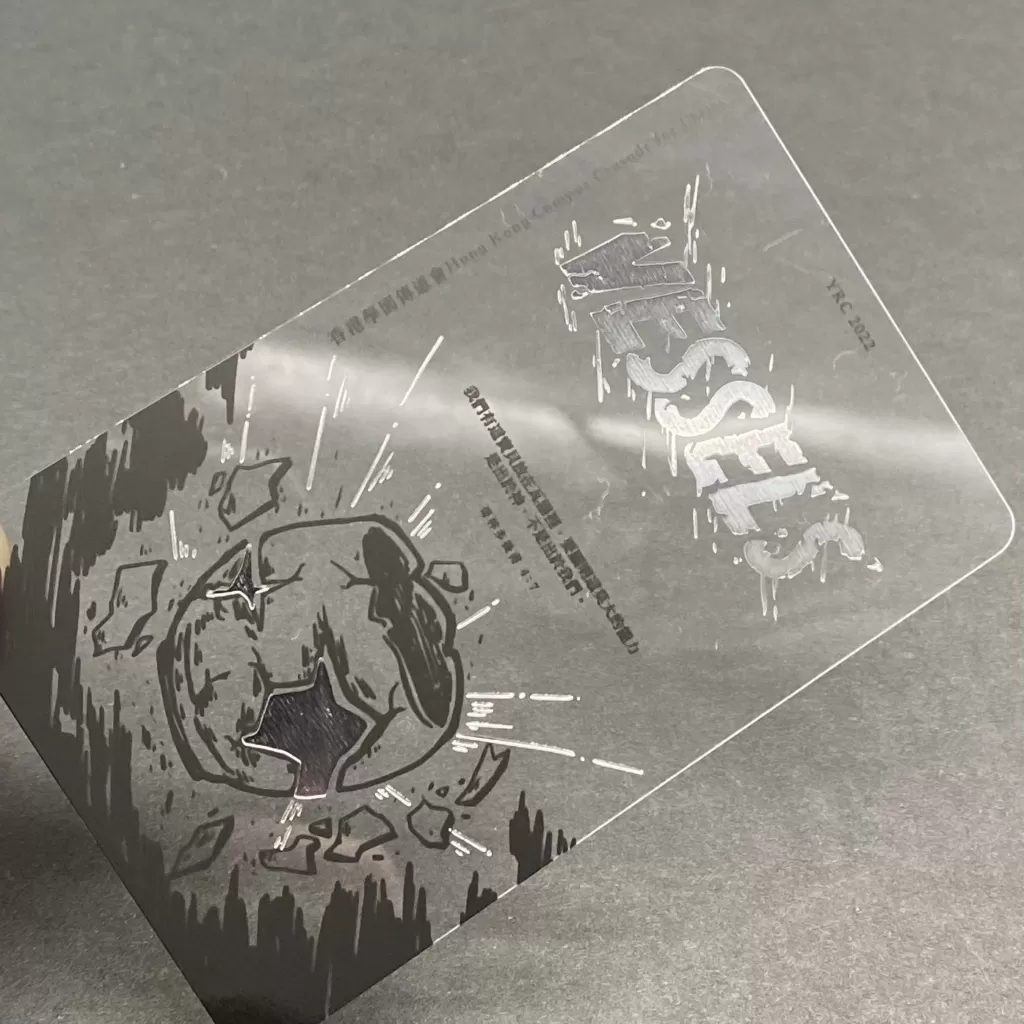
Translucent PVC Cards
A translucent PVC card isn't as see-through as a fully clear one — the material reads less sharp — and, like clear stock, it scratches easily, so handle and hand it out with care. Its signature look is a matte, misted translucency that, paired with the right design, gives off a distinctive mood. That hazy, matte transparency carries an almost mysterious quality, which makes it a natural fit for sci-fi, dreamlike, and other surreal themes.

Frosted Transparent PVC Cards
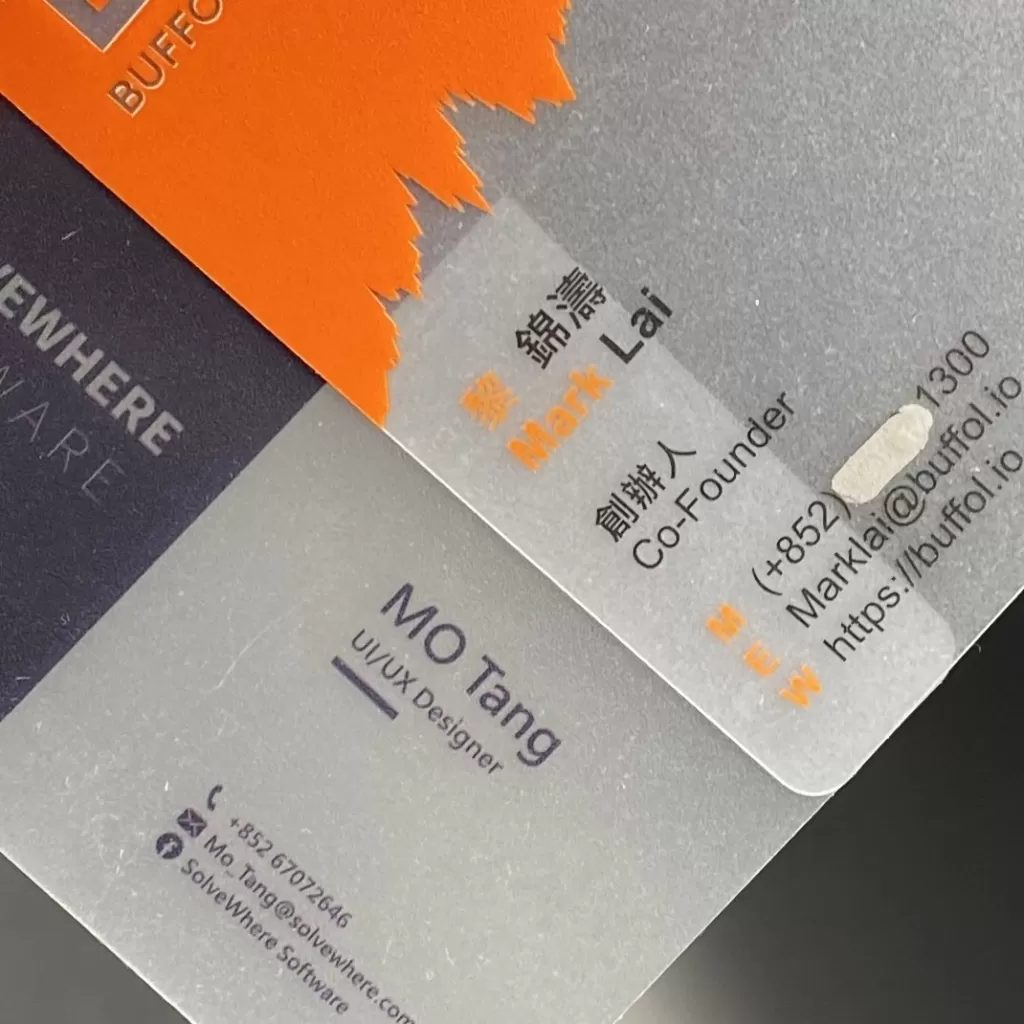
Frosted PVC is the transparent card you'll see most often on personal business cards, largely because the frosted surface is scratch-resistant — it holds up well to long-term use and storage. There's no need to fuss over surface scuffing, and the frosted texture adds a tactile quality of its own. Frosted cards read as practical and grounded, which suits professionals well — dentists, doctors, and lawyers, for example.
Before You Print
Single-Sided Printing Works Best
For transparent cards, single-sided printing is generally the safe recommendation. Unless you have a strong reason or a design that specifically calls for it, double-sided printing isn't advised. Printed on both sides with no extra processing, the artwork on the front and back shows through and interferes, so the two sides visually overlap — and the finished card may fall short of what you had in mind.
Double-Sided Needs a White-Ink Underprint
So is double-sided off the table? Not at all. Lay down a layer of white ink before the colour — the trade calls this a white-ink underprint — and the front and back stop bleeding into one another. As a bonus, the colours sit more solidly on the card. The catch: the white ink and the CMYK colour aren't laid down in the same pass. The press runs the white first, then the colour, so any registration drift between the two passes can leave a thin white edge around the printed colour.
Can a transparent card be printed white? Yes — but white doesn't exist in the CMYK set; it's an extra spot-colour process. That's why printing with white ink costs more than a straight four-colour job.
Finishing Techniques You Can Use
Foil Stamping
Foil stamping is a common finish — you'll spot it all the time on packaging and cards. On a PVC card, foil makes the whole piece more eye-catching and is a great way to make the single most important element stand out.
Custom Die-Cut Shapes
A card in an unusual shape is genuinely eye-catching. Breaking out of the standard rectangle gives it real visual impact and lifts the card's appeal with little effort. A die-cut outline also makes the card feel more individual and can help push a product's highlight forward.
Cut-Out (Hollow) Detail
A cut-out means slicing away a specific area in the middle of the card to create a hollow, open effect. This one really tests your design: to work a cut-out into the artwork, you have to weigh the size of the opening, the thickness of the lines, and where the card stays connected. If the design can't accommodate it, the finished result won't live up to the idea.
Whether it's fully clear, translucent, or frosted PVC, these are all rewarding cards to work with — but they carry more constraints than ordinary paper stock. Before you print, always talk it through with your printer to make sure they can produce exactly what you have in mind.
Ready to print your own? Browse our transparent PVC cards, with delivery across Hong Kong and Macau. Not sure which finish suits your design? WhatsApp us at +852 3001 5678 — English is fine — and we'll help you get it right before you go to print.