Designing a PVC card that stores member or employee data, and not sure which technology actually holds that data? You're in the right place. Recording data matters more than ever today — customer records, transaction logs, entry logs and the like all carry real value for a business. A well-chosen PVC card also helps keep your operation secure and strengthens the relationship between customers, staff and the company.
There are four common ways to record data on a PVC card:
- Barcode
- QR code
- Magnetic stripe
- Smart card
Each type of PVC ID card has its strengths and weaknesses. Below we walk through them one by one so you can pick the option that fits.
Barcode
The barcode is the simplest of the four technologies, which is exactly what makes it so adaptable. It's contactless — unlike magnetic-stripe and smart cards, it doesn't need to touch the reader; a scanner can pick it up from a short distance. A barcode fits on a PVC card of almost any size, from a concert pass to a gym membership card, or even something as small as a keychain fob.
Because barcodes are simple and easy to use, plenty of businesses still rely on them for record-keeping and tracking today.
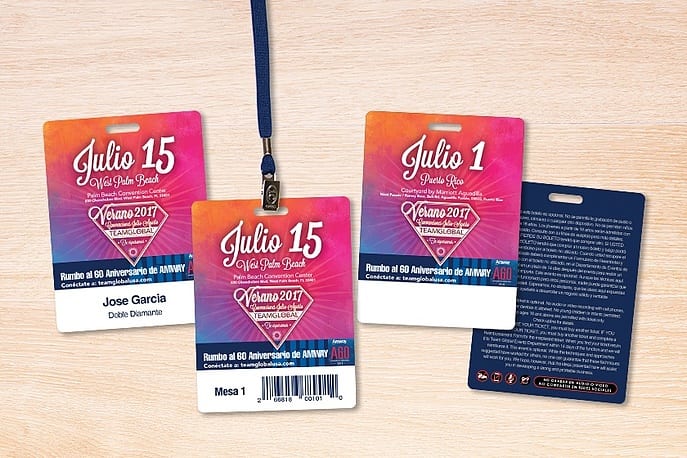
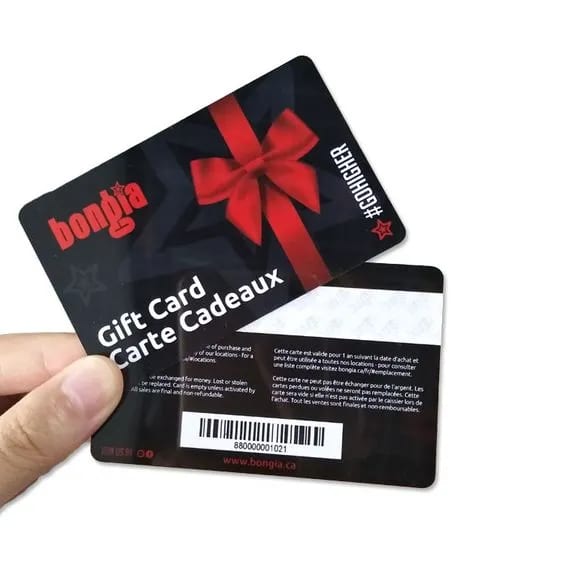
Barcodes are very durable, because printing is usually finished with a gloss or matte laminate film — which means the barcode won't be ruined if the surface gets scratched.
On security, though, a barcode is easy to copy, so it offers next to none. Its capacity is also tiny: it can only hold simple data such as a membership number.
QR Code
QR codes have become far more common in recent years, playing a big part in both payments and record-keeping. The barrier to making one is low — there are plenty of free, self-service QR generators online; follow the steps and producing a code is easy. Like the barcode, a QR code is contactless, and essentially every smartphone can read the information inside it.
Compared with a barcode, a QR code is far more capable and versatile. Its larger capacity stores much more data — a web link or personal details alike. The payment systems you see everywhere run on QR codes, which shows just how flexible the format is. The use we reach for most often is simply turning a web address into a QR code.
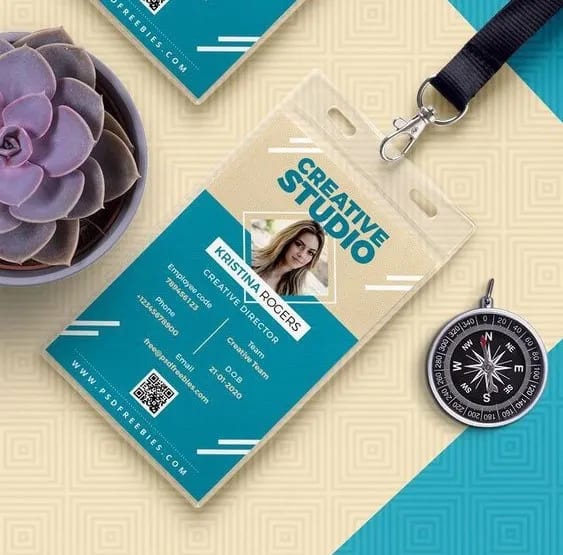
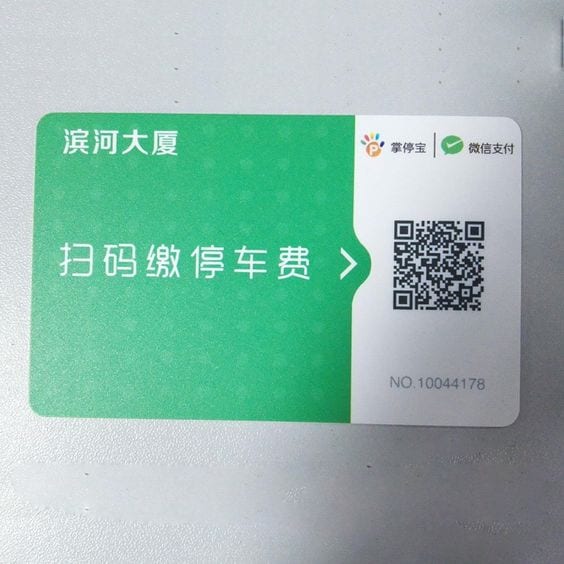
Because QR codes are so versatile, many companies have switched over from barcodes. Add a QR code to a membership card, for example, and a member can scan it with their phone to log into a website and check their own details. Some companies put a QR code on staff cards to double as a door-entry pass — but handle that carefully in production, because QR codes are relatively easy to copy and abuse.
Magnetic Stripe
The magnetic stripe is more complex than either the QR code or the barcode. The stripe is essentially fixed at the standard credit-card size, because that's the size the reader expects — which in turn limits how big the PVC card itself can be.
Beyond card size, magnetic stripes come in two encoding formats: high-coercivity and low-coercivity. If you already own card-reading equipment, you must confirm before printing whether you need high or low coercivity — otherwise the finished card may not work with your reader.
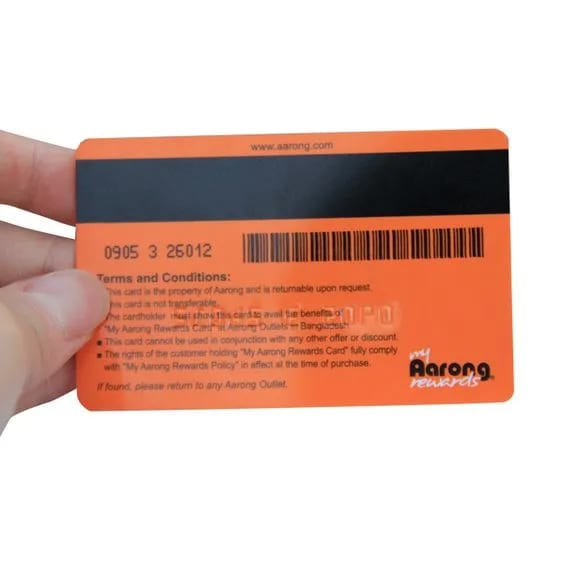
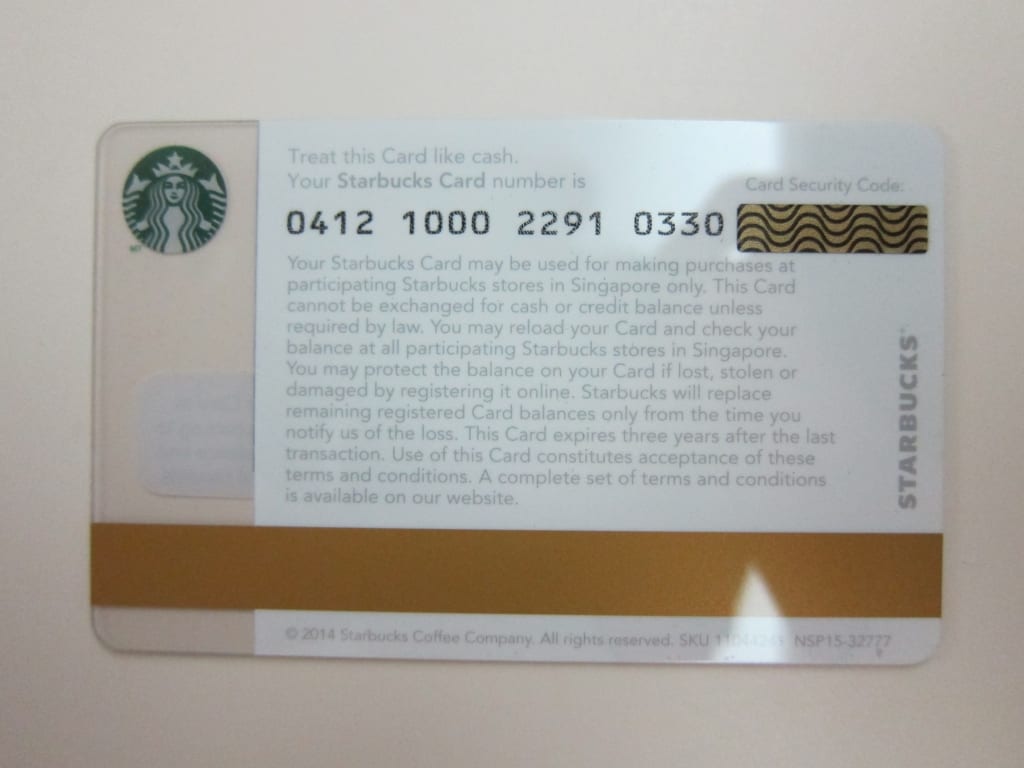
A magnetic stripe's durability is less reliable: leave a PVC magnetic card near anything magnetic and it can be demagnetised. A demagnetised card stops working and has to be re-encoded by the issuer before it can be used again. When you buy clothes, you'll have noticed the magnetic security tags on them; after purchase the staff remove them with a demagnetiser. Hold your credit card too close to that device and it can be wiped and rendered useless.
NFC or RFID Smart Card
Smart cards are the most secure option and now the most widespread — better than standard magnetic-stripe and barcode cards, though the price is higher. These cards can be programmed and encrypted, and they're very easy to track. Inside each smart card is a microchip whose encoding exchanges data with a chip reader — so before you buy, you need to know whether the PVC card and your reader are compatible.
The most familiar smart-card application is the Octopus card in your wallet: tap it on a reader and the reader reads the information stored on the card to deduct the fare.
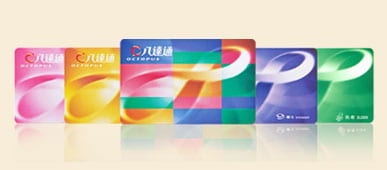
Plenty of hotels now use the same technology for their door cards: tap the card and the chip automatically connects to the "system", which then knows whether you're a guest. Some hotels only let you reach the floor you're staying on — again, decided by the information held on the chip.
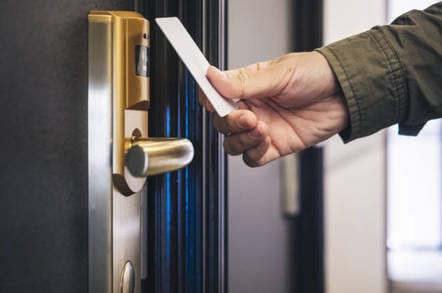
Smart cards are very durable — the chip sits in the middle of the PVC card, well protected from damage, which makes it more reliable than a magnetic card. The chip's larger capacity records more information, so its range of uses is correspondingly broader. Even our new identity cards use the same technology, storing your personal data on a chip.
On top of that, most smart cards are shielded against magnetic interference, so you don't have to worry about a card being wiped and becoming unusable.
Smart cards are ideal for:
- Company access cards
- High-security access
- Residential estate door cards
- Car-park cards
- Gyms and fitness centres (24-hour access)
The right card depends on the outcome you want and your budget
Price: (cheapest) Barcode = QR code < Magnetic stripe < Smart card (most expensive)
Security: (lowest) Barcode = QR code < Magnetic stripe < Smart card (highest)
Practicality: (lowest) Barcode < Magnetic stripe < QR code < Smart card (highest)
Versatility: (least) Barcode < Magnetic stripe < QR code < Smart card (most)
In the end, choose the PVC card that matches the software and hardware you already own and the technology you use. If you have any questions, message us on WhatsApp at +852 3001 5678 (English is fine) and our team will walk you through each PVC card type and the one that best fits your situation. We deliver across Hong Kong and Macau.