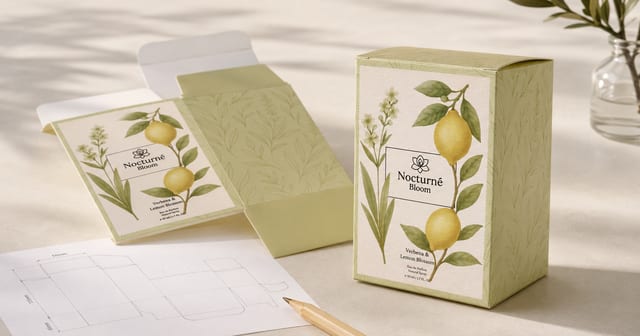
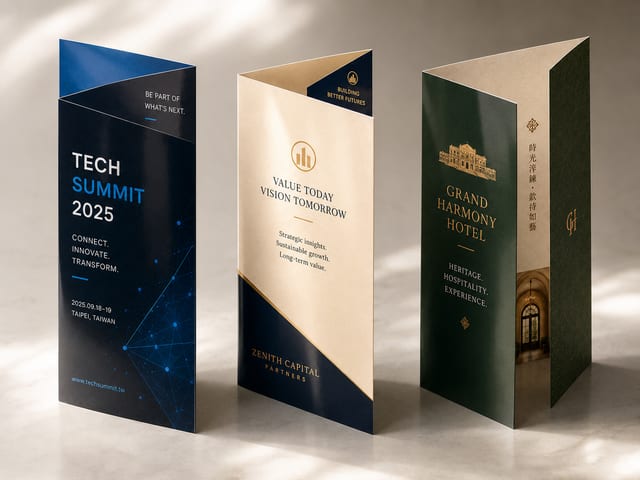
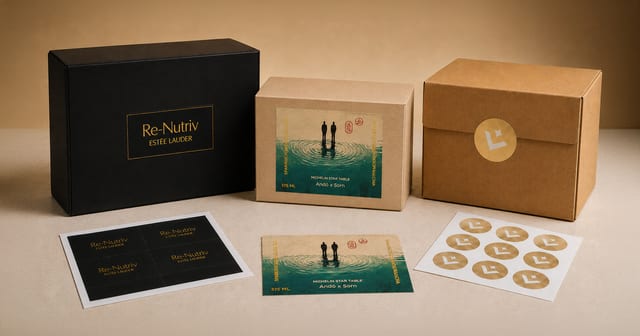
Paper size is tied to both the design and the purpose of a printed piece, so you should lock in your size before you start designing. Skip that step and you will burn a lot of time resizing a finished layout. What are the standard paper sizes, the common poster sizes, the magazine and book sizes, and the card and postcard sizes? This guide walks through the paper sizes behind every common print product.
Every table below lists two figures: the trimmed size (the finished size after cutting) and the size with bleed. The bleed size adds the standard margin around the trim, so any colour or image that runs to the edge stays edge-to-edge with no white slivers after the sheet is cut.
A-series paper sizes
A4, A5 and A6 need no introduction — these are the sizes we handle every day. The A series is built on a sheet with a width-to-length ratio of 1 : √2 and an area of exactly one square metre (m²). That gives a largest size measuring 841 mm by 1189 mm (a √2 : 1 ratio), which is called A0. A1 is half of A0, A2 is half of A1, and so on.
So every A size keeps the same √2 : 1 ratio. When the standard was set, dimensions were fixed to whole numbers, so any halved size that lands on a fraction (under 1 mm) is rounded up.
A4 is the size you reach for most often, at 210 mm × 297 mm. The table below collects the A-series sizes, and because your design needs bleed too, it includes the bleed size for each.
| Size | Trimmed size | Size with bleed |
|---|---|---|
| A1 | 594 × 841 mm | 600 × 847 mm |
| A2 | 420 × 594 mm | 426 × 600 mm |
| A3 | 297 × 420 mm | 303 × 426 mm |
| A4 | 210 × 297 mm | 216 × 303 mm |
| A5 | 148 × 210 mm | 154 × 216 mm |
| A6 | 105 × 148 mm | 111 × 154 mm |
B-series paper sizes
The B series and its numbering are less widely known. It is built on a sheet whose width edge is 1 metre and whose area is √2 square metres (m²). That gives a largest size measuring 1000 mm by 1414 mm (a 1 : √2 ratio), named B0. Halve that B0 sheet across its long edge and you get two B1 sheets, each 707 mm by 1000 mm; carry on the same way for B2, B3, B4 and beyond.
Compared with the A series, each B size has √2 times the area of the same-numbered A size — a B4 sheet, for example, is √2 times the area of an A4.
| Size | Trimmed size | Size with bleed |
|---|---|---|
| B1 | 707 × 1,000 mm | 714 × 1,006 mm |
| B2 | 514 × 728 mm | 520 × 734 mm |
| B3 | 364 × 514 mm | 370 × 520 mm |
| B4 | 257 × 364 mm | 264 × 370 mm |
| B5 | 182 × 257 mm | 188 × 264 mm |
| B6 | 148 × 105 mm | 134 × 188 mm |
C-series paper sizes (envelopes made for the A series)
The C series shares the same √2 : 1 ratio as the A and B series. Each C size is set as the geometric mean of the matching A and B sizes.
C4, for instance, is the geometric mean of A4 and B4, still at a √2 : 1 ratio, so it sits between A4 and B4 in size. That is exactly what makes the C series the right envelope for A-series sheets — and, in turn, the B series the right envelope for C-series sheets.
| Size | Trimmed size | Size with bleed |
|---|---|---|
| C1 | 648 × 917 mm | 654 × 913 mm |
| C2 | 458 × 648 mm | 464 × 654 mm |
| C3 | 324 × 458 mm | 330 × 464 mm |
| C4 | 229 × 324 mm | 235 × 330 mm |
| C5 | 162 × 229 mm | 168 × 235 mm |
| C6 | 114 × 162 mm | 120 × 168 mm |
Postcard sizes
The most common postcard size is 4R — the same size we use for printed photos. Because most postcards feature scenery and landmarks, the 4R photo size is what you see most. Postcard sizing is fairly free-form, though: A6, A5, 4R and 5R are all common choices.
| Size | Trimmed size | Size with bleed |
|---|---|---|
| 4R (4 × 6 in) | 100 × 148 mm | 106 × 154 mm |
| 5R (5 × 7 in) | 127 × 178 mm | 133 × 184 mm |
| A6 | 148 × 105 mm | 154 × 111 mm |
| A5 | 210 × 148 mm | 216 × 154 mm |
Business card sizes
90 × 54 mm is the size anyone who has printed cards will recognise — it is what we use most in Hong Kong and Macau. Precisely because it is so common, it gives the recipient no visual surprise, so it is worth looking at the card sizes other countries use. Lately, as overseas online platforms have taken off, 85 mm × 55 mm has come into wider use as well. There is no single fixed card size — but do note that different sizes can carry different printing costs, so it pays to check before you settle on your dimensions.
| Size | Trimmed size | Size with bleed |
|---|---|---|
| Standard card (used in China, Hong Kong, Macau, Taiwan, Singapore) | 90 × 54 mm | 96 × 60 mm |
| Japanese card | 91 × 55 mm | 97 × 61 mm |
| European card | 85 × 55 mm | 91 × 61 mm |
| South American card | 90 × 50 mm | 96 × 56 mm |
Other common sizes
Most print products are derived from the A, B and C paper sizes above, so we hope these tables give your design work a solid head start. If there are other print-product sizes you would like us to cover, get in touch — we will answer your questions and fold the answers into this article.
For more on sizing, see these related reads:
- What is the standard business-card size — and can you only print the standard?
- 10 designer business cards: the leading card styles of 2019
Not sure which size fits your project? WhatsApp us at +852 3001 5678 (English is fine) and we will help you pick the right size and bleed, with delivery across Hong Kong and Macau.