In Hong Kong's business world, a card is still one of the fastest ways to signal that you are professional — and the paper stock you print it on does more of that work than the design does. This guide ranks the most popular business card stocks printed in Hong Kong, from thick cotton card to black card, matte laminated card, recycled stock and specialty papers, so you can pick the right feel for your brand and your budget.
Business card paper stocks, ranked
Thick cotton card (9/10)
Cotton card is one of the most sought-after stocks for business cards, with a wonderful hand-feel and a genuinely premium look. It is usually 400gsm or heavier, and its slightly rough surface delivers better print results and durability. Cotton is also very friendly to finishing: foil stamping, letterpress and embossing all come out beautifully on it. The trade-offs are a higher price and a thickness that is not ideal for carrying a stack around.
Black card (8/10)
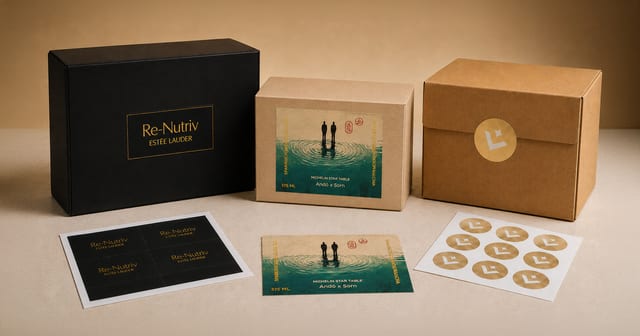
Black card is comfortably the second most popular stock in Hong Kong, with a deep, pitch-black surface. The texture is excellent and it carries a distinctly elegant style, while staying durable and resistant to tearing or warping — a natural fit for refined or minimalist designs. One thing to watch: black card is not friendly to colour printing. To get any spot colour on it you have to lay down a layer of white first and then print the colour on top. Skip the white base and the black underneath swallows the ink, so the colour prints poorly.
Matte laminated card (7.5/10)
Matte laminated cards are a very common, affordable choice in Hong Kong — arguably the best value of the lot: cheap yet hard-wearing. The print quality is not the highest, because the stock itself is inexpensive and pairing it with premium print methods would only ruin the value for money. Most are produced by gang-run or digital printing to keep that price-to-quality balance. That makes them ideal for real-estate agents and anyone who hands out cards in volume.
Recycled paper (7/10)
Recycled paper is an eco-friendly stock, typically made from recycled material or carrying FSC certification. It usually costs more, because the management and production needed to hit a genuine environmental grade do not come cheap. There is now plenty of choice here: companies with strict green-certification requirements can specify it, while everyone else can simply opt for an unlaminated stock to get some of the environmental benefit.
Specialty paper (6/10)
Specialty paper covers stocks with unusual materials and textures — leather-effect card, metallic card, pearlescent card and the like. These are generally more expensive, but they give a card a truly distinctive look and feel. Because each of them brings its own printing challenges, check the details with your printer before you commit to a run.
Details to watch when choosing a stock
Beyond the stocks above, how should you actually judge a card? A few key details shape both its appearance and its quality. Here are the ones that come up most often when choosing paper.
Gloss level
The gloss of a business card stock affects how the card looks and how it reads in the hand. A high-gloss paper gives a brighter, shinier finish, while a low-gloss paper gives a softer, more natural one.
Texture
Different card stocks carry different textures — and some, such as gloss art paper, have no obvious grain at all. Texture matters more than people expect, because it shapes the impression your card leaves about the company. Conqueror paper, a favourite in Hong Kong's professional industries, is the classic example of a "serious" stock. Common textures include smooth, suede and linen, each lending your card a different feel and style, so weigh your brand image when you choose.
Weight
The weight of the stock affects both feel and durability. As a rule, heavier paper is more durable but less convenient to carry, while lighter paper bends or tears more easily but is easier to keep on you.
The bottom line
When you choose a card stock, the paper is one of the most important decisions you make — different stocks give a card a completely different look and feel. On top of the stock itself, details like gloss, texture and weight all shape the final appearance and quality. Pick the stock and the finishing details that match your brand image and style, your budget and your other needs. We hope this guide helps — and if you would like a recommendation, just ask us. We deliver across Hong Kong and Macau, and you are welcome to browse our cotton business cards or WhatsApp us at +852 3001 5678 (English is fine).